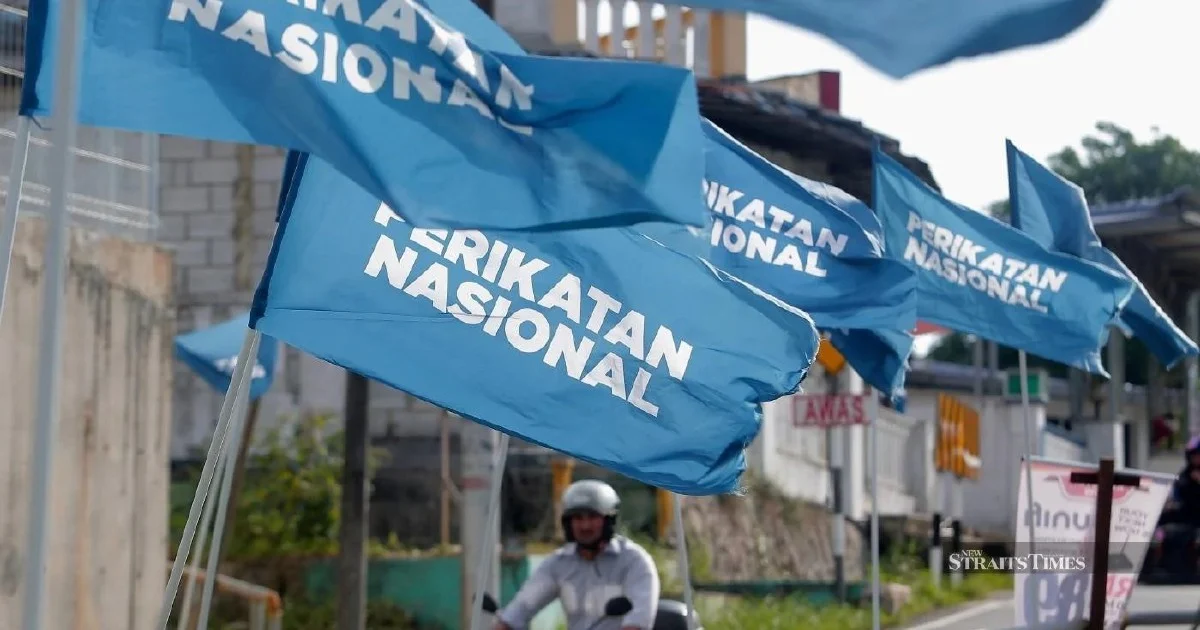
Perikatan Nasional (PN) has moved swiftly to crush online speculation that it intends to sideline itself from the upcoming Johor state election, with senior officials characterising the circulating claims as deliberate misinformation designed to sow confusion. Deputy chairman P. Punithan released a statement addressing the false narrative that has spread across social media platforms, stressing that the coalition remains fully committed to participating in the electoral contest and will not be withdrawing from the race.
The emergence of such claims, whether originating from rival political camps or other motivated actors, underscores the intensifying digital warfare that now characterises Malaysian electoral politics. In an increasingly polarised environment where state elections command significant national attention, the rapid spread of unverified information—sometimes amplified through bot networks and coordinated sharing—has become a recurring challenge for political parties seeking to maintain control of their public messaging.
For PN specifically, the denial carries particular weight given the coalition's evolution over recent years. Since its formation and subsequent performance in the 2022 general election, PN has positioned itself as a serious challenger to established power structures, and any suggestion of electoral withdrawal would fundamentally undermine that positioning. The coalition's leadership has invested considerable effort in building party machinery and establishing electoral alliances across various states, making a voluntary exit from Johor—a state with significant political and economic influence—entirely inconsistent with its trajectory.
Johor carries outsized importance within Malaysia's political fabric. As the country's second-most populous state and historically a power base for ruling parties, electoral performance in Johor often foreshadows broader national trends. The state has also witnessed dynamic political competition in recent years, with multiple coalitions contesting for influence. For PN, establishing itself as a viable electoral force in Johor would be crucial to its ambitions of becoming a credible alternative government at the national level, making any perceived retreat a strategic disaster.
The timing of such rumours is noteworthy, arriving at a juncture when various coalitions are intensifying preparations for state-level contests. The circulation of false claims about coalition participation typically accelerates as election dates approach, when media attention peaks and public interest intensifies. This tactical weaponisation of misinformation—used to confuse voters about electoral viability and candidate slates—has become an unfortunate staple of modern Malaysian politics, requiring parties to invest resources in rapid response communication.
P. Punithan's swift rejection of the fabricated statement reflects an understanding that permitting such narratives to circulate unchallenged could metastasise into broader doubts about PN's electoral intentions and organisational capabilities. In the contemporary information ecosystem, where initial claims can achieve viral status within hours and correction often struggles to catch equivalent momentum, early and forceful denial represents a crucial defensive tactic. The deputy chairman's framing of the claims as utterly without merit was designed to foreclose any ambiguity that opposition voices might seek to exploit.
From a broader Malaysian political perspective, the incident highlights the vulnerability of all major coalitions to coordinated disinformation campaigns. DAP, PKR, UMNO, and other significant players have each faced similar viral rumours at various points—some planted by opponents, others emerging organically from speculation. The infrastructure necessary to rapidly investigate such claims, establish their falsity, and communicate corrections remains unevenly developed across Malaysia's political ecosystem, leaving parties of varying sophistication exposed to reputational damage.
The density of upcoming electoral contests at the state level means that opportunities for such mischief will continue multiplying. With Johor joining other states in the electoral calendar, attention will remain intense on PN's demonstrable commitment to contesting these races comprehensively. The coalition's ability to put forward competitive candidate slates, mobilise ground support effectively, and articulate a coherent platform will ultimately matter far more than rhetorical denials of false claims. Nevertheless, clarifying the record when misinformation circulates remains an essential preliminary step to preventing such distortions from calcifying into voter perceptions.
The incident also signals the need for greater media and platform responsibility in Malaysia's digital sphere. While social media companies have implemented fact-checking partnerships in several Southeast Asian markets, enforcement remains patchy and resources stretched thin across languages and regions. Political actors of all colours have recognised the relative ease with which false narratives can gain traction, incentivising investment in disinformation production even when the falsity is easily discernible to informed observers.
Moving forward, PN's credibility will rest not on reactive denials but on concrete actions—successful candidate recruitment, visible campaign activity, clear policy articulation, and ultimately competitive electoral performance in Johor and elsewhere. The coalition's leadership has indicated its determination to contest comprehensively, and the coming weeks will test whether that rhetorical commitment translates into sustained organisational effort across the state. For Malaysian voters seeking reliable information amid a torrent of competing claims, official statements from party leadership require corroboration through observable party activity and journalist investigation.