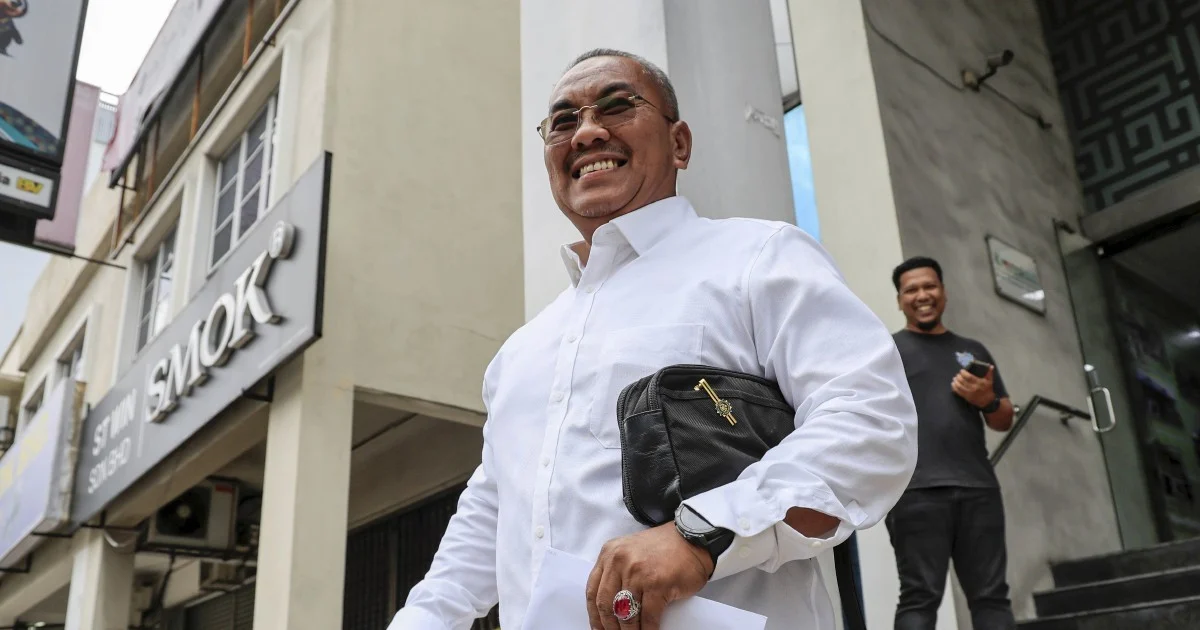
Perikatan Nasional's election machinery has cleared a significant hurdle ahead of the Johor state election, with coalition leadership confirming completion of internal seat negotiations that had previously created friction among member parties. Datuk Seri Sanusi Md Nor, serving as the electoral director for the opposition coalition, made the announcement in Kuala Lumpur, signalling that the process of dividing constituencies among PN's component parties has concluded without leading to a public rupture within the alliance.
The resolution of 34 overlapping seats represents a critical juncture for PN's electoral prospects in Johor, a state where opposition fortunes have fluctuated considerably since the coalition's formation. Such negotiations are invariably contentious, as smaller parties within multi-party alliances view seat allocation as a test of their negotiating power and electoral viability. The successful conclusion of these talks without defections or public acrimony suggests that all component parties believe they have secured adequate representation to justify their continued participation in the broader coalition framework.
For Malaysian observers, the completion of PN's internal negotiations carries implications that extend beyond administrative efficiency. Johor remains the only major state currently under PN control, making it simultaneously a showcase of coalition governance and a potential flashpoint should internal tensions resurface. The state's electoral calendar has long held significance in national politics, and a cohesive PN performance there could provide momentum for future contests, whereas fractious campaigning might expose the coalition's underlying structural weaknesses.
The overlapping seats that required resolution likely involved multiple PN parties claiming historical connections or territorial presence in the same constituencies. Such disputes are endemic to broad coalitions, where parties often have competing claims based on previous electoral performance, demographic representation, or regional strongholds. The fact that 34 constituencies generated sufficient controversy to require directed negotiation indicates the density of competition within Johor's political landscape and the stakes different parties attach to representation.
Sanusi's role as election director places him at the centre of PN's campaign machinery, a position that carries responsibility not merely for administrative coordination but also for maintaining the delicate balance required to keep diverse political interests aligned. His public confirmation of negotiation closure serves multiple audiences: it reassures the electorate of PN's organisational capacity, it signals to party members that leadership has addressed grievances through dialogue rather than fiat, and it telegraphs to rival coalitions that PN presents a unified front despite its inherent diversity.
The timing of this announcement reflects the typical rhythm of Malaysian electoral preparation, where seat finalisation must precede candidate nomination and campaign mobilisation. In Johor's context, early clarity on seat allocation permits individual parties to begin identifying and vetting candidates, arranging campaign logistics, and developing narratives tailored to their assigned constituencies. Delayed finalisation would compress these preparation periods and risk candidates embarking on campaign work prematurely, only to be reassigned or displaced if negotiations remained unresolved.
For smaller PN constituent parties, successful negotiation of seat allocations is often existentially important. These parties rely on electoral legitimacy to justify their continued independence rather than being absorbed into larger alliances or rivals. A generous allocation of competitive seats or winnable constituencies validates their leadership's strategic choices and provides members with tangible evidence that coalition participation delivers electoral opportunities unavailable through solo contests. Conversely, punitive allocations or relegation to unwinnable seats can trigger internal rebellions and defections.
Johor's political composition makes this negotiation particularly intricate. The state encompasses constituencies ranging from densely urban centres with diverse demographic profiles to rural areas where traditional power structures retain influence. Different PN parties maintain varying levels of organisational strength across these different terrain types, which naturally generates disputes over allocation. Resolving such disputes requires either compensating disadvantaged parties with alternative seats or appealing to their commitment to coalition unity as justification for accepting less-preferred allocations.
The successful conclusion of negotiations also reflects broader calculations about electoral strategy and expectations. If PN leadership anticipated substantial seat gains in Johor, internal competition for constituencies would intensify, making negotiations more fraught. Conversely, if expectations are more modest, parties may prove more accommodating about allocation because the practical advantage of any single seat diminishes. The sealed agreement on 34 overlapping seats suggests leadership reached consensus on what constitutes realistic electoral scenarios, allowing them to frame negotiations around consolidated targets rather than competing visions of possible outcomes.
Moving forward, Sanusi's announcement establishes a baseline against which PN's subsequent campaign performance will be measured. Successful implementation of the negotiated allocation—with all parties fielding candidates as planned and maintaining unified messaging—would validate the coalition's internal governance model and strengthen arguments for voter support based on organisational competence. Any subsequent ruptures, whether through candidate defections, party disputes, or public disagreements on campaign positions, would undermine the credibility of this announcement and invite scrutiny of whether the negotiated settlement was genuine or merely a tactical pause before deeper divisions resurface.