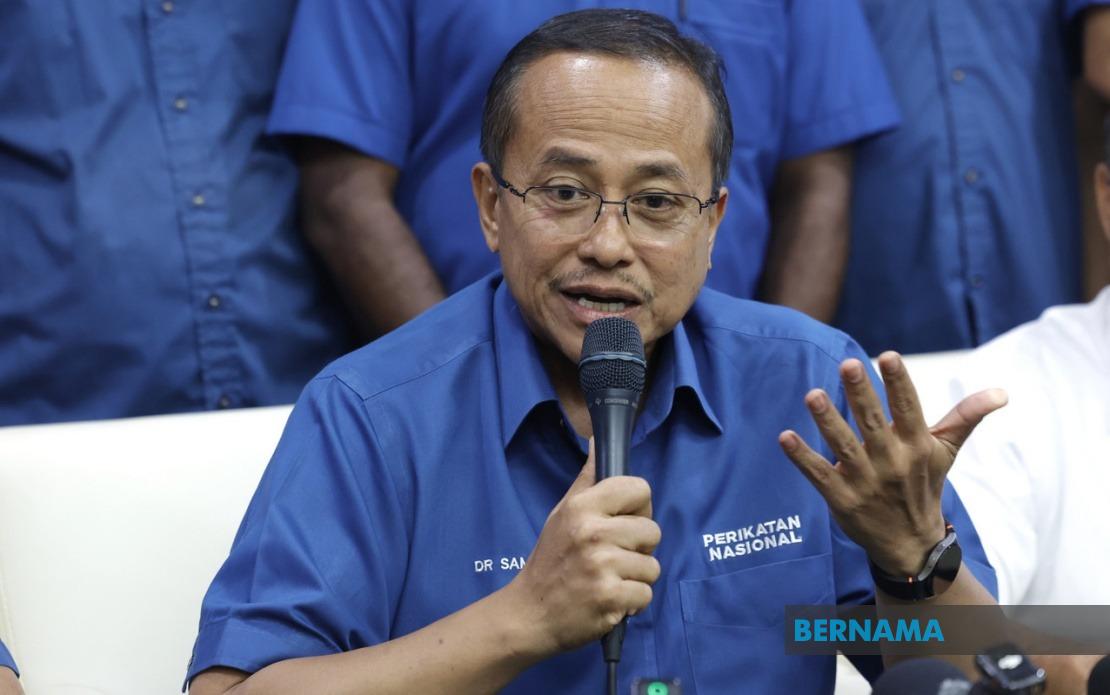
The Perikatan Nasional coalition took a decisive step toward unity in the upcoming Negeri Sembilan state election when its supreme council approved a coordinated seat allocation strategy on July 16. The decision, announced by PN chairman Datuk Seri Dr Ahmad Samsuri Mokhtar at a special meeting in Seremban, represents a formal endorsement of arrangements spanning four coalition partners: PAS, Parti Gerakan Rakyat Malaysia (Gerakan), Parti Bumiputera Perkasa Malaysia (Wawasan), and the Malaysian Indian People Party (MIPP). The council's move reflects an attempt to present a consolidated front in what promises to be a closely contested state battle.
Centrally, the council confirmed that every PN candidate competing in the 16th Negeri Sembilan state election will carry the Perikatan Nasional logo rather than individual party symbols. This branding choice carries strategic weight in Malaysian electoral politics, where coalition logos serve both to unify disparate voter bases and to project a message of coherent governance. By standardising visual identity across candidates from different parties, PN aims to strengthen name recognition and reinforce the impression of a disciplined, coordinated alliance rather than a fragmented collection of separate organisations.
Ahmad Samsuri framed the campaign around three core objectives: advancing the welfare and interests of Negeri Sembilan's residents, accelerating the state's development trajectory, and safeguarding communal harmony within a plural Malaysian context. Such language reflects standard political positioning in multiethnic states, where appeals to shared prosperity and intercommunal stability form the rhetorical foundation for most major coalitions. His emphasis on preserving harmony speaks to Negeri Sembilan's demographics and the historical importance of managing relations among Malay, Chinese, and Indian communities in the state.
The statement from Ahmad Samsuri also served a secondary purpose: addressing an emerging rift within the broader opposition-turned-government movement. He explicitly clarified that all preliminary discussions with partner parties had proceeded under his purview as PN chairman and carried his explicit approval. This assertion of hierarchical control became necessary following statements by Bersatu president Tan Sri Muhyiddin Yassin, who claimed that Bersatu had been excluded from consultations regarding the Negeri Sembilan seat distribution and broader negotiations with Barisan Nasional.
Muhyiddin's position revealed underlying tensions within PN's organisational structure. Bersatu, which historically anchored the Perikatan coalition after its formation, appeared sidelined in planning for the state election despite remaining nominally part of the alliance. Rather than endorse arrangements made without its participation, Bersatu opted for independence, declaring its intention to contest the election under its own party logo. This bifurcation mirrors broader challenges facing Malaysian political coalitions, where organisational egos and competition for influence frequently undermine unified messaging.
The decision by PN to proceed with seat allocations despite Bersatu's non-participation signals confidence in the coalition's viability without that component. It also suggests that PN leadership, particularly Ahmad Samsuri's faction, judged Bersatu's participation as less critical than maintaining the alliance's direction and schedule. Whether this calculation proves sound will become apparent once candidate lists are released and campaigns commence.
For Malaysian political observers, the Negeri Sembilan contest represents a microcosm of larger coalitional dynamics shaping the nation's trajectory. The decision to employ a unified logo, the careful messaging around inclusivity and development, and the handling of Bersatu's separation all reflect how political parties navigate the perpetual tension between maintaining broad alliances and preserving individual organisational identity and influence. States like Negeri Sembilan, with relatively modest voter populations, often serve as testing grounds where coalition architects trial different approaches before deploying them nationally.
The election itself carries significance beyond state boundaries. Negeri Sembilan has historically been contested terrain, with power frequently shifting between coalitions. Its result will provide early signals about voter sentiment regarding the PN-led federal government and broader questions about the viability of existing political alignments. For Perikatan, demonstrating organisational competence and electoral appeal in a state election offers opportunity to build momentum ahead of the next general election cycle.
The seat allocation approved on July 16, though not publicly detailed in full at the announcement, represents the product of negotiations among parties with competing interests and territorial constituencies. PAS, Gerakan, Wawasan, and MIPP each brought demands reflecting their respective bases and strategic positions. Reaching agreement while Bersatu remained external to discussions suggests either strong consensus among the core members or dominant leverage wielded by one or more parties. The distribution's ultimate fairness, efficiency, and electoral wisdom will be evaluated only after results are tallied.
Looking ahead, PN's unified branding strategy in Negeri Sembilan sets a precedent for how the coalition may present itself in future state contests and ultimately at the national level. Should the election yield disappointing results, the decision to centralise identity under a coalition logo may face criticism for obscuring individual parties' roles and contributions. Conversely, a strong PN performance would validate the branding choice and suggest that voters increasingly respond to coalition-level messaging rather than granular party distinctions. Either outcome will inform strategic thinking within Malaysian politics as coalitions continue evolving their structures and approaches.

