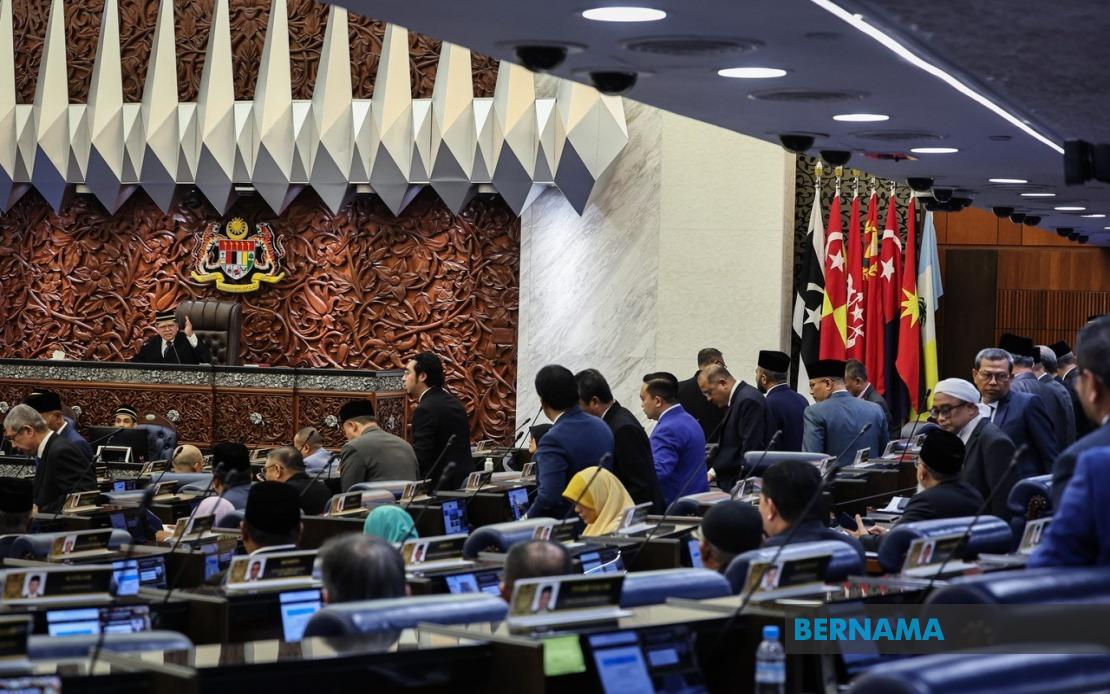
The Prime Minister's non-attendance at parliament's special sitting discussing the Royal Commission of Inquiry findings on Tabung Haji should not prevent legislators from engaging substantively with the issues at stake, according to Tengku Datuk Seri Zafrul Tengku Abdul Aziz, the Senior Political Adviser to the Prime Minister. His remarks came after several Members of Parliament staged a walkout during the August 11 sitting of the Dewan Rakyat, declining to participate in deliberations over the comprehensive RCI report tabled by Minister in the Prime Minister's Department (Religious Affairs) Dr Zulkifli Hasan.
The walkout, which included prominent opposition figures such as Perikatan Nasional Opposition Leader Datuk Seri Hamzah Zainudin, as well as PN chief whip Datuk Seri Takiyuddin Hassan and PN chairman Datuk Seri Dr Samsuri Mokhtar, was widely interpreted as a protest against the government's handling of the Tabung Haji matter. However, Tengku Zafrul's intervention reframed the debate fundamentally, suggesting that those who exited the chamber were failing to discharge their parliamentary duty to scrutinise matters of genuine public concern.
Through a social media post, Tengku Zafrul articulated a sharp distinction between parliamentary procedure and the substantive policy question at hand. He underscored that the debate centred on Tabung Haji itself—an institution holding the accumulated savings of millions of Malaysian Muslims—rather than functioning as a vehicle for attacking or defending the Prime Minister personally. This framing proved significant because it repositioned the boycott as a dereliction of legislative responsibility rather than a legitimate expression of political opposition. In his view, the absence of the Prime Minister from the chamber created no legitimate justification for MPs to absent themselves from their parliamentary obligations.
The substance of Tengku Zafrul's critique rested on a fundamental principle of parliamentary democracy: that legislators must engage with matters affecting their constituents regardless of political theatre or partisan posturing. He posed a rhetorical challenge to those who had departed, asking whether the absence of the chief executive provided acceptable grounds for backbench MPs to disengage from substantive discussion. His language suggested that such disengagement amounted to a dereliction of duty, particularly when citizens' financial interests hung in the balance.
Tengku Zafrul called on MPs to adopt a more constructive approach to parliamentary oversight. Rather than walking out, he argued, legislators possessed multiple tools for holding government accountable: they could pose pointed questions during debate, articulate disagreements openly on the record, and marshal factual evidence to support their criticism. His prescription was direct and unambiguous—if government actions were demonstrably wrong, opposition figures should confront that wrongdoing with evidence rather than resort to symbolic gestures of protest. He acknowledged that disagreement between government and opposition was not merely acceptable but essential to healthy democracy, provided such disagreement was grounded in substance rather than spectacle.
The characterisation of the Tabung Haji matter as a watershed issue in Malaysian economic history underscored the stakes involved. Tengku Zafrul positioned the institution's troubles alongside the most consequential episodes in the development of the Muslim and Malay economy, suggesting that the RCI report represented a defining moment for institutions designed to serve the economic interests of a substantial portion of the Malaysian population. The report itself, a 211-page document released publicly on July 29 following government approval, examined the management and operations of Tabung Haji spanning 2014 to 2020—a period encompassing substantial institutional turbulence.
The institutional complexity of Tabung Haji compounds the significance of parliamentary scrutiny. As a quasi-governmental entity holding the savings and accumulated funds of millions of ordinary Malaysians, the organisation sits at the intersection of religious trust and financial stewardship. The RCI's investigation into this seven-year period presumably identified governance failures, investment missteps, or operational deficiencies that had affected depositors' interests. Against this backdrop, Tengku Zafrul's insistence on serious parliamentary engagement appeared less as a partisan talking point and more as an appeal to legislators to take seriously their fiduciary responsibility toward constituents whose money remained at stake.
The walkout itself reflects broader tensions within Malaysian politics concerning the RCI process and its findings. The decision by Perikatan Nasional to collectively withdraw from the chamber suggested a coordinated political strategy, possibly indicating that PN viewed the RCI report or the government's handling of it as sufficiently problematic to warrant symbolic protest. However, Tengku Zafrul's rebuttal sought to delegitimise such gestures by appealing to a higher principle: that parliamentary engagement serves citizens rather than political parties, and that lawmakers forfeit moral authority when they abandon substantive debate in favour of performative opposition.
For Malaysian readers and observers of parliament, the exchange highlighted persistent tensions within the legislative process. Opposition parties frequently resort to walkouts and boycotts to register protest, arguing that doing so withdraws legitimacy from proceedings they view as unfair or politicised. Government representatives, conversely, characterise such tactics as abdication of responsibility. Tengku Zafrul's framing attempted to transcend this binary by arguing that the stakes—millions of Malaysian Muslims' savings—transcend partisan calculation and demand rigorous, engaged parliamentary scrutiny regardless of which side of the aisle one occupies.
The timing of the special Dewan Rakyat sitting itself merited consideration. The decision to convene parliament to debate the RCI report on Tabung Haji represented an unusual step, suggesting the government recognised the matter's political sensitivity and wished to afford parliament a formal opportunity to examine the findings and hold the administration accountable. By this logic, the opposition's refusal to participate appeared particularly counterintuitive, potentially sacrificing an opportunity to interrogate government performance on a matter directly affecting millions of Malaysians.
Moving forward, the incident raises questions about the nature and limits of legitimate parliamentary protest in Malaysia. While walkouts and boycotts constitute recognised forms of political expression internationally, Tengku Zafrul's intervention suggested that such tactics might carry reputational costs when deployed on matters of substantial public interest. His argument implicitly challenged opposition parties to consider whether symbolic protest served their constituents' long-term interests better than sustained engagement with parliamentary mechanisms designed to scrutinise government action and demand accountability. The coming months may reveal whether this intervention influences opposition behaviour on matters involving substantial public interest, or whether Malaysian parliamentary politics continues along its current trajectory.

