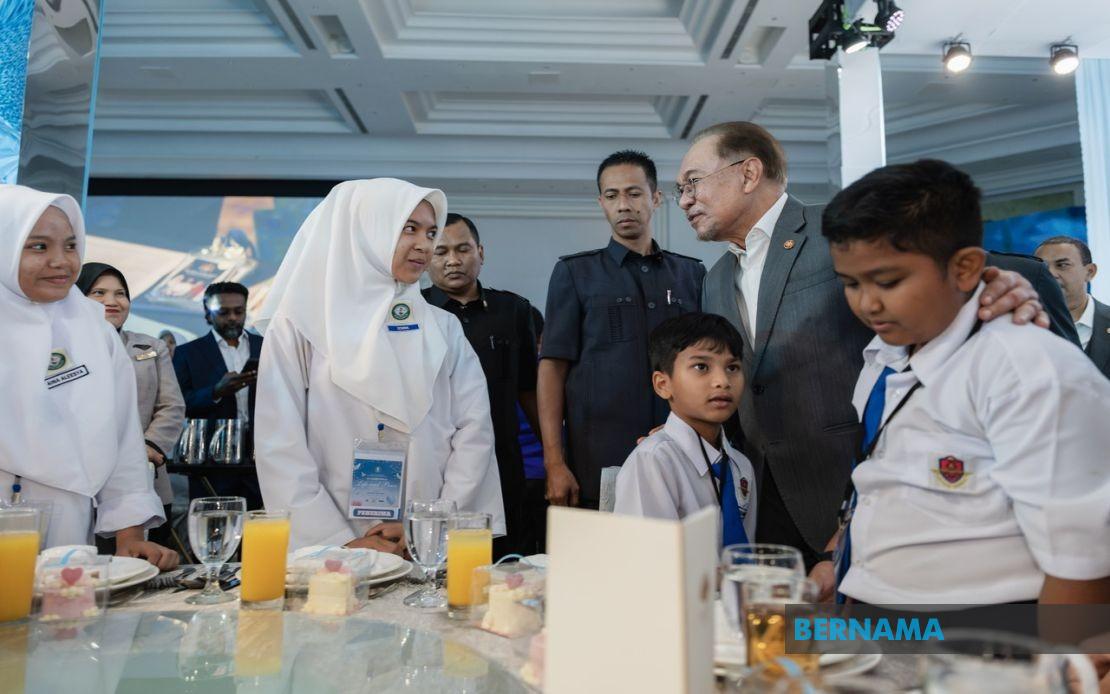
Prime Minister Datuk Seri Anwar Ibrahim has delivered a pointed message to Malaysia's educational community: intellectual prowess divorced from moral development represents a fundamental failure of the schooling system. Speaking at a youth celebration event in Kuala Lumpur, he challenged the prevailing narrative that grades and examination results should dominate how society measures a child's success, arguing instead for a more comprehensive understanding of what it means to prepare young people for productive adulthood.
The Prime Minister's remarks came during the "Celebration of Life and Peace" event, where approximately 700 pupils from 47 schools across Kuala Lumpur and Putrajaya gathered. His intervention signals growing concern within Malaysia's political leadership about the cultural dimensions of education—a shift from purely technocratic approaches toward recognising the role schools must play in shaping citizens' values and interpersonal conduct. The gathering itself exemplified this philosophy, combining celebration with explicit messaging about social responsibility.
Anwar articulated a vision of education that encompasses multiple dimensions of human development. He questioned the purpose of schooling itself, positing that the institution's core mission extends far beyond transmitting academic knowledge. Instead, he framed education as a transformative experience designed to cultivate virtue, foster intellectual capability, and instil respect for authority figures and family structures. This framing reflects a particular understanding of what constitutes meaningful educational outcomes—one that prioritises the formation of character as equally important as the acquisition of skills.
The Prime Minister's specific invocation of bullying behaviour underscores a documented concern within Malaysian schools. Bullying represents not merely a disciplinary issue but a symptom of deeper failures in moral education and peer culture. By highlighting this phenomenon, Anwar implicitly acknowledged that Malaysian schools face a culture of peer harassment that undermines the wellbeing of vulnerable students and creates toxic environments incompatible with genuine learning. His warning that such conduct "jeopardises their future" suggests he views bullying not as a temporary adolescent problem but as a damaging pattern with long-term consequences for perpetrators and victims alike.
The event itself carried symbolic weight beyond the Prime Minister's remarks. Organised by ERM Foundation and timed to celebrate the birthday of the foundation's founder, Xin'er, it created a platform for articulating values around inclusion and dignity. The presence of his wife Datuk Seri Dr Wan Azizah Wan Ismail and political secretary Datuk Azman Abidin indicated this was not a routine administrative function but a deliberate governmental engagement with youth development issues. Each child received RM500 in financial assistance alongside food and entertainment, a gesture emphasising that celebrating milestone moments matters across socioeconomic divides.
Xin'er's remarks provided crucial context for understanding why such events merit prime ministerial participation. She highlighted the reality that many Malaysian children lack opportunities for dignified birthday celebrations due to economic hardship, illness, or other adversities. By assembling hundreds of pupils for a coordinated celebration, the foundation and government effectively made a statement about national commitment to inclusive childhood experiences. Her articulation of hopes for peace, health, and happiness reflected a vision of what childhood should provide—stability, security, and genuine human connection rather than mere material consumption.
The substance of Anwar's message—that intelligence without compassion produces dangerous individuals—addresses a longstanding tension in Malaysian educational philosophy. Colonial-era structures prioritised examination performance, a legacy that persists in contemporary obsession with standardised test results and university entrance metrics. By explicitly critiquing an approach that produces academically proficient but morally underdeveloped individuals, the Prime Minister challenged education stakeholders to reassess their priorities. His rhetorical question—"If we are smart in school but go around disturbing and bullying others... that is not right"—framed the issue as fundamentally about the kind of society Malaysia wishes to build.
For teachers and school administrators, Anwar's intervention carries practical implications. His emphasis on parental and educator responsibility suggests that addressing bullying requires more than administrative policies; it demands deliberate cultivation of alternative peer norms and explicit teaching of respect. The appeal to students themselves—asking them to commit to studying diligently while respecting teachers and honouring parents—reframes anti-bullying initiatives as part of broader character development rather than mere disciplinary enforcement.
The timing of these remarks within Malaysia's broader educational discourse matters considerably. The nation continues grappling with questions about how to modernise curricula while maintaining cultural and moral anchoring. Anwar's emphasis on respect for parents and teachers reflects values deeply rooted in Malaysian and broader Asian philosophical traditions, yet his focus on creating genuinely kind individuals extends beyond mere compliance with authority. This synthesis suggests an educational vision that respects traditional values while insisting they manifest through authentic concern for others' wellbeing.
Regionally, Malaysia's approach to youth development attracts attention from neighbouring countries facing similar challenges with school bullying and the pressure to produce high-achieving but sometimes emotionally underdeveloped students. The integration of celebration, material support, and explicit moral messaging in this event offers a model of how governments might engage constructively with youth without reducing interaction to either surveillance or purely economic transactions.
The broader implications extend into how Malaysia positions itself internationally. Emphasising education for character and compassion—alongside intellectual development—reflects aspirations toward becoming a nation defined not merely by economic competitiveness but by social cohesion and mutual respect. For Malaysian parents and educators, the Prime Minister's message reinforces that report cards represent only partial measures of educational success, and that schools bear responsibility for nurturing the human qualities that sustain functioning societies.

