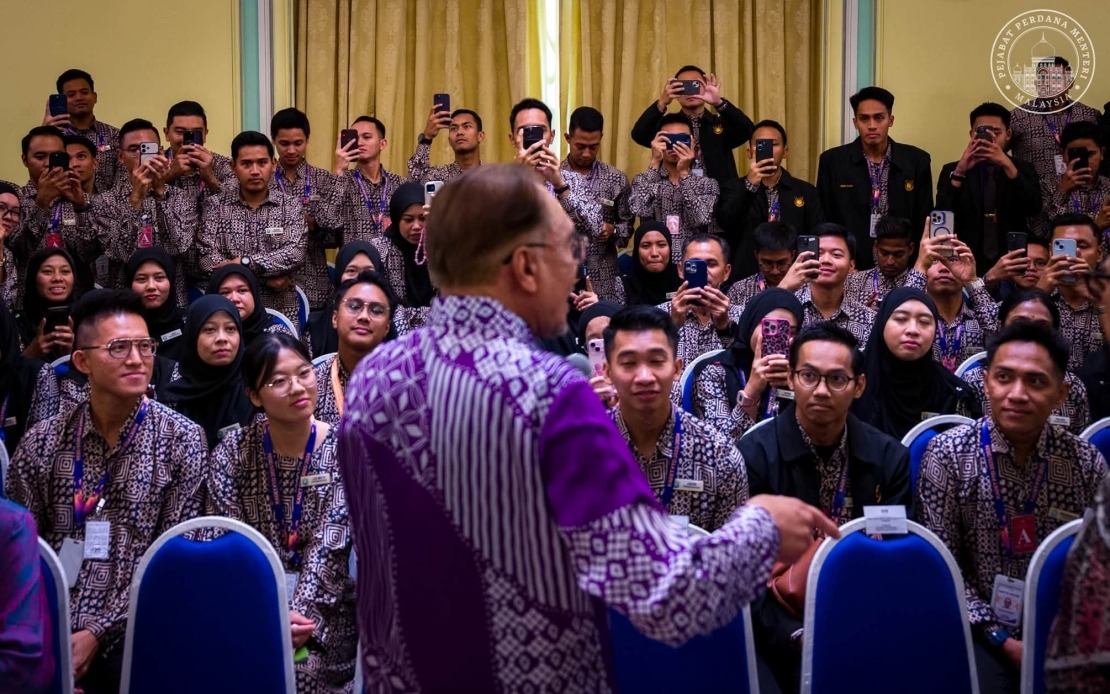
Prime Minister Datuk Seri Anwar Ibrahim has delivered a pointed message to Malaysia's public sector workforce, emphasising that effective civil service requires a delicate equilibrium between openness to transformation and steadfast adherence to moral principles. Speaking during an engagement with Administrative and Diplomatic Service (PTD) officer cadets enrolled in the Postgraduate Diploma in Public Management programme at his Putrajaya office, Anwar stressed that these twin pillars—institutional reform and personal integrity—form the foundation upon which a modernised bureaucracy must be built.
The Prime Minister's remarks arrive at a critical juncture for Malaysia's civil service, which faces mounting pressure to deliver efficiency gains while simultaneously tackling longstanding concerns about governance standards. Anwar's direct address to PTD cadets signals the administration's recognition that the next generation of senior officials will be tasked with navigating this complex terrain. These officers, currently pursuing advanced qualifications in public management, represent the cohort expected to lead transformational initiatives across government departments and agencies in the coming decades.
Anwar articulated his vision through a social media statement, underscoring that public sector employees bear a fundamental responsibility extending far beyond routine administrative functions. The integrity he referenced encompasses not merely compliance with existing rules, but a proactive commitment to ethical decision-making even when such choices prove politically inconvenient or professionally challenging. This framing distinguishes between passive adherence to regulations and the active moral leadership required of officials shaping policy and allocating public resources.
The emphasis on efficiency carries particular weight given Malaysia's competitive positioning within Southeast Asia. Regional economies increasingly compete for investment and talent by demonstrating institutional capacity and decisiveness in service delivery. When government agencies respond sluggishly to applications, process permits inefficiently, or delay infrastructure approvals, the costs ripple throughout the economy. Anwar's reminder thus addresses not merely internal governmental concerns but the broader economic implications of bureaucratic performance.
Crucially, the Prime Minister framed institutional change not as a departure from established values but as their logical extension. By positioning the courage to embrace transformation alongside integrity, Anwar rejected a false dichotomy sometimes presented in public discourse—the notion that reform inherently threatens ethical standards or that principled governance necessarily resists innovation. Instead, he proposed that truly capable public servants must simultaneously respect institutional continuity and drive necessary modernisation.
The reference to placing national and popular interests above institutional self-preservation strikes at a perennial challenge facing the Malaysian bureaucracy. Departmental rivalries, territorial defensiveness, and resistance to cross-agency collaboration have historically hampered coordinated policymaking. When officials prioritise their agency's standing or their own career advancement over genuine public benefit, policy fragmentation and inefficiency follow. Anwar's appeal to a higher allegiance invokes the foundational social contract underlying public service—that state employees are trustees of collective resources and interests.
The choice to address this message specifically to PTD cadets rather than current senior officials carries strategic significance. Existing high-ranking bureaucrats have established working relationships, institutional loyalties, and entrenched approaches developed over decades. Attempting to redirect their orientation risks triggering defensive reactions and minimal behavioural change. By cultivating the desired mindset among future leaders at the formative stage of their postgraduate education, the administration invests in generational shift that may prove more durable than top-down directives aimed at experienced officials.
Malaysia's civil service operates within a global context where governmental efficiency increasingly determines national competitiveness. Countries that streamline licensing procedures, digitise service delivery, and reduce corruption attract investment and talent. Conversely, nations where bureaucratic obstacles remain high and governance standards slip lose out in competition for the resources and expertise driving economic growth. Anwar's remarks should be understood partly as an appeal to Malaysian officials to perform at standards expected by multinational corporations, foreign investors, and international talent pools evaluating where to commit their assets.
The timing of these comments reflects broader reform efforts undertaken by the current administration. Since taking office, Anwar's government has signalled intentions to address governance issues through institutional restructuring and personnel changes. His appeal to civil servants combines this structural approach with calls for individual moral recommitment. Together, these strategies aim to create conditions where institutional incentives align with ethical behaviour, and where ambitious officials find their advancement tied to genuine performance improvements rather than political connections alone.
Moreover, the Prime Minister's invocation of "good governance" as prerequisite for a "more progressive, just and prosperous Malaysia" links immediate civil service conduct to long-term national development outcomes. This framing helps officials understand that their daily decisions—how they treat applicants, whether they take shortcuts, whether they speak up against impropriety—collectively determine whether Malaysia's governance institutions function as engines of prosperity or obstacles to it. By connecting individual integrity to national prosperity, Anwar attempts to elevate public sector work beyond mere employment into a form of patriotic contribution.
The Postgraduate Diploma in Public Management programme through which the PTD cadets are upskilling represents the administration's confidence in evidence-based, professionally trained governance. These officers will return to their agencies equipped with contemporary management frameworks, understanding of international best practices, and networks connecting them to peers undergoing similar training. When Anwar appeals to their integrity and openness to change simultaneously, he addresses officials equipped with both the knowledge and networks to drive genuine institutional reform.
Looking forward, the success of these interventions will be measured not through immediate changes in bureaucratic procedures, but through gradually accumulating shifts in how Malaysian civil servants approach their work. Whether the balance Anwar advocates—between principled stability and purposeful transformation—becomes embedded in institutional culture remains to be seen. Yet his direct engagement with the next generation of senior officials signals that reaching this balance ranks among the administration's central governance priorities.

