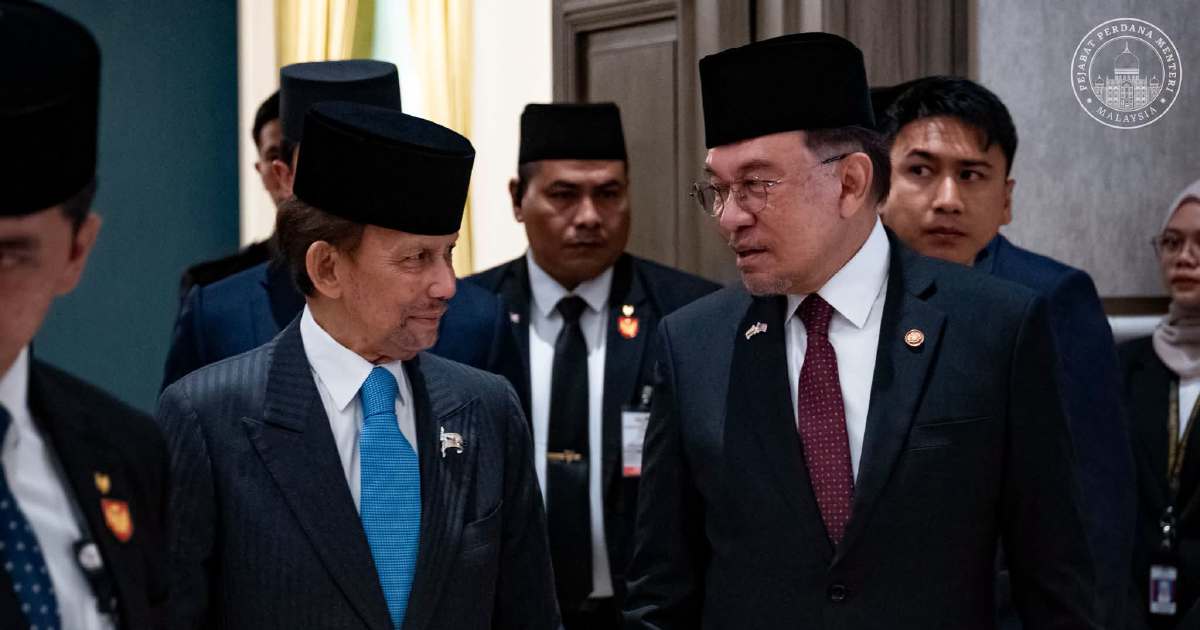
Prime Minister Datuk Seri Anwar Ibrahim is set to undertake an official visit to Brunei Darussalam next week, where he will hold bilateral consultations with Sultan Hassanal Bolkiah in Bandar Seri Begawan. The meeting represents the 27th edition of the Annual Leaders' Consultation, a formal mechanism that underscores the enduring diplomatic relationship between Malaysia and its smaller neighbour across the South China Sea.
The Annual Leaders' Consultation format serves as a cornerstone of Malaysia-Brunei ties, providing a structured platform for the two nations' top leadership to address matters of mutual concern and chart the course of bilateral cooperation. Such high-level engagements are particularly significant in Southeast Asia, where personalised diplomacy between heads of government often proves instrumental in resolving disputes, coordinating regional positions, and deepening economic partnerships. The regularity of these consultations, now spanning nearly three decades, speaks to the commitment both countries have maintained towards nurturing stable and productive relations.
Brunei's geostrategic position and its role as the chair of ASEAN in 2024 add particular weight to Anwar's forthcoming visit. As an influential voice within the regional bloc, Brunei's perspectives on key issues ranging from maritime security to economic integration carry significance beyond its size. The timing of this consultation presents an opportunity for Malaysia to coordinate positions on pressing regional matters and to strengthen bilateral collaboration on issues of shared interest, particularly in economic cooperation and regional stability.
The consultation framework typically encompasses discussions on trade and investment, security cooperation, and alignment on ASEAN-related matters. Malaysia and Brunei share common maritime borders and have longstanding economic ties, though trade volumes remain modest compared to Malaysia's engagements with larger neighbours. The bilateral relationship, while generally cordial, requires consistent high-level attention to ensure that minor tensions do not escalate and that opportunities for deeper integration are fully explored and exploited.
Economic dimensions are likely to feature prominently in Anwar's discussions with Sultan Hassanal Bolkiah. Both nations have expressed interest in enhancing trade connectivity and facilitating cross-border investments, yet practical implementation often lags behind political rhetoric. The visit offers a chance to accelerate pending projects and to identify new areas where Malaysian expertise and Brunei's resources might be complementary, particularly in energy, finance, and tourism sectors that could benefit both economies.
On the regional stage, Malaysia and Brunei find themselves navigating complex geopolitical dynamics in Southeast Asia. The South China Sea remains a point of potential friction, with overlapping claims and increased military presence from external powers shaping the strategic environment. Malaysia's approach to these challenges, articulated through ASEAN frameworks and bilateral dialogues, benefits from alignment with regional partners such as Brunei. Anwar's consultation with the Sultan provides an avenue for coordinating responses to regional security challenges and for reinforcing ASEAN's collective voice in managing great power competition.
The diplomatic protocol surrounding the Annual Leaders' Consultation reflects the importance both governments accord to their relationship. Such formal mechanisms, while sometimes appearing ceremonial to outsiders, serve vital functions in maintaining channels of communication and in demonstrating commitment to peaceful, structured engagement. In an era when misunderstandings can quickly escalate into crises, these regularised forums provide breathing room for leaders to discuss issues candidly and to find solutions before problems become entrenched.
For Malaysian audiences, the significance of this visit lies partly in what it represents about regional positioning. As ASEAN members navigate an increasingly multipolar world, the strength and coherence of intra-ASEAN relationships become more valuable. Brunei's relatively low profile in international affairs does not diminish its importance within regional structures, and Malaysia's consistent engagement at the leadership level sends a signal that all ASEAN members, regardless of size or economic clout, warrant serious diplomatic attention. This approach reinforces the principle of equality and consensus that underpins the ASEAN way.
The 27th iteration of these consultations also marks a continuity that deserves recognition. Few bilateral relationships in Southeast Asia have maintained such regular, high-level engagement over such an extended period. While the consultations may not always generate headline-grabbing announcements, their very existence and regularity contribute to regional stability and predictability. They provide a mechanism through which small differences can be managed before they threaten the broader relationship, and through which emerging opportunities can be identified and developed systematically.
Looking forward, Anwar's visit should be viewed as part of a broader strategy of deepening Malaysia's relationships with immediate neighbours and of reinforcing ASEAN cohesion during a period of external pressure and internal disagreements on various issues. The consultation with Sultan Hassanal Bolkiah offers an opportunity to reaffirm shared values and to discuss how Malaysia and Brunei might work together to address challenges ranging from climate change to cybersecurity that increasingly require regional cooperation. By investing in these bilateral foundations, Malaysia strengthens not only its ties with Brunei but also its standing within the broader ASEAN community.

