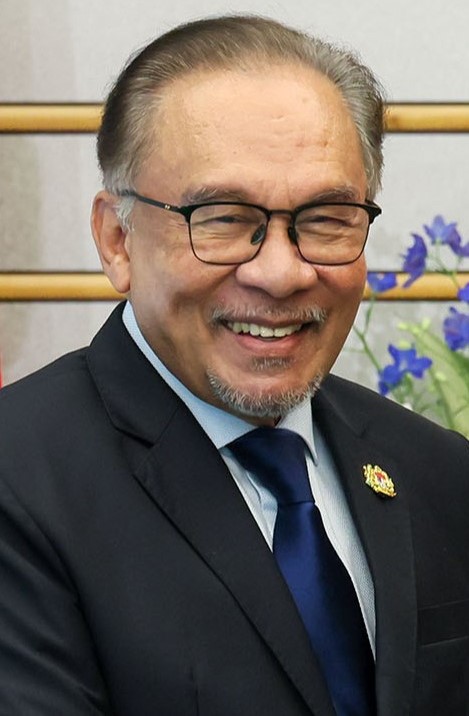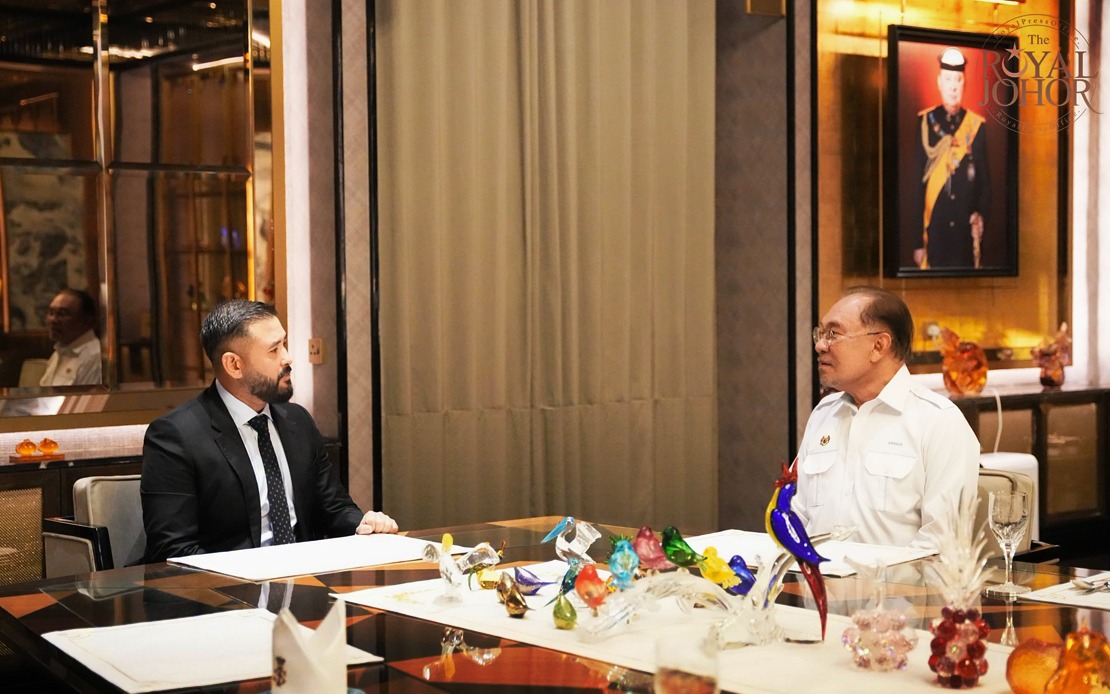
Prime Minister Datuk Seri Anwar Ibrahim has publicly thanked the Regent of Johor, Tunku Mahkota Ismail, for meeting with him, presenting the encounter as evidence of the government's respectful relationship with the monarchy and as a rebuke to what he characterised as petty political attacks. Speaking at a Pakatan Harapan candidate announcement ceremony in Tangkak for the 16th Johor state election, Anwar framed the meeting as a straightforward gesture of goodwill that demonstrated the impropriety of invoking royal names in electoral contests.
The Prime Minister seized the opportunity to criticise political opponents who he suggested were quick to leverage references to the monarchy in their campaigns despite lacking the courage for substantive political engagement. He noted that accepting the Regent's invitation to meet demonstrated a commitment to institutional propriety, implicitly contrasting his approach with what he implied were the tactics of others. Anwar's comments reflected a broader tension in Malaysian politics regarding the boundaries between the monarchy's constitutional role and electoral competition, a distinction he sought to underscore through his public acknowledgement of the meeting.
During the audience with Tunku Mahkota Ismail, Anwar explained that he had used the platform to detail federal government development initiatives undertaken for Johor's benefit under his administration. This emphasis on substantive governance updates suggests the meeting served both ceremonial and informational functions, allowing the Prime Minister to update the state's leadership on national projects affecting the region while simultaneously demonstrating the government's deference to royal institutions. The choice to highlight these policy discussions rather than merely the social courtesies involved underscores Anwar's effort to position such engagement as part of normal executive-monarchical relations.
The Pakatan Harapan coalition, which includes DAP and Amanah alongside the Prime Minister's own PKR, presented a united front at the event, with DAP secretary-general Anthony Loke Siew Fook and Amanah president Datuk Seri Mohamad Sabu both in attendance. This gathering of senior opposition-turned-government figures at the candidate announcement reflected the coalition's consolidation around electoral strategy for Johor, a state that remains politically significant despite not holding majority Malay-Muslim demographics compared to other peninsular states. The assembled leadership telegraphed internal cohesion as the coalition prepares to defend its federal position while advancing state-level contests.
Anwar articulated a philosophy of constructive engagement with Malaysia's sultans that acknowledges both agreement and disagreement as normal features of a functioning constitutional monarchy. He described a pattern of consultation, exchange of perspectives, and receptiveness to royal counsel that he positioned as distinguishing his government's approach from that of predecessors. By framing disagreement as compatible with respect and deference, Anwar sought to establish that principled governance does not require unanimous alignment with every royal position, while maintaining institutional dignity and the consultative tradition.
The Prime Minister extended this framework to describe his relationship with Sultan Ibrahim, Malaysia's current King, characterising their dynamic as one in which both parties exchange views, offer counter-perspectives, and ultimately accept advice offered in good faith. This articulation of give-and-take reflected an attempt to normalise the idea that constitutional executives may respectfully differ with the monarchy on policy matters while remaining committed to the institution itself. For Malaysian readers accustomed to discussions of royal prerogative and executive authority, Anwar's language suggested a model of constitutional partnership rather than subordination.
Anwar's explicit prohibition on political parties involving the royal institution in election campaigns represented a direct challenge to existing practices in Malaysian politics, where references to royal endorsement or favour are common currency in electoral rhetoric. His insistence that such invocation was incompatible with serious politics carried implications for how the coalition would differentiate itself from competitors in the Johor contest and potentially in any future national electoral competition. The statement effectively positioned Pakatan Harapan as the guardian of institutional propriety against opponents allegedly willing to exploit royal names for narrow partisan advantage.
For Johor specifically, Anwar's emphasis on the Johor Sultan's involvement in federal consultation and the Regent's meeting suggested a government narrative of partnership with state-level royalty on development matters. In a state where the royal house wields significant cultural and political influence, this framing could help establish the federal government as respectful of local prerogatives while advancing its own agenda. The implicit contrast between consultation and co-optation became crucial to Anwar's political positioning as the Johor state election approached.
The episode also illuminated broader Southeast Asian patterns in which elected governments navigate relationships with constitutional monarchies or hereditary institutions. Malaysia's model, which reserves significant ceremonial and advisory roles for the sultans while vesting executive power in elected officials, creates recurring tension that political leaders must manage carefully. Anwar's approach suggested awareness that dismissing royal input invites accusations of authoritarianism, while over-deference to every royal position can undermine democratic decision-making. His invocation of consultation without subordination offered a middle path, though one whose practical boundaries remained contested among Malaysia's competing political factions.