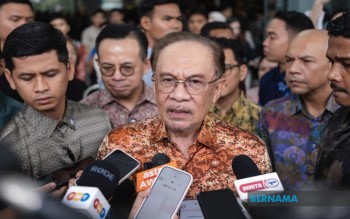
Prime Minister Datuk Seri Anwar Ibrahim has drawn a clear line on consumption tax policy, categorically ruling out a return to the Goods and Services Tax despite ongoing government discussions about reforming Malaysia's tax regime. Speaking after officiating the TikTok Shop Summit 2026 in Kuala Lumpur, Anwar, who also holds the Finance portfolio, emphasised that the fundamental architecture of GST remains incompatible with the MADANI government's commitment to protecting lower-income households from additional fiscal burdens.
The pronouncement comes amid broader deliberations within government circles about modernising Malaysia's consumption tax framework. Earlier statements from the administration had indicated a willingness to explore potential reforms, including the possibility of reintroducing elements of a broad-based consumption tax to enhance revenue collection and meet fiscal consolidation objectives. Such proposals have circulated widely in policy discussions, with various stakeholders advocating for mechanisms ranging from levies on digital payment transactions to wholesale reintroduction of GST architecture.
Anwar's distinction between the core principles of GST and tactical modifications to the existing Sales and Service Tax framework reveals a nuanced position on the tax question. While he categorically rejected the foundational concept of GST—a broad-based levy applied universally across the population—the Prime Minister explicitly acknowledged government flexibility regarding the current SST system. This openness to SST adjustments signals that incremental improvements to implementation, efficiency, and coverage remain on the table for consideration, even as the option of wholesale tax regime change is taken off the agenda.
The political sensitivity surrounding consumption tax arrangements in Malaysia runs deep. The country shifted away from GST in 2018, replacing it with the dual-pillar SST framework amid considerable public opposition focused on cost-of-living pressures. That transition represented a significant policy reversal following widespread complaints that GST had disproportionately affected ordinary Malaysian families struggling with inflation and affordability challenges. The move reflected broader political recognition that broad-based consumption taxes, however economically efficient, carry substantial political risk when implemented in a context of already-strained household finances.
Anwar's emphasis on protecting the poorest segments of the population from additional taxation underscores a core philosophical commitment of the MADANI administration. By explicitly tying the rejection of GST to its regressive nature—its impact on citizens across all income brackets, particularly those with the least capacity to absorb additional expenses—the Prime Minister articulated a distributional priority that distinguishes current government thinking from previous approaches to tax policy. This framing suggests that future tax reforms, whether on consumption or other bases, will be evaluated primarily through the lens of impact on lower-income households.
The government's exploration of alternative revenue-raising mechanisms reflects genuine fiscal pressures facing the Malaysian state. Mounting expenditure commitments, infrastructure investment needs, and social programme obligations create persistent pressure on the revenue side of the budget equation. Yet the categorical rejection of GST indicates that policymakers view any new revenue sources as necessarily constrained by distributional considerations. This constraint potentially limits the quantum of additional tax revenue available from consumption-based mechanisms and may push the government toward exploring alternative approaches, including improved tax administration, broadened tax bases within existing frameworks, or targeted levies on specific high-value transactions or activities.
The SST regime itself, comprising a service tax and sales tax operating in parallel, has functioned as Malaysia's primary consumption tax instrument for nearly a decade. While administratively distinct from GST, SST nevertheless generates significant revenue and imposes compliance costs on businesses. Anwar's openness to SST adjustments likely encompasses potential reforms to rates, thresholds, coverage, or administrative procedures aimed at enhancing both revenue yield and operational efficiency. Such modifications could include expanded sectoral coverage, streamlined registration thresholds, improved compliance mechanisms, or targeted rate adjustments designed to balance revenue objectives with distributional equity concerns.
The political economy of tax policy in Malaysia increasingly reflects a tension between fiscal consolidation imperatives and electoral constraints around cost-of-living issues. The government faces pressure to manage public debt and fiscal deficits while simultaneously maintaining or improving social transfers and managing public expectations about service quality. This tension cannot be resolved through consumption taxation alone, particularly when such taxation is constrained by distributional concerns. Consequently, policymakers must balance competing objectives through careful calibration of multiple policy instruments and through sequencing reforms in ways that maintain public acceptance.
For Malaysian businesses and investors, Anwar's positioning offers both clarity and uncertainty. The definitive rejection of GST removes one potential source of future regulatory upheaval, allowing companies to plan around a stable consumption tax architecture for the foreseeable future. However, the simultaneous indication of potential SST adjustments introduces scope for future modifications that could affect business operations and compliance obligations. The timing and nature of any SST reforms remain unclear, though the government appears committed to consulting with stakeholders and implementing changes in ways that enhance rather than undermine economic efficiency.
Regionally, Malaysia's consumption tax trajectory carries implications for Southeast Asian tax policy debates. As regional economies grapple with similar pressures around revenue adequacy and distributional fairness, Malaysia's experience with GST introduction and subsequent reversal offers instructive lessons about the political constraints surrounding broad-based consumption taxation. The apparent durability of SST and rejection of GST suggest that regional policymakers considering consumption tax reforms must account carefully for public acceptance, particularly among lower-income constituencies who bear the heaviest burden from such levies.
The government's approach also reflects evolving thinking about progressive taxation in Malaysia. Rather than viewing consumption taxes purely through an economic efficiency lens, the MADANI administration appears to emphasise distributional consequences and social acceptability. This represents a meaningful shift from purely technocratic policy development toward frameworks that integrate social and political considerations into tax design. The practical implications remain to be seen, but the direction is clear: future tax policy will prioritise protecting lower-income households from additional burdens, even if this constrains certain revenue-raising options or requires alternative approaches to fiscal consolidation.

