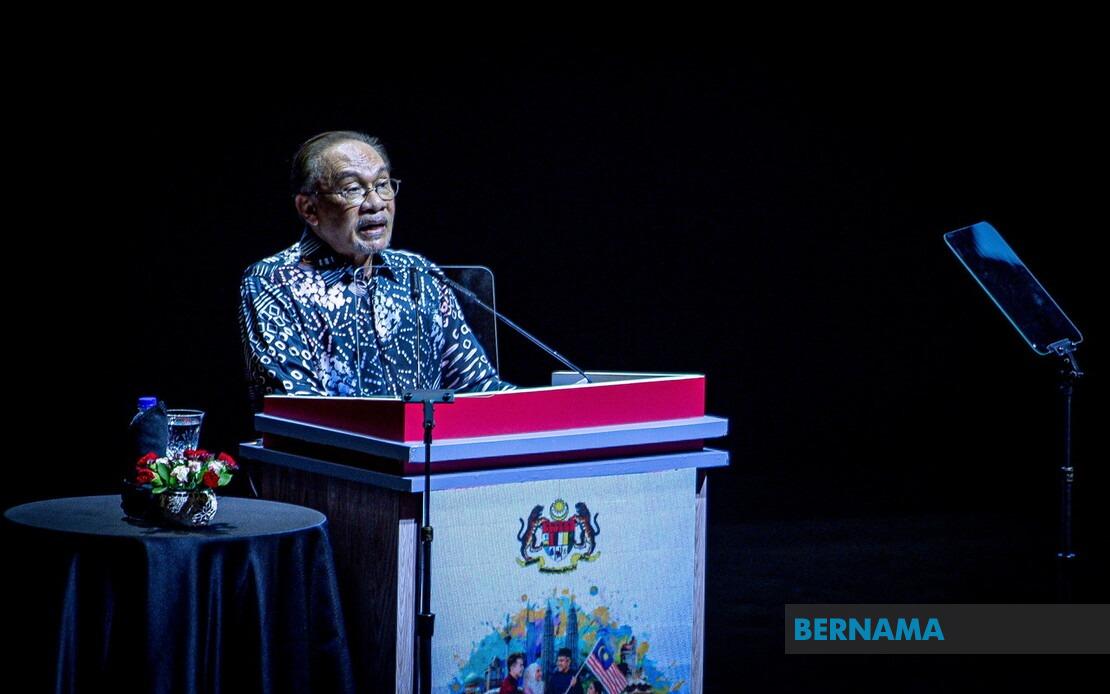
Prime Minister Datuk Seri Anwar Ibrahim has unveiled a six-pronged package of immediate measures designed to provide relief from the mounting pressures of daily living, with all initiatives set to commence on September 1. The announcement, delivered during the 2026 National Day Prime Minister's Address at Putrajaya International Convention Centre, targets critical areas affecting household budgets including fuel subsidies, school maintenance allocations, artificial intelligence deployment, healthcare digitalisation infrastructure, e-Invoicing systems, and microfinancing accessibility. The timing reflects the government's recognition that inflation and cost pressures continue to weigh heavily on Malaysian families despite previous interventions.
Addressing an audience that included Deputy Prime Minister Datuk Seri Dr Ahmad Zahid Hamidi, Communications Minister Datuk Seri Fahmi Fadzil, and senior cabinet colleagues, Anwar acknowledged that existing policies have not fully resolved the economic hardships facing ordinary Malaysians. His candid assessment represents a significant political moment, as the Prime Minister directly confronted scepticism about government effectiveness in tackling affordability challenges that have dominated public discourse throughout his administration. Rather than claiming victory over cost pressures, Anwar framed the new measures as components of an ongoing commitment to address persistent citizen concerns, signalling that policymakers understand the urgency of the situation.
The fuel subsidy element addresses one of the most immediate household expenses, as transportation costs ripple through the broader economy and directly impact food prices and service charges. By maintaining or adjusting fuel support mechanisms, the government seeks to prevent sudden shocks to consumer prices at the pump and in supply chains. For Malaysia's transport-dependent economy, fuel price stability remains crucial to maintaining business confidence and preventing inflationary spirals that disproportionately harm low-income households.
School maintenance provisions target the educational infrastructure that serves millions of families, recognising that facility quality and functionality directly affect student learning outcomes and parent confidence in the public education system. Adequate maintenance funding prevents costly emergency repairs that disrupt academic calendars and protects investments in school facilities. This measure particularly benefits families with children in government schools, a significant demographic across Malaysia's urban and rural communities.
The inclusion of artificial intelligence and healthcare digitalisation reflects the government's dual focus on modernisation and accessibility. Deploying AI systems can streamline administrative processes, reduce bureaucratic inefficiencies, and improve service delivery speed across government agencies. Healthcare digitalisation promises to reduce out-of-pocket costs through more efficient medical record management, reduced redundant testing, and improved prescription tracking—benefits that accumulate particularly for chronic disease patients requiring frequent medical visits.
E-Invoicing implementation aims to reduce compliance costs for small and medium enterprises by streamlining tax administration and reducing paperwork burdens. When businesses operate more efficiently, cost savings can theoretically flow through supply chains to consumers, though the relationship between corporate efficiency and retail pricing remains contested among economists. The measure demonstrates the government's recognition that cost-of-living pressures extend beyond consumer prices to encompass business operating costs that ultimately affect employment and economic growth.
Microfinancing expansion addresses credit accessibility for low-income Malaysians and small entrepreneurs who struggle to access traditional banking services. Many individuals and small business operators face prohibitive interest rates or documentation requirements that exclude them from conventional lending, forcing reliance on informal credit sources with predatory terms. Improved microfinance availability can enable productive investment, job creation, and entrepreneurial activity among underserved populations, generating broader economic benefits beyond immediate relief.
The September 1 implementation date carries symbolic significance as a launch point following National Day celebrations, positioning these measures as patriotic efforts to strengthen national prosperity and citizen welfare. From a Malaysian perspective, the package reflects the government's attempt to balance macroeconomic stability with social protection—a perennial challenge for policymakers managing inflation expectations while protecting vulnerable populations from price shocks.
The announcement's emphasis on temporary relief language suggests these measures may represent interim steps pending longer-term structural reforms. This framing manages expectations among citizens while acknowledging that sustained affordability improvements require deeper policy adjustments beyond immediate intervention. For Southeast Asian observers, Malaysia's approach demonstrates how regional governments attempt to navigate the tension between inflation management and social stability, a challenge affecting multiple economies across the region.
Stakeholders will closely monitor implementation effectiveness during the initial months, as execution often determines whether policy announcements translate into genuine household relief. The measures' success depends on coordinated effort across multiple government agencies, adequate funding allocation, and responsive adjustment based on early performance data. For Malaysian citizens already stretched by cost pressures, the September 1 launch date marks a concrete point where announced intentions must materialise into measurable assistance.

