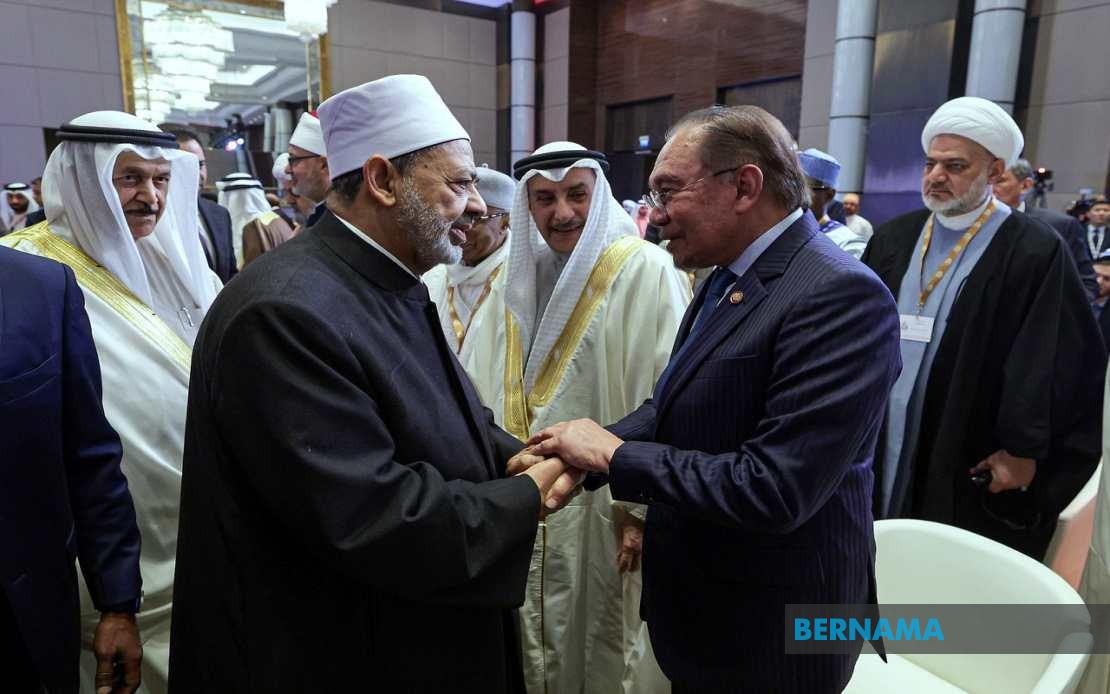
Prime Minister Datuk Seri Anwar Ibrahim has publicly commended Prof Dr Ahmad Muhammad Ahmad Al-Tayyeb, the Grand Imam of Al-Azhar Al-Sharif, as a pivotal voice in promoting wasatiyyah—the Islamic principle of moderation—at a time when the Muslim world faces mounting pressures to take increasingly polarized stances on contemporary matters. In a contribution to a recently published biographical work marking Al-Tayyeb's 80th birthday, Anwar characterised the distinguished scholar as instrumental in advancing a more nuanced approach to faith and governance that transcends narrow institutional interests.
The Prime Minister's endorsement carries particular significance for Malaysia's multicultural context, where the government has consistently positioned itself as a champion of moderate Islam within the global Islamic discourse. By specifically highlighting Al-Tayyeb's advocacy for strengthening bonds across the Muslim community through compassion, mutual respect, and love, Anwar appears to be reinforcing his administration's commitment to an inclusive interpretation of Islamic values. This framing positions Malaysia alongside other Muslim-majority nations that view religious moderation not as a dilution of faith, but rather as its fullest expression in diverse, pluralistic societies.
A key pillar of Anwar's remarks centred on Al-Tayyeb's tireless efforts to nurture harmonious relationships between Muslims and non-Muslims. The Prime Minister emphasised that despite approaching his ninth decade, the Al-Azhar leader continues to engage with pressing global issues that demand nuanced religious leadership. This active engagement across interfaith boundaries has become increasingly important as tensions in various regions threaten to widen sectarian divides and undermine efforts towards peaceful coexistence. For Malaysia—a nation where roughly 70 per cent of the population identifies as Muslim while significant Christian, Buddhist, Hindu, and other faith communities thrive—such leadership provides a template for navigating religious plurality without compromising doctrinal integrity.
Among Al-Tayyeb's most notable contributions to interfaith relations is his role in drafting and signing the Human Fraternity Document with Pope Francis in Abu Dhabi in 2019. This landmark accord represents one of the most comprehensive statements of common ground between Islam and Christianity in contemporary times, emphasising shared values of dignity, compassion, and brotherhood. Anwar spotlighted this achievement as evidence that genuine interfaith harmony is achievable when religious leaders prioritise universal human principles while remaining grounded in their respective traditions. The document's message—that believers of different faiths should regard one another as brothers and sisters deserving of love, support, and respect—directly echoes themes that Malaysia's leadership has long championed, particularly under Anwar's stewardship.
The biography itself, published by the Muslim Council of Elders to mark Al-Tayyeb's milestone birthday, features testimonials from religious authorities and international thought leaders, underscoring the Grand Imam's global standing as a bridge-builder and intellectual force within Islam. Rather than merely defending Islamic positions through rhetoric, Anwar observed, Al-Tayyeb embodies these principles through his scholarly work, personal conduct, and demonstrated commitment to wisdom-based problem solving. This distinction between rhetoric and practice is crucial in an era when populist political movements often exploit religious grievances, and when authentic religious leadership is increasingly difficult to identify amid competing claims to Islamic authority.
The concept of wasatiyyah, central to both Al-Tayyeb's philosophy and Anwar's framing, deserves deeper examination in the Malaysian context. Unlike caricatures of Islamic moderation as mere appeasement or watering down of conviction, wasatiyyah represents a principled middle path that acknowledges complexity, respects human dignity, and eschews extremism in both interpretation and method. For Malaysian policymakers and religious scholars, this framework offers intellectual legitimacy for approaches that might otherwise be dismissed as insufficiently Islamic by more rigid ideological competitors. By associating his government with figures like Al-Tayyeb, Anwar strengthens the domestic position of moderate Islamic voices against those who view compromise or interfaith engagement as betrayals of faith.
Geopolitically, Anwar's emphasis on Al-Tayyeb's contributions reflects Malaysia's strategic interests in maintaining influence within Organisation of Islamic Cooperation (OIC) spaces and broader Muslim-majority network diplomacy. Egypt, home to Al-Azhar, remains a significant player in regional politics, and the university's theological positions shape Islamic thought across Africa, the Middle East, and beyond. By publicly aligning himself with Al-Tayyeb's vision, Anwar signals Malaysia's commitment to a particular strand of Islamic leadership—one that values scholarship, interfaith dialogue, and peaceful problem-solving over confrontational posturing. This positioning may enhance Malaysia's soft power in intra-Muslim discussions about the faith's future trajectory.
The timing of Anwar's remarks also merits consideration within domestic Malaysian political dynamics. The Prime Minister's government has faced criticism from conservative religious constituencies who view certain policies—whether related to LGBTQ+ rights, secular law, or interfaith initiatives—as insufficiently Islamic. By repeatedly invoking respected global Islamic figures like Al-Tayyeb who champion moderation, Anwar constructs a protective intellectual fortress around his government's approach. It demonstrates that moderate Islam enjoys substantial support among prestigious international Islamic scholars and institutions, potentially neutralising claims that his administration has abandoned Islamic principles.
Looking forward, the implications of this discourse extend beyond ceremonial appreciation. Anwar's framing of Al-Tayyeb as a model suggests potential future policy directions for Malaysia, particularly in religious education, interfaith council initiatives, and how Islam is presented in international forums. Should Malaysia seek to deepen institutional ties with Al-Azhar—whether through student exchange programmes, scholarly collaborations, or theological consultation—such groundwork would prove invaluable. The emphasis on wasatiyyah as a coherent, intellectually rigorous framework also provides linguistic and conceptual tools for Malaysian religious leaders seeking to articulate positions that balance traditional Islamic commitments with contemporary pluralistic realities.
Ultimately, Anwar's commendation of Al-Tayyeb reflects the Prime Minister's vision of Malaysia as a nation where Islamic leadership and multicultural pluralism reinforce rather than contradict one another. By championing a Grand Imam whose life work demonstrates that Islam's most authentic voice speaks to reconciliation, scholarship, and compassionate coexistence, Anwar positions his administration within a globalised community of moderate Islamic thought. This approach acknowledges that Malaysia's religious identity and its multicultural character are not opposing forces requiring compromise, but rather complementary elements of a coherent national vision—one increasingly endorsed by some of the Muslim world's most respected intellectual authorities.

