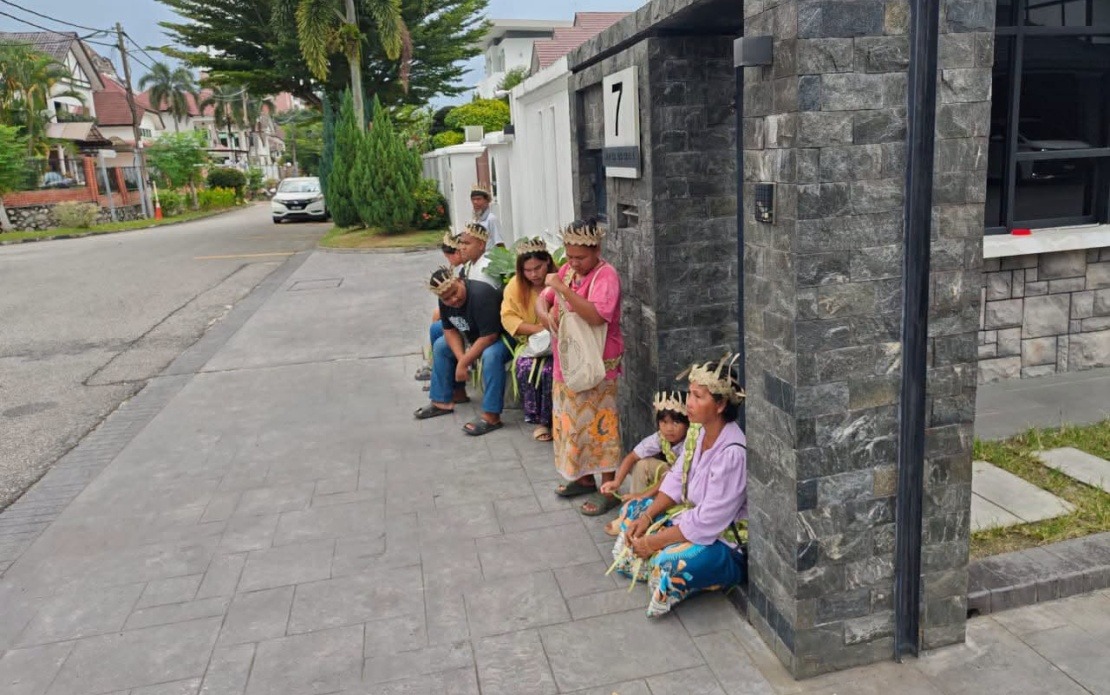
Prime Minister Datuk Seri Anwar Ibrahim has committed to escalating a contentious land dispute affecting the Orang Asli community of Kampung Sungai Cot in Maran, Pahang to the state government. The pledge came after representatives from the indigenous settlement visited his official residence in Kuala Lumpur on July 17, where the PM engaged directly with community leaders to understand their grievances spanning land ownership and recent detentions affecting villagers.
The encounter marks a significant intervention into a longstanding territorial dispute that has proven resistant to conventional resolution mechanisms. Through his Facebook post following the meeting, Anwar outlined his understanding of the multiple pressures confronting the Orang Asli residents, encompassing both the fundamental property rights question and the parallel issue of law enforcement action that had resulted in three community members being detained by police. The PM's decision to connect personally with the visiting delegation underscores the escalating political salience of indigenous land concerns within Malaysia's policy framework.
Notably, Anwar conveyed positive developments regarding the detained individuals, confirming that the three Orang Asli residents have since been released by police authorities. This outcome, while offering immediate relief to affected families, requires contextual understanding within Malaysia's broader pattern of Orang Asli encounters with the justice system. The detention and subsequent release cycle frequently indicates procedural intervention rather than substantive resolution of underlying grievances, particularly when property disputes and perceived trespassing allegations intersect with indigenous rights frameworks.
The Prime Minister's public acknowledgement of these intersecting issues represents a calculated calibration of the government's approach to indigenous affairs. By documenting his engagement with community representatives and explicitly confirming the police release, Anwar positioned the federal executive as actively monitoring the situation while signalling to state-level authorities the importance attached to fair resolution. This multilayered messaging serves both the immediate constituency—reassuring the Kg Sungai Cot community of high-level attention—and the broader political landscape, where indigenous rights advocacy has gained considerable traction among civil society observers and international monitoring bodies.
The land dispute itself reflects patterns replicated across peninsular Malaysia where Orang Asli customary territories interface with state land administration systems that evolved during colonial periods and remain substantially unchanged. Kampung Sungai Cot represents one node within a nationwide constellation of similar conflicts where indigenous communities claim traditional usage rights while facing competing claims from development interests, agricultural concessionaires, or private landholders. The Pahang government's role in these territorial configurations remains central, as state authorities retain primary responsibility for land classification, titles, and dispute adjudication outside federal territories.
Anwar's intervention introduces federal-level pressure into what might otherwise remain confined within state administrative channels, where historical precedent suggests relatively slower progress on indigenous land recognition. By elevating the matter to direct correspondence with Pahang's government, the PM effectively signalled that inaction or prolonged stalling carries political costs and that federal resources may be mobilised if state-level solutions remain elusive. This approach acknowledges the constitutional division of powers that grants states primary authority over land matters while deploying federal leverage—including the PM's office as a focal point for escalation.
The Prime Minister's simultaneous call for restraint across all parties and his injunction against politicisation of the Kg Sungai Cot situation carry particular weight given Malaysia's polarised political environment. By explicitly requesting that stakeholders avoid manipulating the dispute for partisan advantage while maintaining space for lawful and equitable resolution, Anwar navigated a delicate balance between demonstrating responsiveness to indigenous concerns and avoiding accusations that the government capitalises on such matters opportunistically. This framing also implicitly cautioned opposition figures and advocacy groups against instrumentalising Orang Asli grievances, suggesting a preference for depoliticised, rules-based resolution mechanisms.
The commitment to engage Pahang authorities reflects awareness that sustainable solutions to land disputes require sustained intergovernmental coordination rather than ad-hoc federal interventions. The Pahang state government holds statutory authority over land matters within its jurisdiction, and any lasting settlement requires state-level buy-in and administrative implementation. By pledging to raise the matter directly, Anwar positioned the federal office as a broker and monitor rather than a substitute for state responsibility, establishing a framework within which Pahang officials face explicit expectations regarding responsiveness and timeline management.
For Malaysian readers and Southeast Asian observers, this development carries implications extending beyond Kg Sungai Cot's specific circumstances. Indigenous land issues have emerged as significant policy challenges across the region, increasingly subject to international scrutiny through human rights mechanisms and environmental governance frameworks. Malaysia's handling of the Orang Asli land question shapes both its domestic indigenous affairs trajectory and its standing within international discourse on indigenous rights and land security. The PM's intervention suggests federal recognition that reactive crisis management no longer suffices, potentially signalling broader policy recalibration toward proactive engagement with pending territorial disputes.
The path forward hinges substantially on whether Pahang authorities treat Anwar's intervention as catalytic for substantive progress or as a procedural courtesy. Historical patterns suggest that such high-level engagements occasionally accelerate resolution but frequently yield protracted negotiation processes where competing interests and bureaucratic inertia reassert themselves. The released detainees and their community will likely measure success not merely by federal acknowledgement of their grievances but by tangible movement toward land title clarification or formal recognition of indigenous customary rights. Ongoing monitoring by civil society organisations and potential intervention by international human rights bodies may intensify pressure on both federal and state governments to demonstrate concrete results beyond statements of intent.

