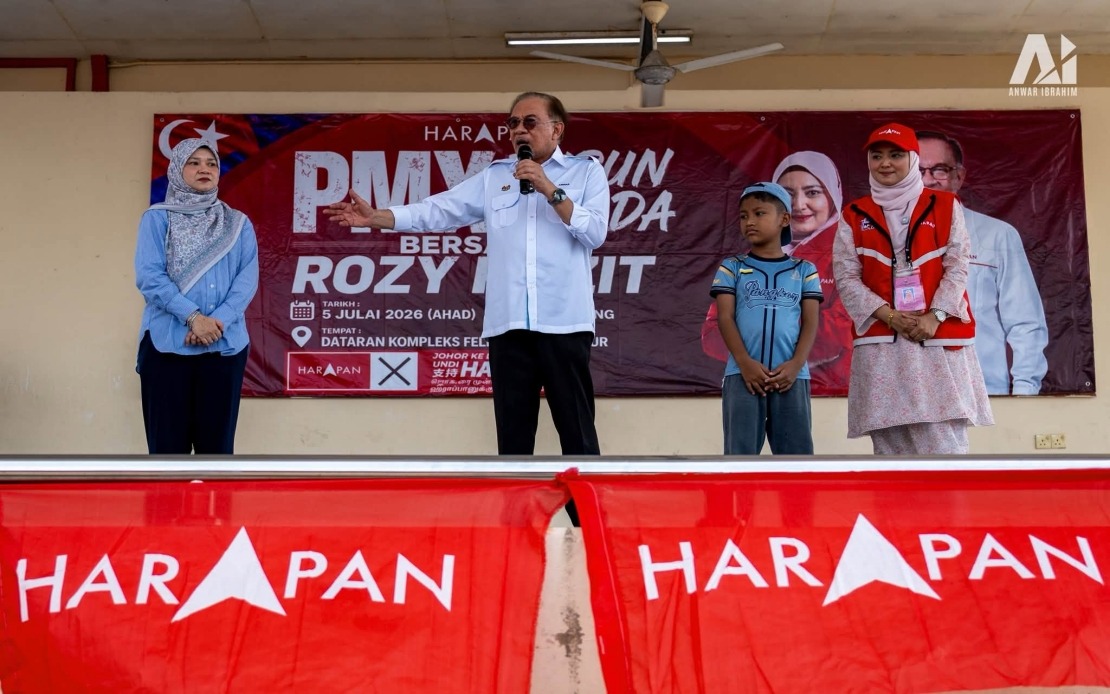
Prime Minister Datuk Seri Anwar Ibrahim has reflected on an encounter that left a lasting emotional impression during a recent visit to Felda Palong Timur in Segamat, Johor. The encounter involved nine-year-old Muhammad Afif Ikhwan, who travelled through an oil palm plantation alongside his grandmother, Rosimah Mohammad, driven by a single determination: to see the Prime Minister in person. The brief but meaningful interaction has since prompted Anwar to take personal steps to follow up with the boy, demonstrating how such spontaneous moments of human connection can resonate deeply within a nation's leadership.
The backstory underscores the lengths to which rural families sometimes go to bridge the gap between their everyday lives and the corridors of power. Fifty-eight-year-old Rosimah, from Kampung Pudu in Segamat, made the decision to ride a motorcycle along tracks cutting through oil palm plantations—a mode of transport and route choice that speaks to the geography of rural Malaysia, where vast agricultural estates often separate communities from public highways and town centres. The journey, undertaken solely to grant her grandson a few moments in the presence of the nation's top leader, reflects both her devotion as a grandmother and the symbolic importance that many ordinary Malaysians attach to direct encounters with political leaders.
During the programme at Felda Palong Timur, the moment itself was brief but pointed. As the crowd gathered, Muhammad Afif's small hand reached forward through the throng of people, and Anwar reached back to shake it. The Prime Minister then invited the boy to join him on stage, transforming what could have been a fleeting handshake into a more substantial memory. For a nine-year-old from a rural plantation area, such a platform moment can become a defining childhood experience—one that shapes how he views his place in the national narrative and his relationship to those in power.
What strikes Anwar most, as he expressed in a Facebook post, is the disproportionality between the smallness of the dream and the magnitude of effort it required to pursue it. To an adult perspective, a handshake with a Prime Minister might seem a modest goal. Yet to a boy in a rural settlement and to his grandmother, it represented something worth the practical challenges of navigating plantation terrain and taking time away from daily responsibilities. This observation touches on a broader truth about leadership and empathy: the ability to recognise that what may appear trivial from a position of power can be profoundly meaningful to those seeking connection across social distance.
Following the encounter, Anwar took the initiative to dispatch someone to visit Muhammad Afif and present him with a bicycle. The gift itself carries practical and symbolic weight. In rural areas where vehicle ownership may be limited and distances between home and school considerable, a bicycle represents genuine utility—a means of independent mobility that can facilitate access to education and social interaction. But it also functions as a tangible reminder that his moment of connection with the Prime Minister was acknowledged and valued, not simply allowed to dissipate as one fleeting encounter among thousands.
The Prime Minister's reflection emphasises a principle that resonates beyond this single incident: that regardless of the weight of national governance and the magnitude of challenges facing the country, leaders must retain their capacity for compassion and their willingness to reach out to ordinary citizens. Anwar frames this not as sentimentality but as a necessary counterbalance to the administrative and political burdens of office. In a context where Malaysians often feel distant from their leaders, and where rural and urban divides can seem particularly pronounced, such gestures carry symbolic importance.
For Muhammad Afif specifically, Anwar expressed hope that the encounter would crystallise into a cherished memory that might inspire continued commitment to education and future contribution to family, community, and nation. This framing converts a personal moment into a broader narrative about national investment in young people—suggesting that even brief encounters can plant seeds of aspiration and ambition that may bear fruit over time. In Malaysia's context, where educational outcomes and economic mobility remain concerns, the symbolic value of a Prime Minister recognising and encouraging a rural child carries layers of meaning.
The incident also illuminates the enduring appeal of direct contact with political leadership in Malaysian culture. Despite living in an age of mass media, digital communication, and widespread access to information, the desire for face-to-face encounter with those in power remains potent. For many Malaysians, particularly those in less urban areas, seeing a leader in person validates their existence within the national community and creates a sense of direct relationship that mediated communication cannot replicate. The effort Rosimah made to facilitate this experience for her grandson reflects this cultural value.
The story has broader implications for how Malaysian leadership engages with rural constituencies. Felda settlements and oil palm plantation communities represent significant portions of Malaysia's population, yet they often feature peripherally in mainstream political discourse. Moments such as this one, when a Prime Minister pauses to acknowledge an individual from such areas and later follows up with a gift, serve to reinforce these communities' sense of inclusion within the national project. They signal, however symbolically, that leadership remembers the existence and aspirations of those beyond the urban centres where media coverage concentrates.
Anwar's decision to publicly share this story through social media also merits attention. By doing so, he transforms a personal encounter into a statement about leadership values and priorities. The narrative he constructs—one centring compassion, recognition of individual dreams, and commitment to ordinary citizens—becomes part of his public identity and political messaging. For readers across Malaysia, the story functions as both an anecdote and a subtle assertion about the kind of leadership Anwar wishes to embody and promote.

