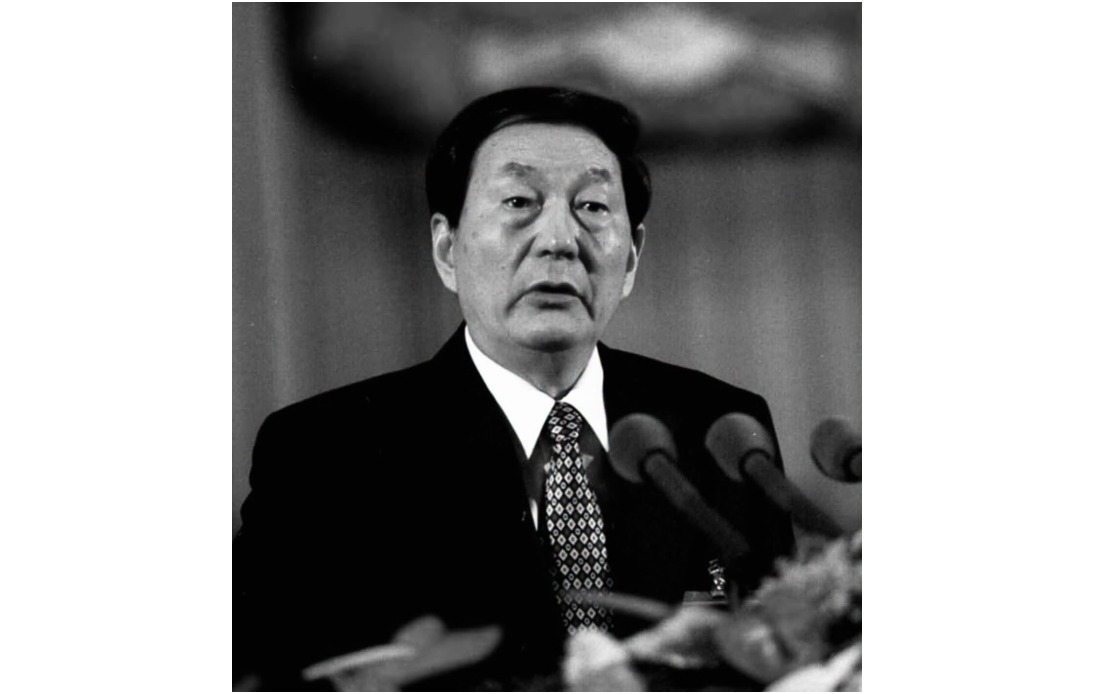
Prime Minister Datuk Seri Anwar Ibrahim has paid tribute to former Chinese Premier Zhu Rongji, who died at the age of 97, describing him as one of the architects of modern China's transformation into an economic powerhouse and a trusted colleague in advancing Malaysia-China relations. In a Facebook post, Anwar characterised Zhu as a towering figure whose influence extended far beyond his tenure as Premier, shaping the trajectory of one of the world's most significant economies during a critical juncture in its development.
Zhu's tenure as China's Premier from 1998 to 2003 proved to be transformative for the nation's economic structure and global standing. During this period, he championed a series of market-oriented reforms that fundamentally restructured China's state-owned enterprise sector, moving it away from centrally planned mechanisms towards competitive market dynamics. These reforms were not merely administrative adjustments but represented a profound ideological shift that enabled Chinese enterprises to operate with greater efficiency and responsiveness to market conditions, laying the groundwork for the country's subsequent economic ascendancy.
One of Zhu's most consequential achievements was navigating China's accession to the World Trade Organisation in December 2001, a milestone that opened the country to unprecedented levels of international commerce and foreign investment. This pivotal moment represented the culmination of years of negotiation and domestic preparation, and it fundamentally altered China's economic trajectory by integrating it more deeply into the global trading system. The WTO entry accelerated foreign direct investment flows into China and transformed the country into a manufacturing hub, contributing significantly to the economic growth that would define the subsequent two decades.
Anwar's personal recollection of his relationship with Zhu underscores the diplomatic dimensions of their partnership. During the 1990s, at a time when Malaysia was itself pursuing economic modernisation and regional integration, Anwar worked alongside Zhu to establish deeper economic and financial linkages between the two nations. The bilateral frameworks and cooperative mechanisms developed during that era have proven remarkably durable, continuing to provide the institutional foundation for Malaysia-China relations even decades later. This suggests that the groundwork laid by both leaders created structures sufficiently robust to withstand changing political circumstances and evolving international conditions.
Beyond the formal architecture of state relations, Anwar recalled the personal dimensions of his friendship with Zhu, including cultural expeditions to sites of profound historical and philosophical significance. These included visits to Qufu, the birthplace of Confucius whose teachings have shaped East Asian thought for millennia, and Tai Shan, one of China's most sacred mountains steeped in religious and cultural meaning. Anwar also referenced visits to locations associated with Admiral Zheng He, the renowned Ming Dynasty navigator whose vast maritime expeditions traversed the Indian Ocean and reached the coasts of Africa, a historical figure whose legacy resonates particularly in Southeast Asia given his historical voyages to the region.
Another memorable moment in their relationship involved a private gathering at Zhu's personal library, where the former Premier presented Anwar with carefully selected volumes of Chinese classical literature. This gesture reflects not merely personal warmth but an intentional effort to facilitate cultural understanding and intellectual exchange between leaders of two nations. The deliberate selection of these texts suggests Zhu's desire to transmit not just information but the philosophical and cultural foundations that underpin Chinese civilisation, a form of soft power diplomacy that extends beyond conventional state-to-state interactions.
Anwar's characterisation of Zhu as a "formidable statesman" driven by "a fierce sense of duty to his nation" reveals the qualities that international peers recognised in him. Zhu's reputation extended beyond China's borders, earning respect from global counterparts who acknowledged his intellectual rigour and commitment to modernising his country's economy. His reforms, while sometimes controversial domestically due to the social disruptions caused by restructuring state enterprises and regional disparities in development benefits, were widely recognised internationally as necessary steps towards making China's economy more competitive and efficient.
The timing of Zhu's passing comes at a moment when Malaysia-China relations remain substantial, with significant economic interdependencies in trade, investment, and infrastructure development. Belt and Road Initiative projects, bilateral trade arrangements, and strategic partnerships continue to characterise the relationship, operating within frameworks whose origins can be traced to the foundational work conducted by leaders like Zhu and Anwar. Understanding the historical roots of contemporary partnerships provides important context for evaluating current and future bilateral engagement.
Zhu's legacy extends beyond specific policy achievements to encompass a broader vision of how China could modernise while maintaining political stability. His pragmatic approach to economic reform, grounded in technocratic expertise rather than ideological purity, influenced generations of Chinese policymakers and demonstrated that market mechanisms could be selectively introduced within a socialist political framework. This model has proven influential not only in China but has been studied and adapted by other developing economies seeking to balance economic liberalisation with state capacity.
For Malaysia, Zhu's passing represents the conclusion of a generational bridge between two leaders who shaped their nations' development during pivotal periods. The relationship Anwar and Zhu cultivated during the 1990s exemplified the kind of principled friendship between national leaders that transcends transactional diplomacy. Anwar's public expressions of mourning underscore the personal bonds that often accompany high-level statecraft, bonds that can prove consequential for bilateral relations over extended periods.

