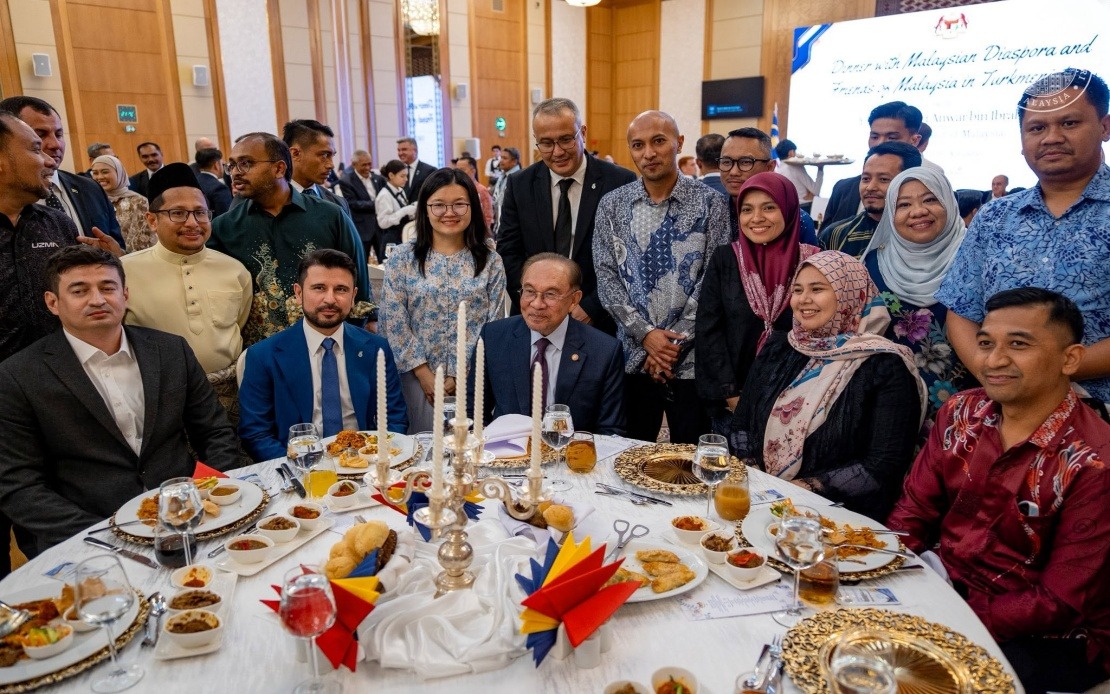
Prime Minister Datuk Seri Anwar Ibrahim used his official visit to Turkmenistan to engage with Malaysians residing in Ashgabat, reflecting the government's broader strategy of maintaining meaningful connections with its citizens abroad. The encounter underscores the administration's recognition that overseas Malaysians represent a vital network of national ambassadors whose experiences and networks extend Malaysia's influence and soft power across multiple continents and economies.
Anwar characterised the gathering in the Central Asian capital as an emotional and spirited occasion, describing the warmth of interaction despite the geographical distance separating the diaspora from their homeland. His comments, shared on social media, emphasised that such moments of connection transcend physical borders, creating a sense of unity among Malaysians regardless of where they have chosen to build their lives and careers. The Prime Minister's presence in Ashgabat and his deliberate engagement with the local Malaysian community signal an intentional diplomatic approach that views diaspora relations as integral to national strategy.
The MADANI Government's commitment to nurturing relationships with Malaysians abroad extends beyond symbolic gestures. Anwar articulated that the diaspora functioning as unofficial ambassadors serves concrete national interests—they actively cultivate Malaysia's international reputation, expand commercial and professional networks, and advance the country's standing in their respective regions. This characterisation acknowledges that Malaysian expatriates, whether engaged in business, academia, diplomacy or other professions, contribute substantively to national objectives even while residing outside Malaysian territory.
Anwar encouraged the diaspora to maintain active engagement with developments back home, suggesting that staying informed about Malaysia's progress and transformation remains important for those living abroad. This appeal reflects a recognition that overseas Malaysians often maintain emotional and sometimes financial ties to their country of origin, and that their continued interest in national affairs strengthens the bonds connecting them to Malaysia. Such engagement can translate into sustained investment, knowledge transfer, and advocacy for Malaysian interests within their host communities.
The Prime Minister articulated a nuanced vision for his Turkmenistan visit that extends considerably beyond conventional diplomatic interests such as trade agreements and investment protocols. While economic cooperation certainly features within the bilateral agenda, Anwar presented the visit as a broader endeavour to deepen friendship, foster mutual understanding, and identify collaborative opportunities that serve both Malaysia and Turkmenistan. This framing demonstrates how official visits function as multifaceted engagements serving diplomatic, economic, and humanitarian dimensions simultaneously.
Anwar's current visit represents the culmination of reciprocal diplomatic engagement between the two nations. The trip follows President Serdar Berdimuhamedov's official visit to Malaysia in December 2024, establishing a pattern of high-level bilateral exchange. This sequential engagement underscores both countries' commitment to developing closer relations and suggests momentum toward expanded cooperation across multiple sectors. For Malaysia, deepening ties with Central Asian nations like Turkmenistan offers opportunities to diversify partnerships and strengthen its position within the broader Asian economic and geopolitical landscape.
The visit to Ashgabat carries particular significance given Malaysia's strategic positioning between South Asia, Southeast Asia, and the Middle East. Central Asia represents a relatively underdeveloped frontier for Malaysian business and diplomatic engagement compared to more established relationships in other regions. By prioritising official visits and facilitating connections between government officials and Malaysian communities in these emerging markets, Anwar signals Malaysia's ambitions to expand its international footprint and identify new avenues for mutual prosperity.
For Malaysian expatriates in Turkmenistan and throughout Central Asia, the Prime Minister's visit and direct engagement provides recognition and validation of their contributions to national interests. Many Malaysians abroad live in countries where the Malaysian government's presence remains limited, making such high-level interactions relatively rare and meaningful. These gatherings reinforce a sense of belonging to a national community that values their presence and achievements, potentially strengthening their commitment to maintaining ties with Malaysia.
The emphasis on diaspora engagement also reflects broader government policy shifts recognising that overseas Malaysians constitute economic and cultural resources. Countries increasingly view diaspora communities as mechanisms for expanding soft power, facilitating trade relationships, and building bridges with host nations. Malaysia's MADANI Government appears to be institutionalising this recognition through deliberate outreach and communication, positioning itself as attentive to the needs and aspirations of Malaysians living abroad.
Anwar's visit to Turkmenistan exemplifies how contemporary diplomacy integrates multiple constituencies and objectives. Government leaders now navigate not only formal bilateral negotiations with host nation counterparts but also ensure engagement with their own nationals abroad, understanding that such interactions generate goodwill domestically while simultaneously advancing national interests internationally. The meeting in Ashgabat thus serves multiple purposes—strengthening Malaysia's relationship with Turkmenistan while simultaneously reinforcing connections between the Malaysian government and its dispersed citizens.