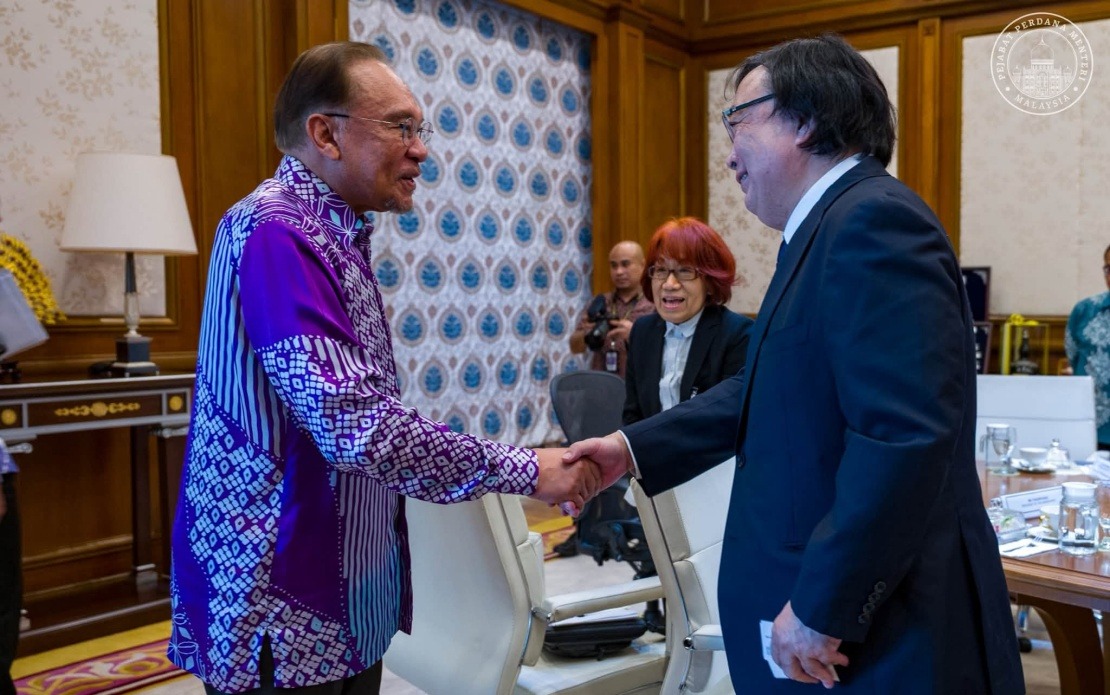
Prime Minister Datuk Seri Anwar Ibrahim held discussions with The Genron NPO President Yasushi Kudo on July 23, focusing on consolidating the Asia Leaders Roundtable as an influential platform for strategic dialogue among regional leaders tackling transnational challenges. The meeting underscored Malaysia's commitment to leveraging multilateral channels for addressing complex regional and global issues alongside Japan, one of Southeast Asia's most consequential partners.
The Genron NPO, a Tokyo-based independent think tank and non-profit organisation, has established itself as a respected voice in Japanese policy circles and serves as a bridge for intellectual dialogue across Asia. Its Asia Leaders Roundtable represents an important convening space where policymakers and thought leaders can exchange perspectives on shared concerns ranging from geopolitical tensions to economic cooperation frameworks. For Malaysia, participation in such platforms reflects its broader diplomatic strategy of engaging through dialogue-oriented multilateral mechanisms rather than confrontational approaches.
During the courtesy call, Anwar took the opportunity to express gratitude to the Japanese government for the reception and hospitality extended during his official visit to Japan in June. These high-level visits and personal relationships between leaders serve as the foundation for deeper institutional cooperation between nations. The warm reception Anwar received indicates Japan's recognition of Malaysia's importance as a stable, moderate voice in Southeast Asia and as a partner aligned with Japan's vision of a rules-based, open Indo-Pacific order.
Malaysia's Comprehensive Strategic Partnership with Japan represents one of the nation's most substantive bilateral relationships, encompassing defence, trade, technology transfer, and development cooperation. The partnership has evolved significantly since its formal establishment, with collaboration extending across multiple sectors including automotive manufacturing, semiconductor production, and renewable energy. Japan remains a leading source of foreign direct investment for Malaysia and continues to be critical to the country's industrial upgrading objectives.
The Prime Minister also acknowledged Yasushi Kudo's invitation for Malaysia to participate in the Tokyo Conference 2027, signalling Malaysia's acceptance as a key contributor to Japan-convened regional forums. Additionally, Anwar noted his appreciation for the opportunity to deliver a video message at the 2026 Tokyo Conference, demonstrating Malaysia's active engagement in shaping the discourse on regional stability and development. These participations allow Malaysian perspectives to inform discussions among Asia's influential leadership circles.
The emphasis on strengthening ties through The Genron NPO reflects a broader trend among Southeast Asian governments to engage with Japanese think tanks and policy institutions as channels for influencing Tokyo's regional strategies. Japan's approach to regional engagement increasingly emphasises soft power through intellectual dialogue and institutional partnerships rather than solely through traditional diplomatic channels. For Malaysia, such engagement provides a platform to articulate its interests while contributing to regional conversations on contentious issues including the South China Sea, supply chain resilience, and technology governance.
The Asia Leaders Roundtable itself has gained prominence as regional tensions have intensified, offering a neutral space for candid discussions among leaders who might otherwise maintain formal diplomatic distance. Malaysia's continued participation signals its interest in maintaining open lines of communication and demonstrating that substantive dialogue remains possible even amid disagreements. This approach aligns with Malaysia's historical positioning as a consensus-builder within ASEAN and a proponent of inclusive regional arrangements.
From Japan's perspective, deepening engagement with Malaysia through civil society institutions like The Genron NPO serves multiple strategic objectives. It allows Japan to maintain influence in Southeast Asia through non-coercive means while building personal relationships with Malaysian leaders that can translate into policy alignment on issues of mutual concern. The attention Japan devotes to such partnerships reflects the country's understanding that Southeast Asia, and Malaysia specifically, will play pivotal roles in determining the region's geopolitical trajectory in the coming decades.
The meeting also underscores Malaysia's diplomatic priorities under the Anwar administration, which has emphasised engagement, multilateralism, and pragmatic partnerships over ideological positioning. By actively participating in platforms like the Asia Leaders Roundtable, Malaysia demonstrates its commitment to being a constructive regional actor invested in finding common ground on shared challenges. This approach has been central to Anwar's efforts to rehabilitate Malaysia's international standing following the political turbulence of preceding years.
Looking forward, Malaysia's deepened engagement with Japanese institutions and participation in forums like the Tokyo Conference represents an investment in soft diplomatic channels that can yield long-term benefits. These relationships often provide early warning of policy shifts and create opportunities for Malaysian officials to directly influence Japanese thinking on regional matters. As great power competition intensifies in Asia, the capacity to maintain productive dialogue through established institutional channels becomes increasingly valuable.
The Genron NPO's role as an independent, non-partisan institution also provides advantages for candid discussion that might be constrained in formal government-to-government settings. Japanese think tanks have historically enjoyed considerable autonomy in their analysis and recommendations, allowing them to explore policy options that official channels might not immediately embrace. Malaysia's engagement with such institutions therefore provides access to influential voices in Japanese policy discussions, complementing traditional diplomatic engagement.
The timing of this meeting, occurring after Anwar's June visit to Japan, suggests a deliberate sequencing of diplomatic activities designed to maintain momentum in bilateral relations. Rather than allowing high-level visits to dissipate in importance, Malaysia is using subsequent meetings with key Japanese interlocutors to consolidate agreements and commitments. This strategic approach to diplomatic engagement reflects a more professional and coordinated approach to foreign policy execution.

