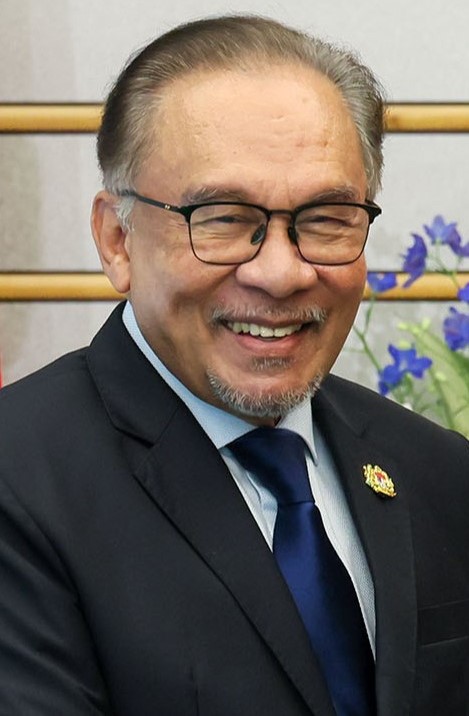
Prime Minister Datuk Seri Anwar Ibrahim is returning to Johor today to undertake a series of grassroots engagements in Segamat, underscoring the government's intensified push to connect with voters ahead of the 16th Johor state election. The visit marks his second trip to the state within three days, reflecting the strategic importance placed on the peninsula's southernmost state in Pakatan Harapan's electoral calculus.
The Segamat itinerary falls within the broader context of Anwar's recent tour announcing the ruling coalition's full slate of candidates for the upcoming election. On Monday, the Prime Minister unveiled the complete list of contenders—20 from PKR, 19 from Amanah, and 17 from DAP—who will contest all 56 state seats across Johor. This coordinated deployment of Pakatan Harapan's three constituent parties signals a unified approach to reclaiming or strengthening the coalition's presence in a state where political dynamics have remained fluid and contested.
The centrepiece of today's Segamat programme is the formal launch of the MADANI KITA initiative, scheduled for 5 pm at Dataran Segamat. The MADANI KITA platform represents a deliberate attempt by the federal government to deepen neighbourhood bonds and facilitate inter-communal dialogue at the grassroots level, translating the broader Madani development framework into tangible community-level activities. By engaging with the local Rukun Tetangga (KRT) network—the established neighbourhood association structure that remains influential in suburban and town-centre localities across Malaysia—Anwar is leveraging existing community institutions to amplify government messaging.
This approach carries particular significance in the context of electoral politics. The emphasis on strengthening communal ties and racial harmony aligns with Pakatan Harapan's positioning as a multi-ethnic coalition committed to inclusive governance. In a state with a substantial representation of multiple ethnic communities, emphasizing cross-community engagement through neighbourhood forums provides the coalition with a vehicle to counter narratives about divisiveness while simultaneously building ground-level support networks.
Following the formal MADANI KITA launch, Anwar will transition to a more informal setting for the "Jom! Makan Durian" programme at the Yayasan Bazaar site, commencing at 6:30 pm. This shift from official ceremony to casual community gathering reflects a broader communications strategy that alternates between formal policy announcements and accessible, approachable encounters with constituents. The choice of durian—a culturally iconic Malaysian fruit that transcends ethnic boundaries—as the focal point for evening socializing underscores an attempt to normalize cross-community leisure and social interaction.
Segamat, positioned approximately 200 kilometres inland from Johor Bahru, represents a significant urban centre within Johor's interior districts. The town serves as both a residential hub and commercial node for surrounding agricultural regions, making it electorally important for any coalition seeking to consolidate support beyond the more urbanized coastal areas. The deliberate focus on Segamat also reflects the coalition's recognition that maintaining competitiveness in secondary cities and towns is essential for overall state-level performance.
The electoral timeline reinforces the urgency of such engagement activities. The Election Commission has scheduled nomination day for 27 June, early voting for 7 July, and polling day for 11 July—meaning Anwar's visit falls within the critical pre-nomination phase when campaigns are gaining momentum and grassroots mobilization becomes increasingly vital. By presenting himself alongside community structures like the KRT, the Prime Minister is attempting to embed Pakatan Harapan within the everyday fabric of Segamat's civic life.
The dual-programme format also serves distinct strategic functions. The MADANI KITA launch allows the government to present itself as a custodian of national development initiatives, while the informal durian gathering provides opportunities for face-to-face interaction with residents, allowing Anwar to address local concerns and build personal political capital. This combination of formality and accessibility has become characteristic of the Prime Minister's recent campaign style across multiple states.
Johor's political significance extends beyond its 56 state seats. As the second-largest state by population and a historically important power base for Malaysian politics, the electoral outcome in Johor carries implications for national political dynamics. Pakatan Harapan's performance in the state will likely influence perceptions of the coalition's viability and strength heading into potential federal electoral contests. Consequently, the visible investment of prime ministerial time and attention in towns like Segamat signals the coalition's determination to consolidate its position and demonstrate active governance at all levels.