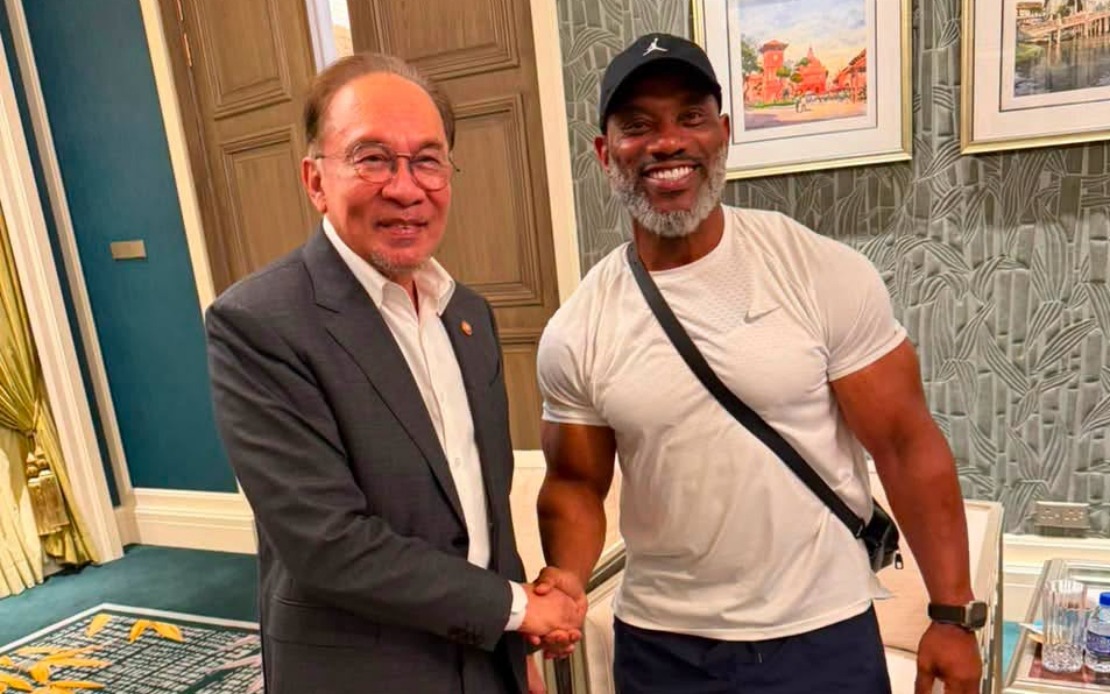
Prime Minister Datuk Seri Anwar Ibrahim expressed his enthusiasm after meeting one of bodybuilding's most celebrated figures, Dexter Jackson, documenting the encounter with a photograph posted to his Facebook account. The 56-year-old American champion's visit appears to have made an impression on the Malaysian leader, who publicly acknowledged the meeting and described himself as feeling inspired by the encounter. Anwar's lighthearted response—suggesting it was time to return to the gymnasium—struck a relatable note that humanized the prime ministerial office through his engagement with global sporting personalities.
Dexter Jackson has established himself as an iconic figure in professional bodybuilding, with credentials that span multiple decades of competitive excellence. His 2008 victory at the Mr Olympia competition represents one of the sport's highest honours, a title he would go on to defend at the 2012 Masters Mr Olympia championship, which caters specifically to competitors aged 50 and over. These achievements underscore Jackson's longevity and sustained performance in a sport that demands extraordinary discipline, dedication, and physical conditioning throughout an athlete's career.
Perhaps more remarkable than his major title wins is Jackson's unprecedented record at the Arnold Classic, one of bodybuilding's most prestigious competitions. He has captured the Arnold Classic crown an astounding nine times, a record that remains unmatched in the competition's history. This particular achievement distinguishes Jackson not merely as a champion but as the most successful competitor in this specific event's storied tradition. The Arnold Classic, named after action film star and former California governor Arnold Schwarzenegger, carries significant prestige within the bodybuilding community and attracts elite competitors from around the globe.
The timing and context of this diplomatic engagement offer interesting insights into modern political leadership in Malaysia. Prime ministers increasingly find themselves representing their nations across diverse spheres of public life, from conventional political forums to cultural and sporting venues. Anwar's willingness to publicly celebrate the meeting and share it through social media reflects contemporary political communication strategies, where leaders build broader appeal by demonstrating genuine interest in fields beyond traditional governance concerns.
The bodybuilding world maintains a devoted following across Southeast Asia, including Malaysia, where fitness culture has experienced considerable growth over the past two decades. International bodybuilding competitions attract participants and spectators from the region, and figures like Jackson command respect within this athletic community. Jackson's visit to Malaysia—the circumstances of which remain unclear from available information—may indicate growing connections between international sporting organizations and the country, potentially including partnerships, coaching engagements, or promotional activities.
Anwar's casual response about returning to gymnasium work, while clearly intended as humorous self-deprecation, also carries subtle significance. It demonstrates a leader maintaining public visibility as approachable and relatable, capable of engaging in lighthearted banter rather than adopting an exclusively formal demeanor. Such moments, amplified through social media, contribute to a prime minister's public persona and can influence how citizens perceive their leadership in informal, everyday contexts.
The intersection of politics and sports remains an enduring aspect of global public affairs. Political figures routinely leverage sporting connections to enhance their public image, expand their appeal across demographic boundaries, and demonstrate engagement with diverse constituencies. A prime minister's photograph with an internationally recognized sports personality serves multiple purposes: it signals openness to the wider world, demonstrates interest in physical health and fitness—topics of increasing concern in rapidly developing nations—and provides shareable content that humanizes political leadership.
Dexter Jackson's longevity in competitive bodybuilding also carries implicit messages about dedication and perseverance that may resonate within political discourse. His continued excellence into his fifth and sixth decades suggests that age need not diminish capability or competitive drive, a subtext that may not be entirely incidental to Anwar's interest in publicizing the meeting. Jackson's career trajectory—marked by sustained achievement rather than a single peak performance—offers a different narrative from athletes whose contributions to their sport concentrate within narrower career windows.
For Malaysian audiences, such engagements between national leadership and international sporting figures represent pathways through which the country positions itself within global networks. Attracting visits from internationally renowned personalities, whether through sporting events, business forums, or cultural exchanges, contributes to Malaysia's standing as a destination of significance within regional and international contexts. The apparent cordiality of the interaction between Anwar and Jackson further illustrates Malaysia's openness to diverse forms of international engagement.

