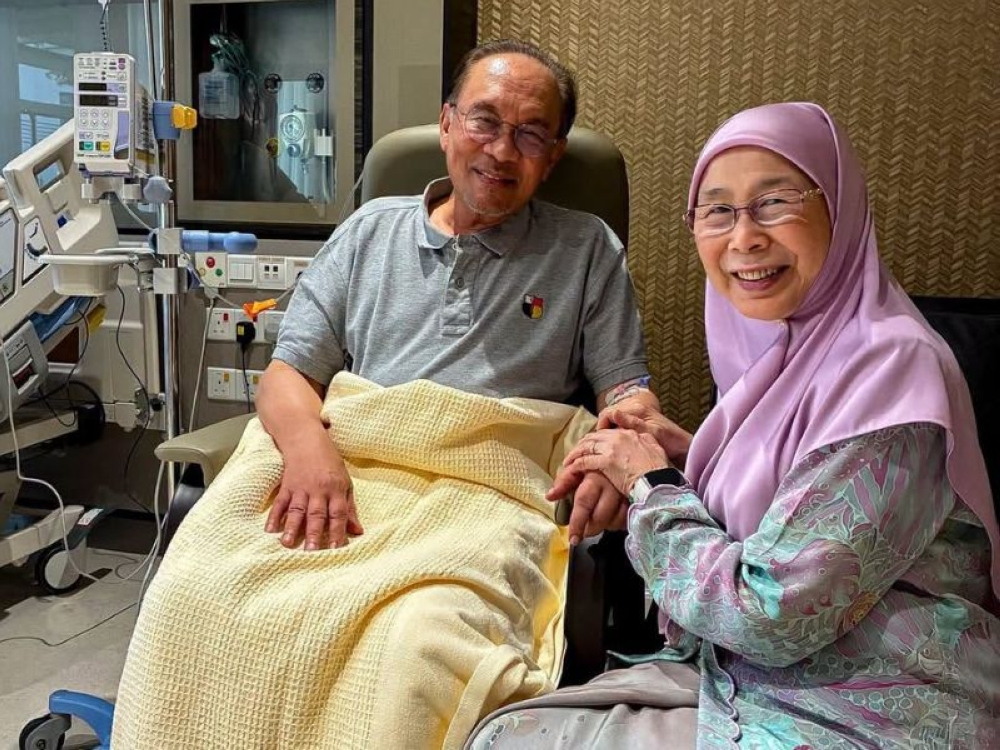
Prime Minister Datuk Seri Anwar Ibrahim is poised to leave hospital and return to his residence today after successfully undergoing hernia surgery, according to an update from his spouse. The surgical procedure, performed at a private medical facility in the capital, has proceeded without complications, positioning the Prime Minister for a swift recovery and gradual return to official responsibilities.
The announcement came as Malaysia's political establishment continued monitoring the leader's health status during his medical absence. The hernia operation represents a significant development in the Prime Minister's healthcare management, with medical professionals indicating that the minimally invasive nature of the procedure should facilitate a relatively quick recuperation period. Hospital officials have maintained a standard post-operative monitoring protocol to ensure optimal healing before discharge.
For Malaysian governance and regional diplomatic initiatives, the timing of the Prime Minister's anticipated recovery holds particular significance. The nation's executive branch has been operating under adjusted protocols during his hospitalization, with senior cabinet members stepping into enhanced coordinative roles to maintain administrative continuity. The relatively brief nature of the medical intervention suggests minimal disruption to the government's policy agenda and international commitments.
The Prime Minister's wife has been instrumental in providing regular family updates to media outlets and the public during this period, demonstrating the importance placed on transparency regarding the nation's top political figure's health. Her confirmation of the expected discharge reflects a measured approach to communicating his condition, balancing public interest in leadership continuity with personal privacy considerations.
From a broader governmental perspective, Datuk Seri Anwar Ibrahim's anticipated return home signals normalcy for Malaysia's executive operations. Cabinet members and parliamentary leadership have prepared briefing materials and pending matters requiring prime ministerial attention, anticipating his resumption of full duties within the coming days. The continuity of government machinery during medical absences represents a critical aspect of institutional stability in any democratic system.
The hernia procedure itself is a commonplace surgical intervention that affects individuals across all demographic and occupational spectrums. However, when the patient occupies the highest political office, the operation takes on heightened public and media attention. Medical experts have noted that such procedures, when performed by qualified surgeons in contemporary medical facilities, carry low complication rates and typically necessitate only brief hospitalization.
For Southeast Asian observers and international partners maintaining relationships with Malaysia's government, the Prime Minister's swift recovery reinforces confidence in governmental stability. Regional diplomatic channels and bilateral initiatives dependent upon prime ministerial engagement can anticipate resumption on their intended trajectories. The absence of any reported complications during or immediately following the surgery provides reassurance to stakeholders monitoring the nation's political trajectory.
The hospital's medical team has presumably provided discharge instructions and post-operative care guidelines to ensure optimal healing during the recovery phase at home. These typically encompass activity restrictions, wound care protocols, and follow-up appointment scheduling. The Prime Minister's privileged access to premier medical facilities ensures comprehensive professional oversight during the recuperation process.
For the broader Malaysian public, the Prime Minister's medical situation underscores the importance of contemporary healthcare infrastructure and the accessibility of advanced surgical procedures within domestic medical institutions. The successful navigation of his hernia operation without complications reflects positively on the nation's healthcare capabilities and the competence of its medical professionals.
As Datuk Seri Anwar Ibrahim prepares for discharge and the resumption of prime ministerial duties, the incident serves as a reminder of the physical demands inherent in holding the nation's highest executive office. The brief hiatus from formal responsibilities provides an opportunity for reflection on succession planning protocols and the importance of ensuring continuity mechanisms are robustly in place within the government's institutional framework.
The expected return home represents the final stage of a relatively straightforward medical episode that has been handled with appropriate transparency by relevant authorities. Media management and public communication regarding the Prime Minister's health have proceeded in measured fashion, maintaining confidence in both his personal well-being and the government's operational capacity. The coming days will likely see a gradual resumption of his public schedule as post-operative recovery progresses satisfactorily.

