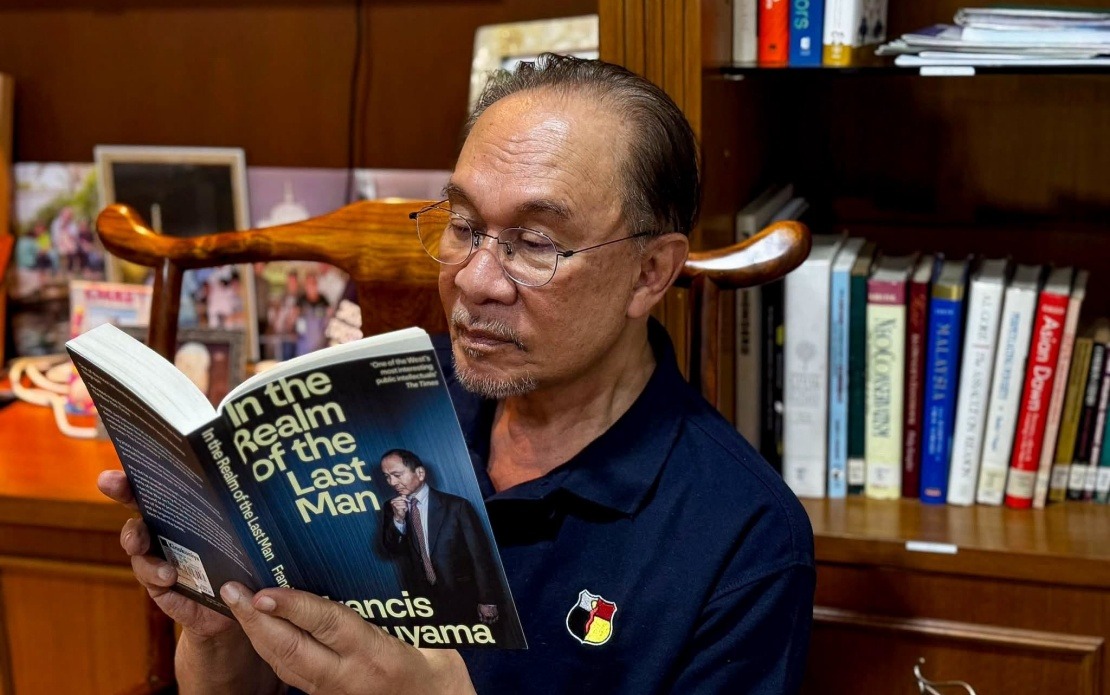
Prime Minister Datuk Seri Anwar Ibrahim has returned home following his discharge from hospital on August 12, marking the conclusion of a brief hospital stay for a planned surgical intervention. The Prime Minister shared news of his homecoming through a Facebook post, accompanying the message with a photograph showing him settled with a book and the caption "Alhamdulillah, back home", conveying both his recovery and gratitude.
The discharge came after Anwar underwent an elective laparoscopic surgical procedure earlier in the week to address a para-umbilical hernia, a relatively common medical condition affecting the abdominal wall. According to earlier reports, Datuk Seri Dr Wan Azizah Wan Ismail, the Prime Minister's wife, had indicated that her husband was expected to leave the hospital on the day of his discharge, with medical clearance provided by his clinical team.
The surgical procedure was conducted on Monday and was described as successful, with Anwar placed under continuous observation by a dedicated team of medical specialists throughout his hospital stay. Laparoscopic techniques, which employ minimal-incision approaches utilising small cameras and specialised instruments, have become standard practice for hernia repairs in modern surgical medicine. This minimally invasive method typically results in shorter recovery periods and reduced post-operative discomfort compared to traditional open surgery, allowing patients to resume normal activities more quickly.
The timing of the Prime Minister's medical procedure is noteworthy given Malaysia's demanding political landscape and the significant responsibilities attached to the office of Prime Minister. Elective surgical interventions are typically scheduled well in advance to minimise disruption to governmental functions, and the decision to proceed with the hernia repair demonstrates Anwar's commitment to addressing health concerns promptly rather than allowing potential complications to develop. Para-umbilical hernias, whilst generally manageable through conservative observation in some cases, can become increasingly problematic if left untreated, potentially necessitating more complex emergency intervention at a later stage.
The brief nature of Anwar's hospitalisation reflects both the efficacy of modern laparoscopic surgical techniques and the quality of medical care provided at Malaysian healthcare facilities. His swift recovery and return to domestic life within days of the procedure underscore the advancement of minimally invasive surgical practices within the country's healthcare system. This efficiency in patient management demonstrates that Malaysia's medical infrastructure remains capable of delivering world-class surgical services to its citizens.
From a governance perspective, Anwar's proactive approach to addressing his medical condition during his tenure as Prime Minister illustrates the importance of maintaining personal health whilst managing national affairs. Many observers have noted that senior government officials in Malaysia and across Southeast Asia frequently maintain rigorous schedules that can impact their wellbeing, making the Prime Minister's decision to undergo planned medical treatment a prudent precedent. The transparent communication regarding his procedure and recovery also reflects a commendable level of openness with the Malaysian public regarding matters affecting the nation's leadership.
Anwar's use of social media to announce his return home represents the contemporary approach to political communication in Malaysia, where direct engagement with citizens through digital platforms has become increasingly normalised. The informal yet respectful tone of his Facebook post, combined with the personal photograph, humanises the office of Prime Minister whilst maintaining appropriate dignity. Such communications help foster a sense of connection between government leadership and the public, demonstrating that even senior political figures experience ordinary life events and health matters.
The recovery period following laparoscopic hernia repair typically involves gradual resumption of activities, with most patients able to return to light duties within two to three weeks and resume full normal activities within six weeks. Given the demands of the Prime Minister's role, careful management of his work schedule during the initial recovery phase would be advisable to ensure optimal healing and prevent potential complications. The medical team overseeing Anwar's care would likely have provided detailed post-operative guidelines to facilitate smooth recuperation.
For Malaysian citizens and regional observers, the incident reinforces the reality that even national leaders must attend to their health needs and remain subject to the medical conditions that affect all humans. Anwar's handling of his surgical procedure with minimal fuss and transparent communication stands as a positive model for how public figures can manage personal health matters whilst maintaining public trust and governmental continuity. The smooth transition from hospital to home life suggests that the Prime Minister's medical team has confidence in his recovery trajectory.

