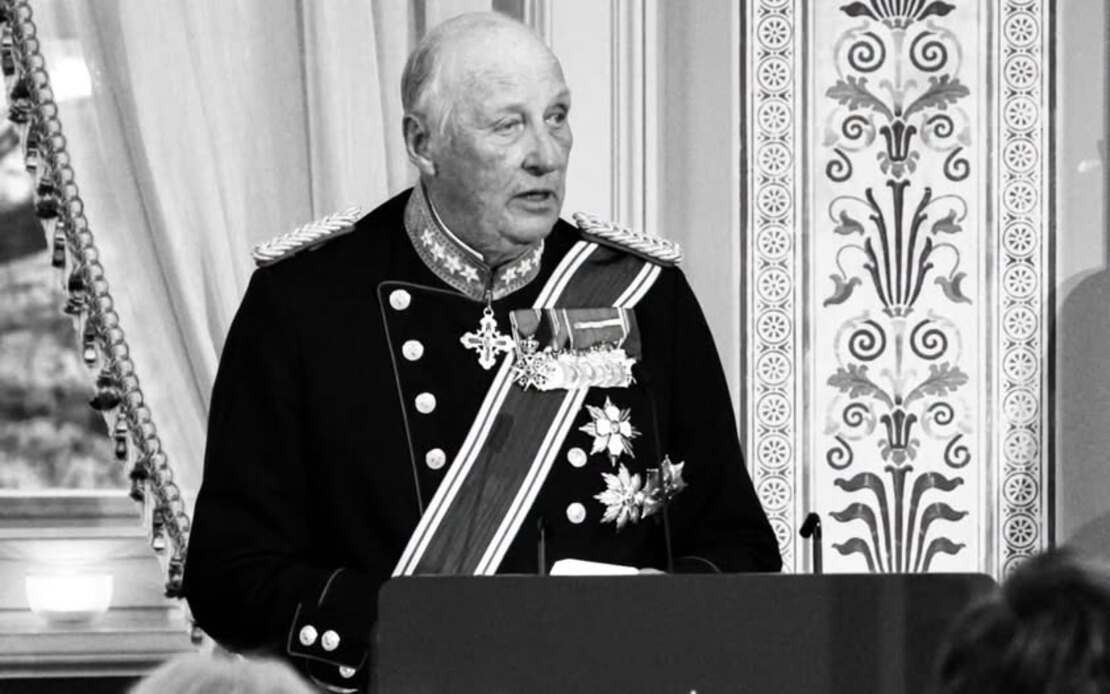
Prime Minister Datuk Seri Anwar Ibrahim has conveyed the Malaysian government's formal condolences to the people of Norway following the death of King Harald V, who passed away on Friday at the age of 89. The late monarch's death brings to a close a reign spanning several decades, during which he became a symbolic figure of stability and progressive values in Scandinavian politics. Through a statement released via his Facebook account, Anwar reflected on the personal qualities and leadership philosophy that defined Harald's tenure on the Norwegian throne.
In his tribute, the Prime Minister highlighted King Harald's distinctive approach to understanding what it meant to be Norwegian in an increasingly diverse society. Rather than viewing national identity through a restrictive lens, the late king championed an inclusive vision that encompassed people from varied ethnic and cultural backgrounds. This forward-thinking perspective had particular relevance in Norway as the country experienced waves of immigration throughout the latter decades of the twentieth century and into the twenty-first.
Anwar drew specific attention to remarks the Norwegian king had made regarding his nation's multicultural composition, citing Harald's acknowledgement that citizens whose families originated from Afghanistan, Pakistan, Poland and numerous other countries were equally deserving of recognition as Norwegian. These statements represented more than ceremonial gestures; they reflected a deliberate effort by the monarchy to set the tone for social cohesion and belonging across demographic divides. The Prime Minister's emphasis on this aspect of Harald's legacy suggests Malaysia's appreciation for leadership models that prioritise unity amid diversity—a theme particularly resonant in the Southeast Asian context, where many nations navigate complex plural societies.
Beyond cultural matters, Anwar underscored King Harald's unwavering commitment to constitutional duty and the sanctity of the oath he took upon assuming the throne. The Prime Minister characterised this dedication as emblematic of a broader principle: that national strength derives fundamentally from the respect and dignity a state extends to each of its citizens. This framing elevates the discussion beyond ceremonial tribute, positioning Harald's approach to monarchy as fundamentally bound to democratic values and personal integrity. Such an emphasis aligns with contemporary discourse surrounding institutional legitimacy and public trust in governance structures.
The late king had been hospitalised since August 17 and was undergoing treatment for hemolytic anemia, a blood disorder requiring cortisone therapy. His admission marked a period of declining health that culminated in his death at the National Hospital in Oslo. King Harald's medical situation had been monitored closely both within Norway and internationally, given his prominence as one of Europe's longest-reigning monarchs and his significant diplomatic presence on the global stage. His passing represents a transition point for Norwegian governance, with his son Crown Prince Haakon now positioned to assume the throne.
Malaysia's formal response through its Prime Minister reflects the importance of bilateral relations between the two nations and the diplomatic protocols surrounding state funerals and transitions of power. Though geographically distant and culturally distinct, Malaysia and Norway have maintained cordial diplomatic ties rooted in shared commitment to international law and multilateral engagement. Anwar's personal statement, rather than a generic official release, suggests the Malaysian government's desire to emphasise the substantive values that King Harald represented—values that transcend national borders and speak to universal principles of human dignity and inclusive governance.
The Prime Minister's characterisation of Harald as a figure who understood "the weight of an oath and the importance of remaining true to one's commitments" carries particular significance in the context of monarchy and constitutional governance. In an era when public institutions face mounting scrutiny and declining public confidence in many democracies, the Norwegian king's reputation for personal honour and adherence to constitutional principles offers a counternarrative. Malaysia's articulation of this dimension of Harald's legacy suggests an appreciation for institutional stability and principled leadership that transcends partisan politics.
The broader implications of King Harald's reign and legacy extend beyond Norway's borders to the Scandinavian region and beyond. His death marks the end of an era in European monarchy and governance, occurring at a time when traditional institutions are being reassessed globally. For Malaysian observers and policymakers, the Norwegian model of a constitutional monarchy paired with progressive social values and inclusive national identity presents points of comparative interest. As Malaysia itself grapples with questions of national cohesion and the role of traditional institutions in modern society, the Norwegian experience offers relevant reference points.
Anwar's statement that "Malaysia joins the people of Norway in mourning his passing" represents not merely ceremonial sympathy but an acknowledgement of shared values in an interconnected world. The expression of condolences at the highest governmental level underscores the international significance of King Harald's life and the diplomatic importance Malaysia attaches to Norway. Such gestures, while formal in nature, contribute to the fabric of international relations and the maintenance of goodwill between nations across different continents and cultural traditions.

