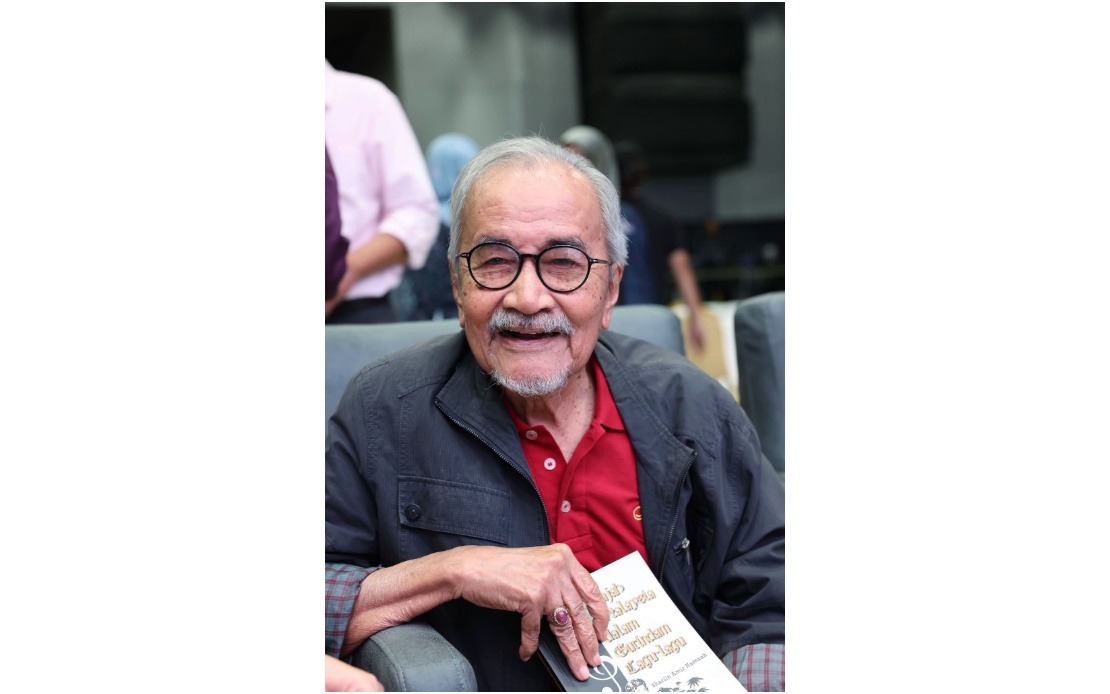
Prime Minister Datuk Seri Anwar Ibrahim has marked the 87th birthday of Datuk Rahim Razali, one of Malaysian cinema's most respected and versatile figures, with a heartfelt public tribute that underscores the government's commitment to honouring the nation's cultural custodians. In a Facebook post released on July 5, Anwar recognised Razali's towering legacy as both an artist and cultural ambassador who has shaped the country's entertainment and creative industries over an extraordinary span of decades.
Razali's artistic trajectory spans more than six decades of continuous, prolific work across multiple disciplines within the entertainment and media sectors. Born on July 3, 1939, in Batu Gajah, Perak, the celebrated personality has left an indelible imprint on Malaysian cinema, television, and journalism through a career that encompasses acting, directing, scriptwriting, sports commentary, and broadcasting. This remarkable versatility distinguishes him among his contemporaries and positions him as a foundational figure in Malaysia's post-independence cultural development.
The Prime Minister's tribute emphasised how Razali's body of work has consistently foregrounded themes of human dignity, cultural preservation, and national identity—themes that resonate particularly strongly in contemporary Malaysia as the nation navigates questions about heritage and social cohesion. Anwar noted that Razali's contributions have enriched the local arts ecosystem through productions and performances that transcend mere entertainment, functioning instead as vehicles for exploring Malaysia's diverse social fabric and collective values. This characterisation reflects a broader recognition within government circles that cultural figures serve functions extending well beyond commercial success.
Throughout his extended career, Razali has achieved formal recognition within Malaysia's film industry establishment, securing both Best Director and Best Male Actor accolades at the prestigious Malaysian Film Festival. These awards acknowledge not only his technical mastery but also his ability to inhabit complex characters and bring nuanced storytelling to the screen. His filmography includes iconic productions such as Matinya Seorang Patriot, a work that gained prominence for its serious engagement with themes of patriotism and national duty, cementing his reputation as a filmmaker willing to tackle substantive subject matter.
The Prime Minister expressed confidence that Razali's artistic legacy would continue generating influence across successive cohorts of creative professionals and art appreciation audiences. This forward-looking dimension of Anwar's message acknowledges a key reality of cultural heritage: that enduring artistic works function as educational and inspirational resources for emerging artists who study and build upon the foundations established by predecessors. By publicly validating Razali's continued relevance, the Prime Minister signals official recognition of intergenerational transmission of artistic values and techniques.
Anwar's statement also included prayers for Razali's sustained good health, longevity, and ongoing capacity to contribute meaningfully to Malaysia's cultural infrastructure. This pastoral element of the tribute reflects traditional Malaysian political communication styles that blend official recognition with personal warmth. The invocation of blessings and prayers carries particular significance in Malaysian public discourse, where such expressions often resonate across religious and cultural communities as markers of genuine regard rather than purely ceremonial gestures.
The timing of this public recognition occurs within a broader context of Malaysian society where the government has been attempting to reinvigorate and reposition the nation's cultural sector as central to national development strategies. Acknowledging figures like Razali serves multiple functions: it legitimises the arts as worthy of political attention, it reinforces narratives about Malaysia's cultural sophistication and artistic heritage, and it demonstrates that government leadership recognises contributions extending beyond economic or political spheres.
Razali's career commenced during Malaysia's early post-independence period, when the nation's film and broadcasting industries were still establishing their distinctive character. His longevity in the creative sector across shifting technological, social, and economic landscapes testifies to an adaptability that allowed him to remain relevant through transformations from cinema's golden age through television's ascendancy to the contemporary digital media environment. This span of relevance makes him not merely a historical figure but an active witness to and participant in Malaysia's cultural evolution.
The public nature of the Prime Minister's tribute, conveyed through social media platforms that reach millions of Malaysians, elevates Razali's profile among younger audiences who may not be intimately familiar with his earlier works. In this respect, the gesture functions as a form of cultural transmission itself, directing attention toward artists and productions that might otherwise remain confined to specialist audiences or historical archives. The amplification of recognition through prime ministerial channels potentially opens pathways for renewed interest in his films and broader engagement with Malaysian cinema history.
For Malaysian cultural observers and film industry participants, the Prime Minister's statement carries implicit messaging about government values regarding the arts. By elevating Razali specifically—a figure known for substantive, thematically ambitious work rather than purely commercial productions—Anwar's tribute suggests an official preference for culturally significant artistic endeavour. This positioning may have subtle but meaningful implications for funding priorities, festival programming, and the broader ecosystem of support surrounding Malaysian creative work.
Razali's recognition on his 87th birthday also invites reflection on the question of cultural succession and heritage preservation within Malaysia's creative industries. With established figures advancing in age, questions naturally arise regarding how their accumulated knowledge, artistic philosophies, and technical expertise can be transmitted to younger generations. The Prime Minister's emphasis on Razali's inspirational influence on future artists acknowledges these succession challenges implicitly.
The broader significance of this tribute extends beyond celebration of individual achievement to encompass Malaysia's ongoing project of defining and promoting national cultural identity. As the nation seeks to position itself as a regional cultural centre and to harness the creative economy for development purposes, acknowledging artists of Razali's stature and calibre reinforces narratives about the depth and sophistication of Malaysia's artistic heritage. Such recognition, while personalised in its immediate expression, serves collective purposes in articulating who Malaysia is and what it values as a society.

