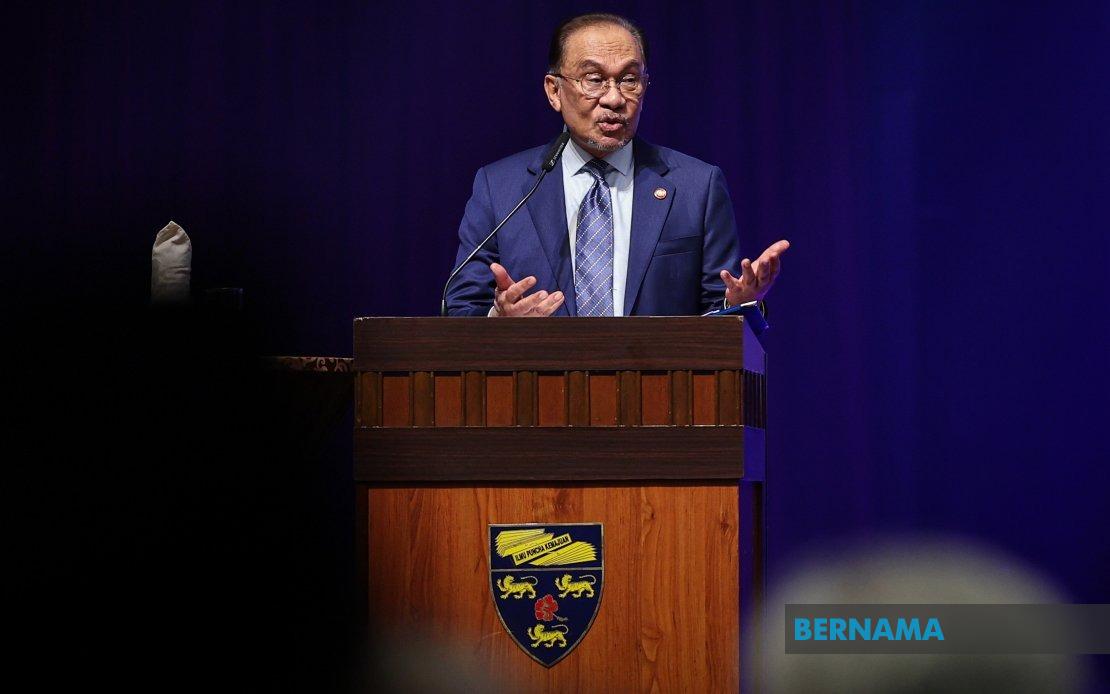
Prime Minister Datuk Seri Anwar Ibrahim has responded to the plight of Rosli Abdullah, a 52-year-old gravedigger in Kuala Terengganu grappling with a debilitating three-year battle against mouth cancer, by extending financial assistance through the government's support mechanisms. The RM2,000 contribution, presented on July 9, marks an intervention designed to alleviate the mounting medical expenses facing a man whose deteriorating health has rendered him unable to sustain his livelihood through manual labour.
The donation was handed over by Azhar Abd Hamid, deputy director of the Terengganu Federal Development Department's Implementation Coordination Unit under the Prime Minister's Department, at the Flat Batas Baru surau in Kuala Terengganu. Azhar explained that the assistance aims to offset immediate treatment burdens and facilitate the surgical intervention that medical professionals have deemed necessary for Rosli's survival and recovery prospects.
Beyond the immediate financial relief, the government has identified a significant administrative gap in Rosli's welfare coverage. Officials discovered that despite meeting the qualifying criteria, Rosli had not been enrolled in the e-Kasih electronic assistance programme, which provides targeted support to vulnerable households. This oversight will be rectified immediately, creating a pathway for sustained government aid that extends well beyond the one-time donation currently provided.
The situation illustrates the vulnerability of Malaysia's informal workers, particularly those employed in traditional occupations offering minimal social protection or employment benefits. Rosli's decades-long service as a gravedigger at the surau—a role he has performed for more than 30 years alongside supplementary cleaning work—has not translated into any institutional safety net, leaving him entirely dependent on charitable intervention when serious illness strikes.
Mohd Radzali Mohamad, the surau's deputy chairman, painted a sobering picture of Rosli's medical trajectory over recent months. The cancer's progression has caused severe swelling in his oral cavity and right cheek, rendering speech impossible for the past month. More critically, the physical manifestations of his illness have prevented him from consuming solid food for two weeks, with his nutrition now dependent entirely on tube feeding—a stark indicator of how the disease has compromised basic biological functions.
The medical pathway forward remains complex and challenging. Rosli has already undergone two surgical interventions, yet the malignancy has recurred with renewed aggression. The Sultanah Nur Zahirah Hospital in Kuala Terengganu, recognising the complexity of his case, has referred him to the Universiti Sains Malaysia Hospital's specialized facility in Kubang Kerian, Kelantan, for advanced surgical treatment. This referral pattern suggests his condition has exhausted the treatment capacity of local institutions and requires expertise available only at tertiary care centres.
Rosli's personal circumstances compound the medical challenges he faces. Living alone as an unmarried man without family support structures, he has become entirely reliant on the benevolence of the surau's management and broader community generosity. The physical deterioration accompanying his illness has eliminated his capacity to generate income through gravedigging or cleaning work, severing the modest financial independence he once maintained through these labours.
Recognising the inadequacy of government assistance alone, the surau's management has initiated an internal fundraising mechanism to accumulate resources specifically designated for Rosli's medical and surgical expenses. However, despite these grassroots mobilisation efforts, the collected funds remain insufficient to cover the full anticipated costs of his treatment at the tertiary hospital. This shortfall underscores the reality that community-based charity, while valuable, cannot substitute for systematic welfare provision designed to protect vulnerable citizens during health crises.
The case resonates with broader Malaysian policy considerations regarding informal sector workers and their access to healthcare. Many Malaysians employed in traditional occupations—gravediggers, manual labourers, domestic workers, and petty traders—operate outside formal employment frameworks, thereby forfeiting access to employer-sponsored health insurance or occupational welfare schemes. When catastrophic illness strikes such individuals, they face the dual burden of income loss and mounting medical debt simultaneously, a combination that frequently forces families into deeper poverty or medical bankruptcy.
The government's intervention through both the immediate donation and the e-Kasih registration represents recognition of these systemic vulnerabilities. The e-Kasih system, designed as a comprehensive poverty assessment and assistance mechanism, offers a more sustainable response than ad-hoc charitable donations. By ensuring Rosli's enrolment, authorities acknowledge that his crisis reflects not individual failings but structural gaps in the welfare apparatus that require institutional correction.
For the wider Southeast Asian context, Rosli's situation exemplifies challenges common across the region, where rapid urban development and economic transformation have outpaced corresponding expansions in social protection systems. Malaysia's relative prosperity places it in a stronger position than many neighbours to address such gaps, yet the persistence of such cases indicates that policy awareness and resource allocation have not yet caught pace with demographic realities.
Moving forward, Rosli's case may serve as a catalyst for reviewing how informal sector workers access healthcare support and how government assistance programmes identify and reach eligible individuals before crises become acute. The administrative oversight regarding his e-Kasih status suggests that current systems for identifying vulnerable populations may require enhanced outreach mechanisms, particularly within informal communities and religious institutional settings where many marginalised Malaysians find shelter and sustenance.

