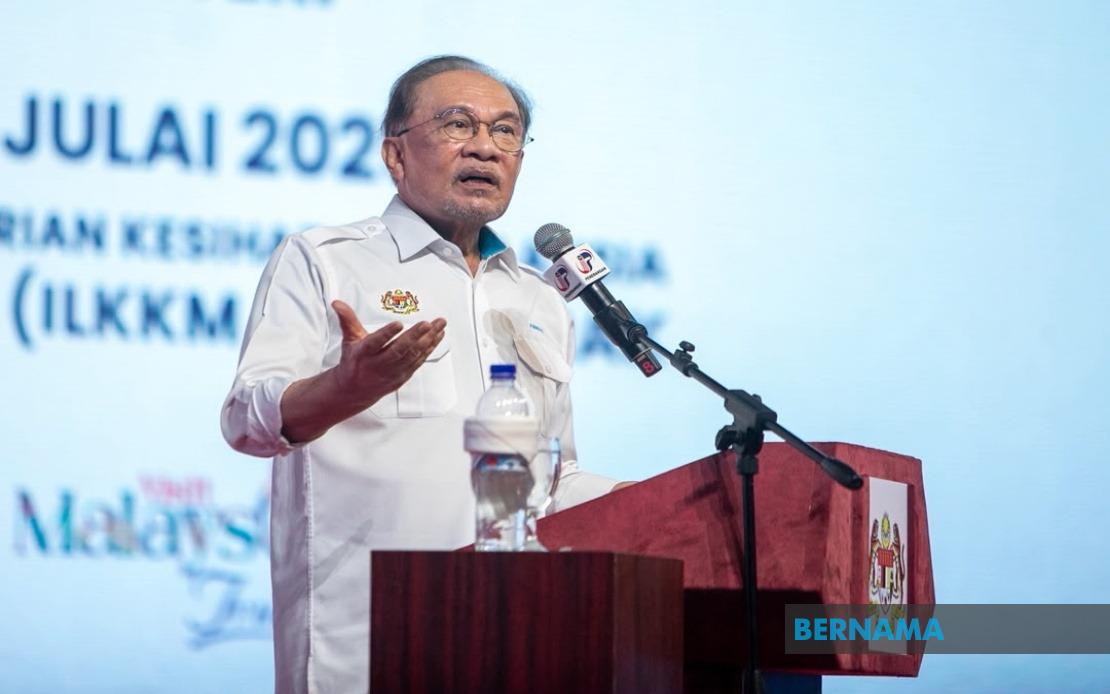
Prime Minister Datuk Seri Anwar Ibrahim has issued a pointed call to Malaysia's youth to reckon with the nation's independence heritage, warning against taking for granted the freedoms secured through generations of sacrifice. Speaking at the inauguration of the 2026 National Month and Fly the Jalur Gemilang Campaign in Ipoh on July 19, the Prime Minister stressed that understanding the true cost of independence remains essential to building a stronger, more unified Malaysia.
Anwar's remarks reflect growing concern among the nation's leadership about generational disconnection from foundational historical narratives. The campaign, which aims to instil national pride and unity through flag-flying initiatives, serves as a vehicle for transmitting historical consciousness to citizens increasingly distant from the independence era itself. By framing the National Month celebration not merely as a festive occasion but as a deliberate exercise in historical remembrance, the Prime Minister sought to deepen engagement with Malaysia's formative struggle.
The independence movement that culminated in Malaya's freedom in 1957 involved profound personal costs for its champions. Those who fought for self-determination endured physical hardship, emotional toll, and permanent separation from loved ones. Anwar's invocation of "blood, sweat and tears" anchors this abstract historical narrative to the lived experience of real individuals whose names history may have partially obscured. His message challenges contemporary Malaysians to move beyond comfortable patriotism and confront the material reality underpinning national sovereignty.
Anwar articulated a three-stage framework for meaningful national observance. First, citizens must engage seriously with historical documentation and analysis, revisiting foundational narratives without romanticism or distortion. Second, symbolic practices—particularly the public display of the national flag—should serve as visible expressions of collective identity rather than mere decorative exercises. Third, this historical consciousness must translate into forward-looking action that shapes Malaysia's trajectory toward greater prosperity and cohesion. This conception positions the 2026 campaign as something more ambitious than typical anniversary celebrations.
The emphasis on intergenerational transmission carries particular weight in contemporary Malaysia. Citizens under 25 years old have no direct memory of the post-independence period and encounter the nation's founding through mediated accounts. Educational curricula, popular media, and family narratives each offer competing interpretations. The Prime Minister's intervention suggests concern that official historical narratives risk erosion without deliberate institutional reinforcement. By positioning himself as custodian of historical truth, Anwar attempts to establish a particular reading of independence as foundational to national identity.
For Malaysian readers and regional observers, the political implications deserve consideration. Anwar's government has consistently emphasised unity and reconciliation as counterweights to communal tensions that periodically surface in Malaysian politics. Linking national pride to shared historical struggle serves this objective by positioning all communities as stakeholders in the independence achievement. This rhetorical move carries particular significance given Malaysia's complex demographic composition and occasional communal friction, suggesting that inclusive patriotism offers an alternative to divisive identity politics.
The presence of Communications Minister Datuk Seri Fahmi Fadzil, National Unity Minister Datuk Aaron Ago Dagang, and Perak Menteri Besar Datuk Seri Saarani Mohamad at the launch underscores the campaign's importance across federal and state levels. The involvement of the communications portfolio signals recognition that historical narratives require sustained media and messaging support. The national unity minister's participation emphasises the government's view that understanding shared national history constitutes an essential foundation for managing Malaysia's diversity.
For Southeast Asia more broadly, Malaysia's approach to independence commemoration reflects regional patterns. Nations across the region grapple with translating anti-colonial liberation narratives into contemporary civic frameworks as the independence generation ages and passes from public life. Malaysia's experience offers lessons about institutional mechanisms for perpetuating historical consciousness across generational divides, a challenge increasingly acute throughout the region.
The 2026 National Month campaign timing reflects the government's forward-planning orientation. Rather than simply marking 2026 as another routine anniversary, the campaign frames it as opportunity for conscious renewal of national commitment. This preventive approach suggests institutional anxiety about historical amnesia—concern that without deliberate intervention, younger Malaysians might progressively disconnect from the narratives that hold the nation together.
Anwar's specific rhetorical turn toward young people—addressing them as "children" despite speaking to citizens of voting age—carries both pedagogical and paternalistic dimensions. It positions the Prime Minister as elder guardian of historical truth and younger citizens as inheritors with responsibilities rather than autonomous interpreters. This approach assumes that historical truth remains comprehensible and transmissible through authority, a proposition increasingly challenged in contemporary discourse where historical narratives face multiple interpretations and competing authorities.
Ultimately, the Prime Minister's intervention articulates a vision of informed nationalism grounded in historical consciousness. Rather than expecting pride to flow automatically from national membership, Anwar insists that genuine patriotism requires understanding the specific struggles through which national independence was achieved. This emphasis on comprehension before celebration suggests a government attempting to deepen rather than merely celebrate national identity—a significant distinction as Malaysia navigates contemporary challenges requiring sustained social cohesion and shared purpose.

