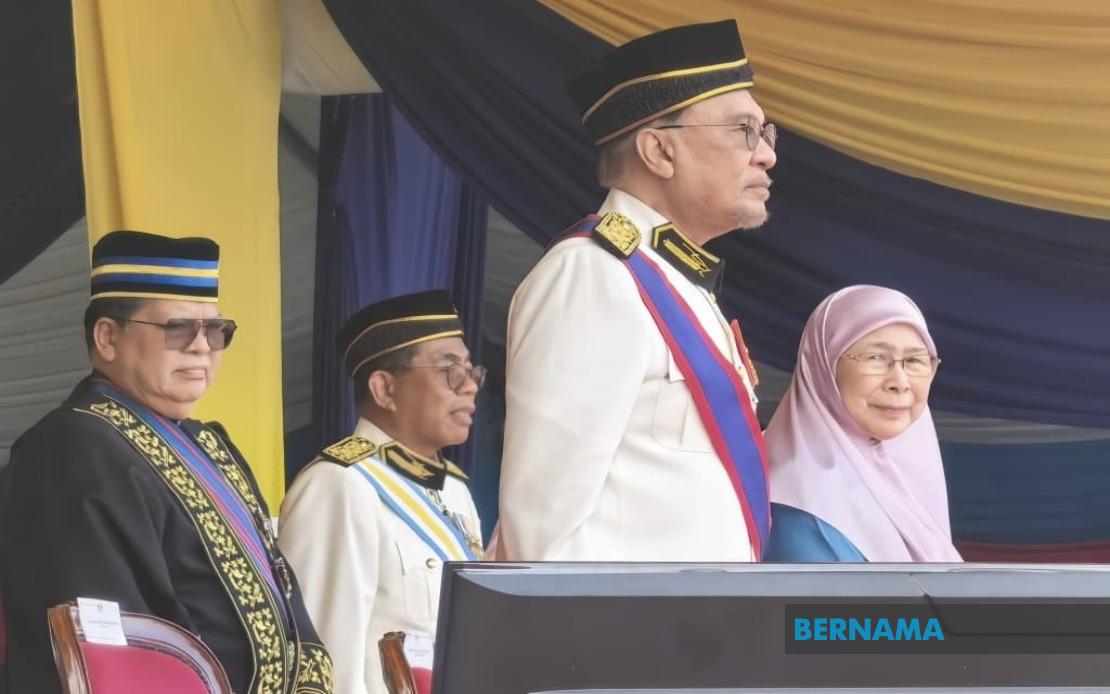
Prime Minister Datuk Seri Anwar Ibrahim has called upon the younger generation to fully appreciate the sacrifices made by Malaysia's security forces in building the nation's freedom, peace, and prosperity. Speaking at the 2026 National Warriors' Day Parade held at Dataran Pahlawan Negara in Putrajaya on July 31, Anwar emphasised that contemporary Malaysians must understand the true cost of independence and stability that previous generations fought to secure.
The centrepiece of the ceremony was a powerful pantomime presentation titled "Darah Pahlawan Ulu Legong" (The Blood of the Ulu Legong Warriors), staged by the Malaysian Armed Forces to commemorate the heroism and ultimate sacrifice of military personnel. Anwar expressed deep emotion at the performance, describing it as both compelling and heart-wrenching, noting that its impact transcended typical theatrical entertainment because it portrayed real historical events involving genuine loss and devotion to country. The production served as a visceral reminder of the human cost of national defence and security operations conducted during Malaysia's turbulent post-independence era.
The pantomime recounted one of the most significant incidents in Malaysian military history: the ambush that claimed the lives of seven soldiers in Ulu Legong, Baling, Kedah, on October 29, 1981, during a security operation against communist insurgents. This event represented a pivotal moment when dedicated servicemen paid with their lives to protect national sovereignty and territorial integrity. By recreating this tragedy through performance, the Malaysian Armed Forces ensured that the sacrifice would not fade into historical obscurity but would remain vivid in public consciousness, particularly among younger Malaysians who may lack direct memory of the nation's struggle for security and stability.
Anwar stressed that Malaysia's current generation enjoys unprecedented peace and prosperity not through accident or fortune, but through the conscious sacrifice and professional dedication of defence force members who accepted the ultimate risk. He articulated that these servicemen did far more than simply perform their duties—they made irreversible commitments that fundamentally shaped the nation's trajectory. The Prime Minister underscored that understanding this sacrifice represents an essential obligation for contemporary citizens, as failure to remember could lead to complacency about the fragility of national security and the vigilance required to maintain it.
The ceremony attracted high-level government participation, reflecting the significance accorded to honouring security personnel. In attendance were Home Minister Datuk Seri Saifuddin Nasution Ismail, Defence Minister Datuk Seri Mohamed Khaled Nordin, Chief of Defence Force General Tan Sri Malek Razak Sulaiman, and Inspector-General of Police Tan Sri Mohd Khalid Ismail, alongside the Prime Minister's wife, Datuk Seri Dr Wan Azizah Wan Ismail. This high-level turnout demonstrated unified governmental commitment to recognising military service and ensuring that such recognition resonates throughout the administration and broader society.
Anwar took particular care to personally meet and recognise survivors and those directly affected by the Ulu Legong incident, demonstrating that commemoration extends beyond formal ceremony into direct human connection. He acknowledged Private Md Said Adam, one of only two survivors of the ambush, as well as Lt. Col. Hamzah Othman, the commanding officer of the 22nd Battalion, Royal Malay Regiment during the operation. By engaging directly with these figures, Anwar emphasised that national service and sacrifice are not abstract concepts but lived realities embodied in specific individuals whose experiences deserve recognition and respect from current leadership.
The 2026 National Warriors' Day Parade operated under the overarching theme "Mengenang Jasa, Mengukuh Pertahanan" (Honouring Service, Strengthening Defence), which captured a dual imperative: remembrance of past service and commitment to maintaining contemporary defence capability. This thematic framework suggests that honouring historical sacrifice is not merely sentimental but essential to sustaining the institutional quality and national commitment required for ongoing security operations. By connecting past sacrifice to present defence requirements, organisers reinforced that the Malaysian Armed Forces' reputation and effectiveness depend partly on societal recognition and support.
The ceremony extended recognition beyond the Ulu Legong incident to encompass broader historical periods, including the Emergency and Confrontation eras—defining chapters in Malaysia's security history when armed forces engaged in prolonged operations to defend national sovereignty against both internal insurgency and external threats. These eras, spanning from the 1940s through the 1960s, required sustained sacrifice from military personnel and fundamentally established the security architecture upon which modern Malaysia rests. By situating the Ulu Legong incident within this longer historical continuum, the ceremony underscored that individual acts of sacrifice were part of a comprehensive national effort spanning decades.
Anwar's intervention and emphasis on this commemoration reflects broader governmental concern that contemporary Malaysians, particularly those born after the major security crises of previous decades, may lack intuitive understanding of why military service matters or why defence spending commands significant national resources. By elevating this ceremony and personally articulating its significance, the Prime Minister sent a clear message that national leadership views security force recognition as integral to sustaining social cohesion and national identity. In the Malaysian context, where the nation comprises diverse ethnic and religious communities that united around independence struggles, commemorating security forces' sacrifice serves as a unifying narrative transcending communal divisions.
The emphasis on young generation awareness carries particular weight for Malaysia, a nation of approximately 34 million people with a median age around 29, meaning the majority of citizens have no personal recollection of active insurgency or the security challenges that shaped the nation in preceding decades. Educational and ceremonial initiatives like the Warriors' Day Parade therefore become essential mechanisms for transmitting historical consciousness and ensuring that the values of national service, sacrifice, and security commitment persist across generational lines. Without such deliberate efforts at cultural transmission, younger Malaysians might take for granted the peace and stability that previous generations fought to establish.
Anwar's remarks also positioned Malaysia within regional contexts, as several Southeast Asian nations have experienced their own security challenges and defence force sacrifices. Countries including Thailand, Indonesia, and the Philippines have similarly wrestled with internal insurgencies and external threats, creating shared understanding across the region of the human costs associated with maintaining national sovereignty. By honouring Malaysia's security forces in high-profile fashion, Anwar signalled that the nation recognises these challenges as serious and expects citizens to reciprocate that seriousness through respect and support for defence institutions.
The practical implications of elevated security force recognition extend to recruitment, retention, and morale within the Malaysian Armed Forces, aspects that directly influence military capability and readiness. When national leadership publicly honours service and sacrifice, it enhances the prestige associated with military careers and reinforces the sense that society values defence personnel contributions. This cultural affirmation becomes particularly important given that professional military service often involves extended separation from families, exposure to danger, and limited financial compensation compared to civilian alternatives, meaning that social recognition and respect become significant non-material benefits attracting quality personnel to defence roles.
Looking forward, Anwar's emphasis on this commemoration suggests that honouring security forces will likely feature prominently in government narratives and ceremonial calendars, with implications for how Malaysia constructs and communicates national identity to both domestic and international audiences. For regional observers and international partners assessing Malaysia's commitment to security and stability, such ceremonies and leadership statements provide reassurance that the nation takes defence seriously and expects citizens to support necessary security investments and policies. This message matters in a region experiencing evolving security challenges, from transnational terrorism to maritime disputes, where national cohesion and societal support for defence efforts significantly influence a country's ability to protect its interests.

