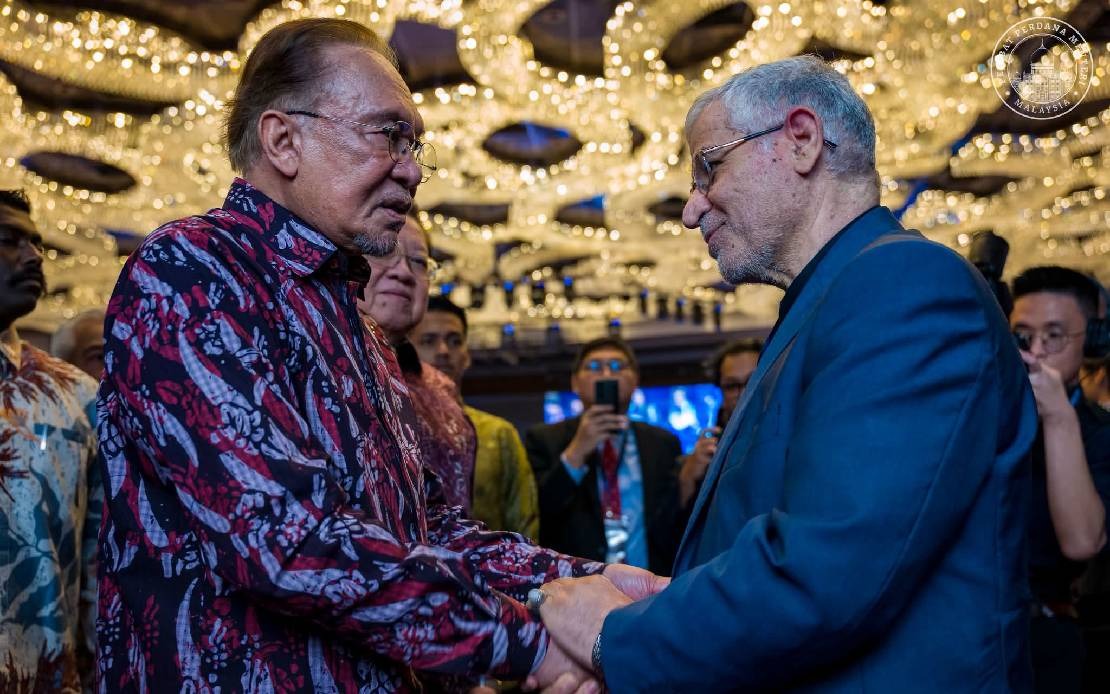
Prime Minister Datuk Seri Anwar Ibrahim has conveyed his regrets to the Iranian government for his absence from the state funeral and farewell ceremonies of Iran's Supreme Leader, the late Ayatollah Ali Khamenei. The Prime Minister communicated this apology during a bilateral meeting with Iranian Ambassador to Malaysia Valiollah Mohammadi on the sidelines of the 39th Asia-Pacific Roundtable conference in Kuala Lumpur. Through a Facebook announcement, Anwar detailed the circumstances of his unavailability, explaining that pressing official responsibilities made it impossible for him to travel to Iran to pay his final respects at the high-profile state occasion.
The diplomatic gesture underscores Malaysia's commitment to maintaining cordial relations with Iran, a significant player in Middle Eastern affairs and an important trading partner for Southeast Asia. Anwar's formal apology, delivered through official channels, reflects the weight of bilateral ties and the diplomatic protocol expected when senior leaders are unable to attend major state ceremonies. Such gestures are particularly important in the context of regional diplomacy, where personal attendance at significant national events is often viewed as a mark of respect and solidarity between nations.
Alongside his expression of regret, Anwar reiterated Malaysia's condolences to both the Iranian government and its population following Khamenei's death earlier this year. The late Supreme Leader, aged 86, passed away on February 28 at his residence in central Tehran. Reports at the time indicated that Khamenei died following a combined military operation involving the United States and Israel, an event that reverberated through regional geopolitical dynamics and had implications for international relations across Asia and the Middle East.
To ensure Malaysia's presence was appropriately represented at the funeral proceedings, Anwar delegated Agriculture and Food Security Minister Mohamad Sabu to attend the ceremonies on behalf of the Malaysian government. This decision demonstrates the priority placed on diplomatic representation, with a senior cabinet member tasked with the responsibility of honouring Iran's Supreme Leader and conveying Malaysia's official sympathy to the Islamic Republic.
The state farewell ceremony for Khamenei is scheduled to unfold over six consecutive days, commencing on July 4. The proceedings will follow a carefully choreographed sequence of traditional and state rituals designed to honour the passing of Iran's paramount religious and political authority. The schedule begins with funeral processions through two major Iranian cities: Tehran, the capital, and Qom, an ancient centre of Islamic learning and scholarship. These processions serve not only as ceremonial occasions but also as opportunities for millions of Iranian citizens to pay their respects and participate in the mourning of their leader.
The funeral arrangements conclude with the interment of Khamenei at the Imam Reza Shrine in Mashhad, scheduled for July 9. The Imam Reza Shrine is one of the holiest sites in Shia Islam and one of the most visited pilgrimage destinations in the world, making it a fitting final resting place for Iran's Supreme Leader. The choice of location carries deep religious and symbolic significance within Iran's Islamic framework and reflects Khamenei's towering position within the Iranian religious hierarchy.
For Malaysia, Khamenei's death represents a significant moment in the country's relationship with Iran. The two nations share historical trade connections and have collaborated on various diplomatic initiatives within broader Asian forums. Iran's geopolitical significance extends beyond its immediate regional context; as a major oil and gas producer with considerable influence over Middle Eastern affairs, developments in Iran inevitably affect regional stability and economic dynamics that touch Southeast Asian interests.
Anwar's careful handling of the diplomatic situation reflects his administration's broader approach to foreign policy, which emphasises maintaining pragmatic relations across the Muslim world while navigating complex international alignments. Malaysia, as a Muslim-majority nation with significant economic ties across multiple regions, must balance its diplomatic relationships carefully. Missing the funeral of such a prominent religious and political figure could have been perceived negatively had it not been accompanied by an official explanation and high-level representation.
The scheduling of Anwar's apology to coincide with the Asia-Pacific Roundtable conference, a significant platform for regional dialogue and policy discussion, suggests a strategic approach to managing the diplomatic messaging. Such conferences provide valuable opportunities for bilateral conversations and clarifications away from the glare of formal state visits. The informal setting of a conference allows leaders to address sensitive matters with greater flexibility while still maintaining the formality required by protocol.
Moving forward, Malaysia's diplomatic engagement with Iran will likely continue through established channels and multilateral forums. The delegation of Minister Mohamad Sabu to represent Malaysia at the funeral ceremonies serves as a practical solution that satisfies diplomatic requirements while acknowledging the constraints facing the Prime Minister. This approach demonstrates how governments navigate the complex demands of international relations when leadership scheduling conflicts with major world events.
The incident also highlights the broader challenge facing leaders in an increasingly interconnected world, where multiple high-priority commitments often overlap. Prime Ministers and presidents must constantly make difficult choices about where their physical presence is most strategically important, all while maintaining respectful diplomatic relations with countries experiencing significant national moments. Anwar's proactive outreach to the Iranian ambassador shows an understanding of how such absences might be perceived and the importance of clear communication in managing diplomatic expectations.

