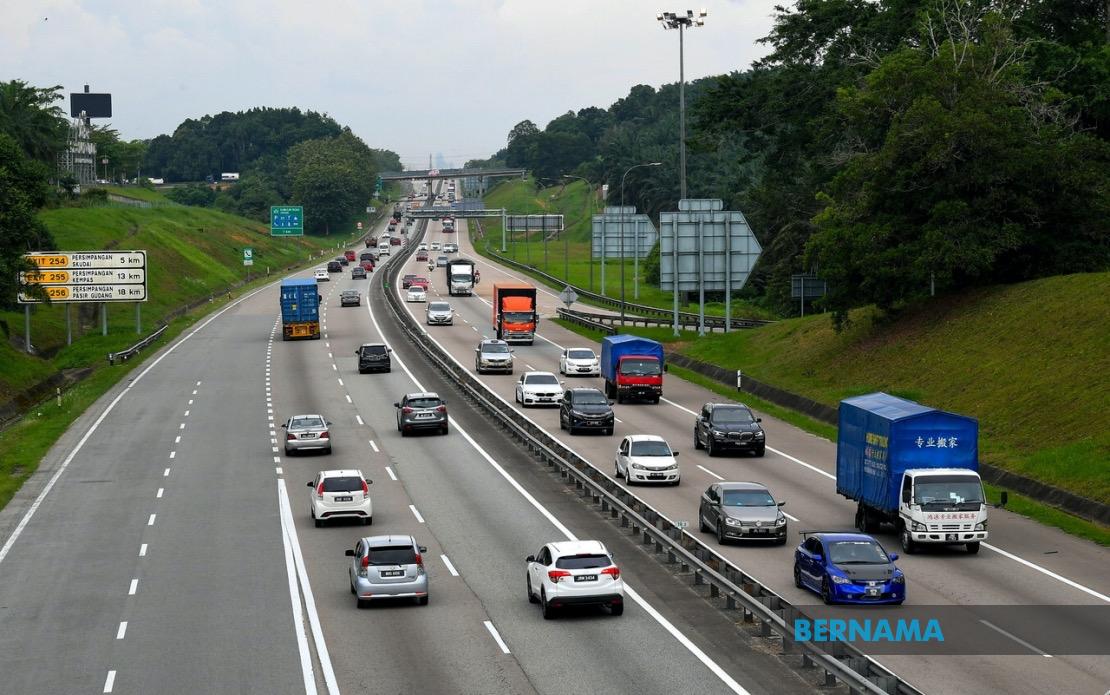
Malaysia's premier highway operator PLUS Malaysia Berhad is gearing up for one of the busiest periods on its network, forecasting a dramatic jump in traffic volumes as the nation observes National Day celebrations alongside the school holiday season. The company expects daily vehicle counts to reach 2.2 million across its highways during two critical windows: August 28 to 31 and September 4 to 7, marking a significant increase from typical operational levels and underscoring the massive logistical challenge of managing nationwide travel during festive periods.
The anticipated congestion reflects a broader pattern observed during Malaysia's school holiday breaks, when millions of families embark on domestic trips to visit relatives, holiday destinations, or conduct business travel deferred from the working calendar. This year's convergence with National Day celebrations on August 31 compounds the pressure, creating a perfect storm of leisure and holiday traffic that tends to concentrate on major intercity corridors during traditional departure times. For Malaysian commuters and travellers, this represents both an opportunity for holiday getaways and a substantial risk of unexpected delays if proper planning and preparation are not undertaken.
To distribute traffic flows and mitigate bottlenecks, PLUS is encouraging users to adopt data-driven journey planning through its MyPLUS-TTA digital advisory system, accessible via the PLUS App. This travel time prediction tool allows motorists to stagger their departures by identifying optimal travel windows with lower congestion levels. By shifting departure times away from traditional rush periods—typically mid-morning and late afternoon—travellers can substantially reduce their time spent in queues and minimise fuel consumption during idle periods. The system also provides real-time incident reporting and alternative route suggestions, empowering drivers to make informed decisions during their journeys.
The PLUS App itself functions as a comprehensive travel companion, consolidating several essential services into a single platform. Beyond traffic information, users can access emergency assistance functionality, incident reports updated continuously by the Traffic Monitoring Centre, estimated toll rates for their intended routes, and detailed locations of rest and service areas strategically positioned along the network. For the growing number of electric vehicle owners in Malaysia, the app now provides charging station locations, addressing range anxiety concerns that may otherwise discourage long-distance EV travel during peak periods. This digital infrastructure represents a significant evolution in highway management, shifting from passive information dissemination to active demand management.
Behind the technological initiatives lies substantial operational reinforcement. PLUS is deploying additional personnel at toll plazas to expedite processing and reduce queue formation at payment points, a perennial bottleneck during high-volume periods. Enhanced PLUSRonda patrol coverage will provide faster response to minor incidents, reducing their duration and cascading impact on traffic flow. The Traffic Monitoring Centre will operate under heightened alert status, with staff actively monitoring conditions and coordinating with field personnel to implement dynamic traffic management strategies. These human-centred interventions complement the technology layer, recognising that no algorithm can replace experienced traffic operators making real-time judgement calls during complex situations.
A particularly innovative measure involves the activation of Smart Lane facilities at 33 strategically selected locations across the network. These flexible-use lanes can operate as additional capacity when congestion develops or revert to emergency lanes during lighter periods. However, their success depends entirely on driver compliance and understanding. PLUS has emphasised that users must monitor signage carefully, reduce speeds within Smart Lanes to prevent safety incidents, and crucially, refrain from using emergency lanes outside designated Smart Lane activation zones. The legal consequences of misusing these facilities serve as deterrents, reflecting authorities' recognition that highway safety cannot be compromised in pursuit of throughput gains.
Interagency coordination will prove critical during the anticipated surge. PLUS is collaborating with the Royal Malaysia Police (PDRM) for traffic enforcement and accident response, the Road Transport Department (JPJ) for vehicle safety compliance checks, and the Malaysian Highway Authority (LLM) for broader traffic management oversight. This multi-stakeholder approach acknowledges that effective highway management transcends any single operator's capabilities, requiring coordinated action across enforcement, regulation, and operational functions. Such cooperation also provides redundancy—if one agency's resources become overwhelmed, others can surge in support.
The human comfort dimension has not been overlooked. PLUS has upgraded maintenance protocols at rest and service areas, prioritising cleanliness standards in facilities that will experience double or triple their typical usage during peak periods. Prayer rooms and toilet facilities receive particular attention, recognising Malaysia's diverse traveller demographics and the importance of providing inclusive facilities that cater to religious observance and basic hygiene needs. Adequate rest facilities are also critical for preventing driver fatigue, a significant contributing factor to highway accidents during extended journeys—a concern that intensifies when vehicles concentrate on particular routes simultaneously.
For travellers intending to navigate these highways, PLUS has issued a comprehensive pre-departure checklist addressing both vehicle and payment readiness. Mechanical fitness checks ensure vehicles are fit for potentially extended journeys, while toll payment preparedness—maintaining adequate Touch 'n Go card balances, ensuring e-wallet funding, and verifying JustGO app card linkages—prevents the frustration of being unable to exit toll plazas due to payment processing failures. These seemingly mundane details become critical when thousands of vehicles are queued behind each transaction point, where delays cascade exponentially.
Behavioural guidance from PLUS emphasises defensive driving principles that become increasingly important during congested conditions. Strict speed limit adherence, maintenance of safe following distances, and avoidance of mobile phone use while driving all reduce accident probabilities that could trigger the very congestion travellers seek to avoid. The paradox of congestion is that individual driver behaviour choices—whether rational or emotional—collectively determine whether a crowded highway functions smoothly or degenerates into gridlock. PLUS's reminders about rest breaks at service areas address the cognitive fatigue that can impair judgment after prolonged driving, particularly relevant for long-distance travellers during school holiday periods who might otherwise attempt non-stop journeys.
For travellers encountering difficulties during their journeys, PLUS maintains dedicated customer support through PLUSLine at 180088-0000, providing emergency assistance contact points for mechanical failures, accidents, or other roadside incidents. The combination of app-based information channels and traditional phone support ensures accessibility for all user demographics, from digital-native younger travellers to older motorists more comfortable with voice communication. Real-time traffic updates circulated through the PLUS App and official social media platforms provide continuous information flow, allowing travellers to adapt plans mid-journey if unexpected congestion develops.
The magnitude of the anticipated traffic surge—2.2 million vehicles daily—illustrates the massive scale of Malaysian domestic mobility during festive periods and the corresponding operational complexity of managing such concentrations. For policymakers and infrastructure planners, these patterns highlight both the success of Malaysia's highway network in enabling geographic mobility and the capacity constraints that emerge during predictable peak periods. The measures PLUS is implementing represent pragmatic approaches to demand management within existing infrastructure constraints, though they also implicitly raise questions about long-term capacity expansion and whether further network development might be necessary to accommodate Malaysia's growing vehicle population and travel demand without imposing such stringent operational challenges during predictable peak periods.

