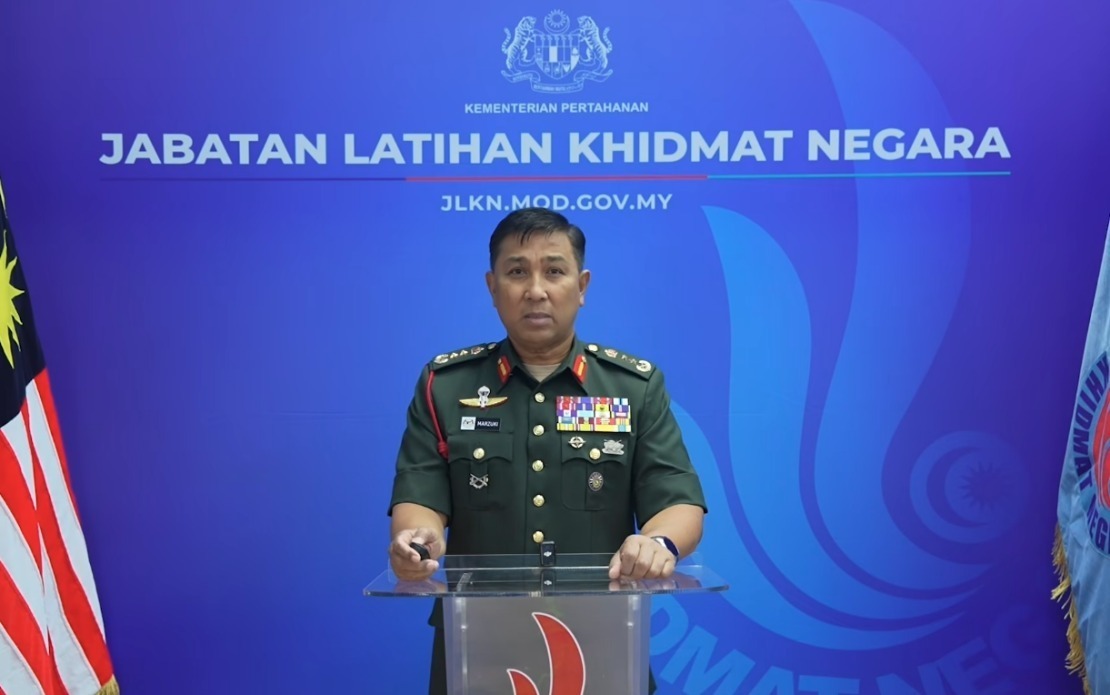
The National Service Training Department has made provisions for 77 trainees enrolled in the PLKN 3.0 Series 3/2026 programme to exercise their voting rights in the forthcoming state elections in Johor and Negeri Sembilan, according to an announcement made on July 11. This accommodation reflects official recognition of the importance of enabling young citizens to participate in electoral processes, even while undertaking compulsory national service obligations that typically demand full-time commitment from participants.
Major General Datuk Marzuki Mokhtar, the director general of the National Service Training Department, explained that the decision represents an intentional effort to preserve trainees' constitutional rights to vote without undermining the core educational and nation-building objectives that form the foundation of the PLKN 3.0 programme. The carefully calibrated approach demonstrates how government institutions can accommodate civic participation while maintaining the structured environment necessary for a military-style training initiative. This balancing act is particularly significant in Malaysia, where the National Service programme has been positioned as a crucial mechanism for fostering national unity and shared identity among young adults from diverse backgrounds.
Breaking down the electoral arrangements, 31 trainees participating in the Johor state election held on the date of the announcement have received permission to postpone their return to camp until the following day, allowing sufficient time for voting procedures and travel. This staggered leave arrangement minimises disruption to the overall training schedule while ensuring these individuals can fulfil their civic duty. The relatively compact timeframe—permitting absence for essentially a single day—reflects the logistical efficiency required when managing large cohorts of trainees across multiple military camps.
A larger contingent of 46 trainees who are registered to vote in the Negeri Sembilan state election scheduled for August 1 will receive a more extended leave period of two to three days. This extended absence takes into account the additional travel requirements for those voting in a different state, acknowledging that geographical distance necessitates a longer window for trainees to complete their voting obligations and return to their training locations. The Department's willingness to grant longer absences for more distant polling locations suggests a pragmatic understanding of the practical constraints faced by young citizens participating in the programme.
The timing and structure of these voting arrangements occur within a broader cohort cycle, as the PLKN 3.0 Series 3/2026 is scheduled to run from early July through late August. A total of 870 trainees with confirmed participation are expected to complete this training series, distributed across three operational camps located in strategically significant regions across Malaysia. Camp 505 AW in Pekan, Pahang will host the largest contingent with 500 trainees, while Camp 515 AW in Kuala Lumpur accommodates 250, and Camp 504 AW Bukit Keteri in Perlis provides training for 120 individuals.
These camp locations span different geographic zones—Pahang representing the east coast, Kuala Lumpur the central region, and Perlis the northern frontier—indicating a deliberate nationwide distribution of the training infrastructure. This geographical spread ensures that trainees from across Malaysia experience the programme while remaining relatively accessible to their home constituencies during electoral periods. The positioning of camps also reflects strategic military and civilian planning, placing training facilities in regions where they can leverage existing infrastructure and maintain operational readiness.
The accommodation of voting rights within the PLKN framework comes at a time when Malaysia has witnessed multiple state-level electoral contests in quick succession. The arrangement by the National Service Training Department underscores institutional recognition that democratic participation cannot be indefinitely deferred, even for individuals engaged in structured national service. This approach strengthens the legitimacy of the training programme itself, demonstrating that state objectives and individual rights need not be fundamentally incompatible.
For young Malaysians, particularly those born around 2006 to 2008 who form the core age cohort for PLKN 3.0 participation, the voting opportunities during their service period represent an important early engagement with electoral processes. Many trainees will be participating in state elections during or shortly after their national service experience, meaning their first substantive interaction with voting may occur while enrolled in the programme. This convergence of civic participation and national service creates a symbolic moment where the state invests in both structured patriotic education and democratic engagement simultaneously.
Looking ahead, the National Service Training Department has reminded prospective applicants for PLKN 3.0 Series 4/2026, particularly those born in 2008, to monitor official departmental channels for announcements regarding selection and registration processes. This forward-looking communication ensures that younger cohorts understand the expectations and timelines associated with programme participation, while simultaneously reinforcing the Department's formal channels as the sole authoritative source for recruitment and administrative information. The emphasis on official departmental communication also serves to protect potential trainees from fraudulent recruitment schemes, a concern that has periodically emerged in connection with large-scale government programmes.
The decision to grant voting leave within the PLKN framework reflects a mature institutional approach to balancing state interests with individual rights. By ensuring that trainees can participate in elections without abandoning their service obligations, the Department demonstrates that compulsory national training and democratic citizenship are mutually reinforcing rather than contradictory objectives. This accommodation may also enhance the perceived legitimacy and social acceptance of the PLKN 3.0 programme among participants and their families, particularly in an era when younger Malaysians are increasingly attentive to questions of civic participation and institutional transparency.

