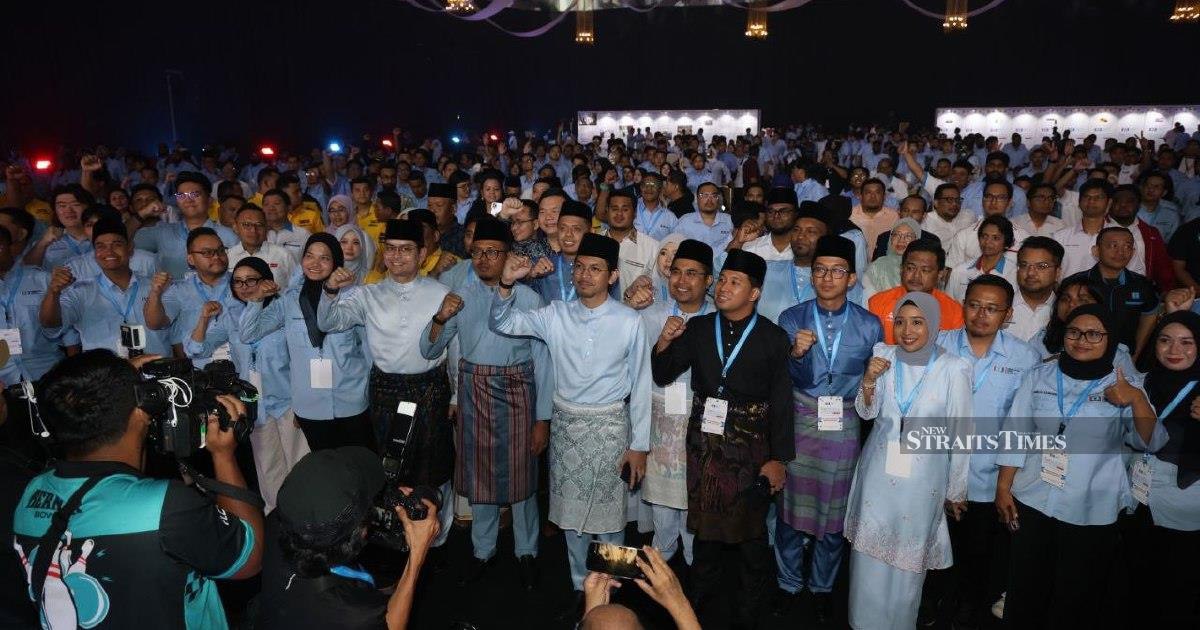
At a forum in Ayer Keroh, PKR Youth chief Muhammad Kamil Abdul Munim delivered a pointed message to Pakatan Harapan leadership: the responsibility for recent electoral setbacks lies not with voters who turned away from the coalition, but with the coalition itself. His remarks reflect growing acknowledgment within reform-minded segments of the ruling coalition that accountability and introspection must precede any meaningful recovery in public support.
The Johor and Negri Sembilan state elections represent significant tests of voter sentiment towards Pakatan Harapan's governance since the coalition recaptured federal power in 2022 following the collapse of the Sheraton Move government. These contests offered clear feedback on whether the electorate retained confidence in the coalition's ability to deliver on its reform agenda and economic promises. The disappointing outcomes cannot be attributed to voter irrationality or fickleness, Kamil argued, but rather demand serious examination of what Pakatan Harapan has failed to accomplish.
This perspective represents a departure from defensive posturing sometimes observed in political circles after electoral reverses. Rather than invoking external factors or questioning the electorate's judgment, Kamil's framing places the onus squarely on Pakatan Harapan's shoulders to diagnose its shortcomings and chart a corrective course. Such candid self-assessment, while uncomfortable, reflects the reality that Malaysian voters have consistently demonstrated sophistication in evaluating political performance and adjusting their choices accordingly.
The trust deficit that Kamil identifies requires serious attention because voter confidence represents the foundation upon which any political coalition builds electoral viability. Over the past two decades, Malaysian voters have demonstrated willingness to punish coalitions perceived as arrogant, disconnected, or failing to deliver tangible improvements to daily life. The 2018 watershed election that swept Barisan Nasional from power after six decades demonstrated this principle at scale, and the more recent state-level results suggest that Pakatan Harapan has not yet secured the institutional loyalty that might insulate it from similar consequences.
Restoring this confidence demands concrete action across multiple fronts. Economic performance remains paramount; voters facing inflationary pressures, employment uncertainty, and rising costs of living vote according to their material circumstances and prospects. Pakatan Harapan's governance record on economic matters—including management of the cost of living, creation of quality employment, and fiscal prudence—will determine whether public perception shifts positively. Beyond economics, the coalition's commitment to institutional reform, judicial independence, and transparency in government continues to shape voter calculations about whether Pakatan Harapan genuinely represents the change it promised.
Internal cohesion within Pakatan Harapan also factors significantly into voter confidence. The coalition comprises ideologically diverse political parties with distinct organizational cultures and constituency bases. Visible disagreements on strategy, frequent recalibrations of political alliances, and perceived jockeying for position undermine the coalition's credibility and suggest to voters that their interests rank below intra-coalition power negotiations. Conversely, demonstration of purposeful cooperation towards shared objectives would reinforce confidence that Pakatan Harapan possesses the unity necessary for sustained governance.
Kamil's intervention carries particular significance because PKR Youth represents younger party members and aspirants who may be less invested in defending traditional political narratives. Their willingness to criticize coalition performance suggests that pressure for reform extends beyond external opposition into Pakatan Harapan's own structures. This internal dynamic could prove valuable if channeled productively towards genuine institutional change, though it also signals potential fractures if ignored by senior leadership.
The Johor and Negri Sembilan results should be interpreted as a warning rather than a verdict. Malaysia's electoral system, with staggered elections across federal, state, and local levels, creates multiple opportunities for coalition realignment and shifts in voter sentiment. The relatively recent federal victory of Pakatan Harapan means the coalition retains time to alter its trajectory, though that window inevitably narrows as the next general election approaches. Whether current leadership heeds calls for accountability and reform will substantially influence whether the coalition can recover voter confidence or faces further erosion.
Sector-specific performance also matters. Public services such as healthcare, education, and infrastructure development carry outsized importance in voter perception. States governed by Pakatan Harapan have opportunity to demonstrate superior delivery compared to opposition-ruled territories, generating tangible evidence of coalition competence. Conversely, governance failures or perceived mismanagement translate rapidly into lost confidence.
Kamil's remarks also implicitly acknowledge that Malaysia's political landscape has matured beyond the era when electoral results could be readily dismissed as anomalies or distortions. Contemporary Malaysian voters possess access to diverse information sources, awareness of alternative political options, and demonstrated capacity to shift allegiances when dissatisfied. Political coalitions therefore cannot assume automatic voter loyalty and must continuously justify their tenure through performance and responsive governance.
Moving forward, Pakatan Harapan faces the imperative outlined by Kamil: acknowledge voter concerns as legitimate expressions of rational evaluation rather than misunderstanding or confusion, commit transparently to addressing identified deficiencies, and implement reforms demonstrating fundamental responsiveness to public needs. The coalition's ability to execute this approach will substantially determine its political viability beyond the next electoral cycle.

