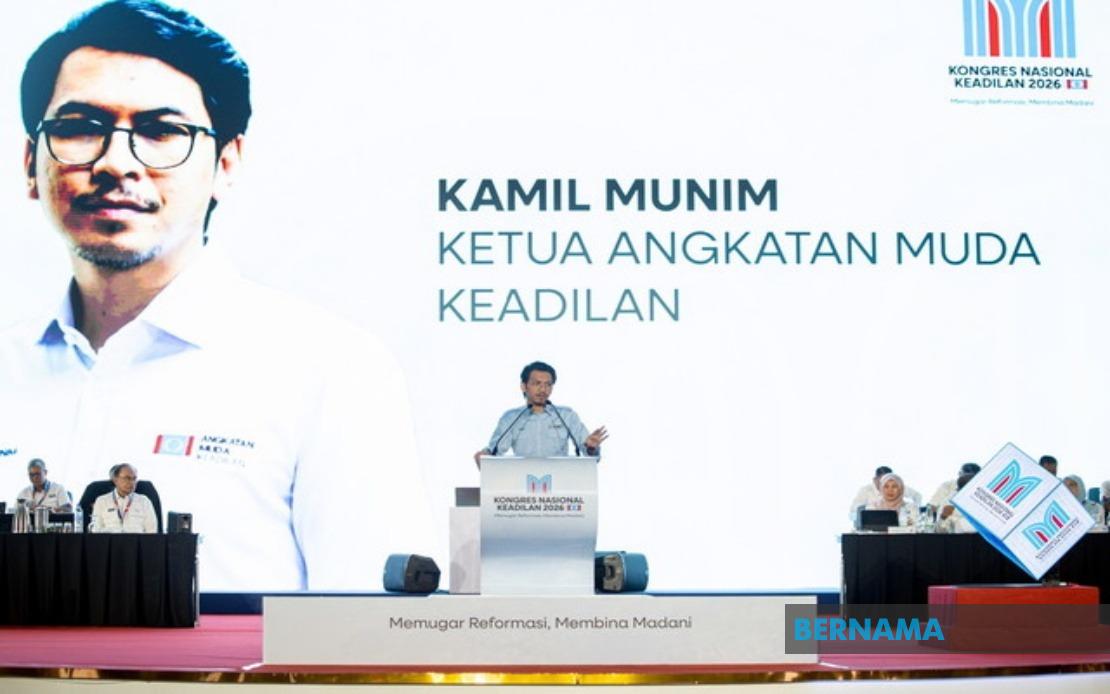
The leadership of PKR Youth (AMK) must fundamentally rethink its approach if the party hopes to secure the backing of Malaysia's largest voting bloc: citizens aged 45 and below. This call for strategic renewal came from AMK chief Muhammad Kamil Abdul Munim during his closing remarks at the PKR National Congress in Melaka on August 16, signalling that recent electoral setbacks have prompted serious internal reflection within the party structure.
The recent state elections in Johor and Negeri Sembilan have served as a wake-up call for Malaysia's reformist political party. Muhammad Kamil acknowledged that these contests, while not catastrophic, exposed vulnerabilities that demand urgent attention. Rather than dismissing the results, party leadership is treating them as diagnostic indicators of weaknesses that require systematic correction. This represents a pragmatic acknowledgment that merely maintaining existing structures and messaging strategies will not be sufficient for the party to regain momentum ahead of the next general election.
Demographic reality underpins the urgency of this strategic pivot. Voters under 45 years old comprise the largest segment of Malaysia's electoral roll, a fact that cannot be overlooked by any party seeking to build a winning coalition. This generation, which has grown up with greater access to information and exposure to global political movements, likely operates on different assumptions and priorities than older cohorts. Understanding and responding to their distinct concerns represents a critical advantage in contemporary Malaysian politics, yet it appears PKR's current grassroots machinery has struggled to translate this demographic weight into reliable electoral support.
Muhammad Kamil's remarks underscored a significant tension within PKR's current positioning. While the MADANI Government—in which PKR plays a key coalition role—has received generally positive public feedback on its performance, this apparent goodwill has not automatically translated into stronger results at the ballot box. This disconnect suggests that the party's challenge extends beyond governance outcomes; it reflects a fundamental communications and engagement problem at the grassroots level. The party machinery, it seems, has become too focused on administrative functions while neglecting the deeper work of building authentic relationships with voters.
The proposed solution centres on a wholesale change in how party leaders interact with communities, particularly in rural areas where small pockets of voters hold significant collective influence. Rather than broadcasting party messages through traditional hierarchical channels, PKR is being encouraged to establish direct dialogue with constituent groups. This approach reflects contemporary best practices in political engagement, where voters increasingly expect personalised attention and demonstrable responsiveness to their specific circumstances rather than generic campaign rhetoric.
Muhammad Kamil was explicit about the scale of work ahead: the party must identify the concerns and anxieties that currently separate voters from PKR, then develop tangible solutions to address them. This requires not just senior leadership commitment but the active engagement of grassroots organisers who interact directly with voters. The framing of this task as beginning with those assembled in the convention hall underscores that responsibility for change rests with the entire party apparatus, from national leadership to local organisers.
Contextualising this moment within PKR's longer political trajectory provides instructive perspective. The party has demonstrated capacity for political breakthrough periodically, most notably in 2008 when it denied Barisan Nasional a parliamentary two-thirds majority despite decades of electoral dominance. A decade later, in 2018, PKR played a central role in Pakatan Harapan's historic victory that brought the first federal government transition since independence. These successes suggest latent strength within the party structure, even if current circumstances require recalibration.
Yet the interval between 2008 and 2018 also illustrates how political momentum can dissipate if strategic attention lapses. The interim period saw the party struggle to consolidate its 2008 gains, a cautionary tale as PKR now faces its own consolidation challenge. Having entered federal government in 2018, the party must avoid the trap of becoming satisfied with administrative stewardship while losing touch with the aspirational energies that propelled its earlier breakthrough.
For Malaysian voters and broader Southeast Asian observers, this moment reflects a wider pattern in regional politics: traditional political boundaries are becoming more fluid, and parties that rely on inherited support or entrenched structures risk losing relevance. PKR's recognition that strategic renewal is necessary positions it ahead of some competitors in acknowledging this reality. However, the implementation challenge remains substantial.
The emphasis on preparing for the coming general election adds temporal pressure to this strategic reassessment. Muhammad Kamil's characterisation of the election as "drawing increasingly near" suggests the party leadership views the window for transformational change as finite. This urgency should drive institutional action, yet history shows that organisational change within political parties often proceeds unevenly, with resistance at various levels to the disruption that genuine strategic shifts entail.
The younger demographic's growing electoral weight reflects Malaysia's demographic transition and the rising political consciousness of Gen Y and Gen Z cohorts. These voters, unlike their parents' generation, came of age during periods of political contestation and possess greater expectations for democratic participation and government accountability. Appealing to this constituency requires parties to move beyond transactional politics and demonstrate sustained commitment to their expressed priorities, whether these involve climate action, economic opportunity, or institutional transparency.
Muhammad Kamil's call for refined strategies also carries implications for PKR's coalition partners within Pakatan Harapan and broader opposition alignments. A revitalised PKR Youth operation with stronger appeal to younger voters could shift the internal dynamics of these alliances and potentially alter the composition of coalitions that contest future elections. The health of Malaysia's competitive political landscape depends partly on multiple parties remaining viable and innovative.
As PKR undertakes this strategic recalibration, the coming months will reveal whether the party can translate leadership rhetoric into concrete organisational change. Success would require not just new messaging but structural adjustments in how the party identifies leaders, allocates resources, and measures grassroots effectiveness. The demographic imperative is clear; the execution challenge remains formidable.

