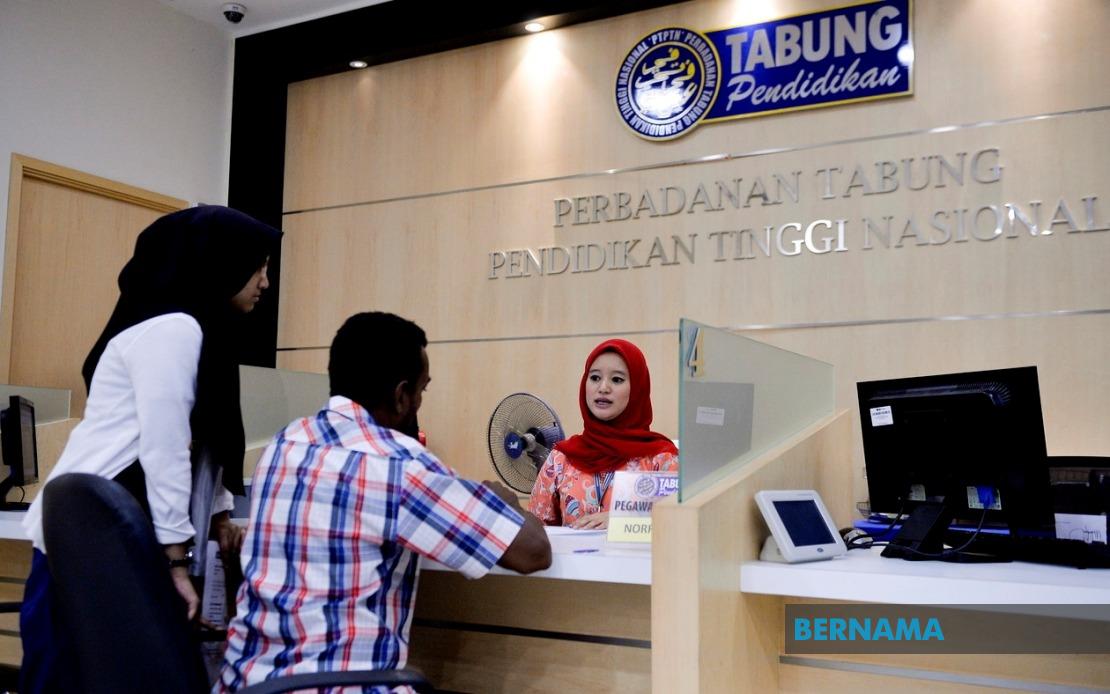
The Women's Wing of Parti Keadilan Rakyat has issued a forceful call for structural reforms to Malaysia's student loan system, arguing that immediate intervention is needed to alleviate the mounting financial pressures facing hundreds of thousands of borrowers caught within the National Higher Education Fund Corporation's repayment apparatus. Speaking through executive committee member Karen Kasturi, PKR Wanita positioned its demands as complementary to broader government discussions about the future of PTPTN, emphasising that addressing current borrowers' difficulties should not be postponed while policy deliberations continue.
The core grievance centres on what PKR Wanita characterises as a compounding penalty structure that punishes borrowers already in financial distress. When accounts are escalated to debt collection agencies—typically after extended delinquency—borrowers face twin obligations: a demand for lump-sum settlement of up to half their outstanding principal, layered atop a 15 per cent intermediary fee that represents thousands of additional ringgit for the average graduate. This dual burden transforms what might have been manageable restructuring into an unattainable payment spike, effectively closing off the path to resolution for working Malaysians struggling with underemployment or irregular income.
Kasturi highlighted a procedural inconsistency that exemplifies system dysfunction: borrowers seeking to navigate restructuring channels encounter contradictory guidance. Initial contact with PTPTN yields references to restructuring options, yet these pathways mysteriously vanish upon follow-up, replaced by automatic referral to collection agencies operating under opaque terms. Borrowers report receiving minimal explanation for this pivot or meaningful opportunity to negotiate directly with the institution holding their debt. This opacity undermines good-faith compliance intentions and suggests the repayment system prioritises revenue extraction over borrower recovery.
The timing of PKR Wanita's intervention follows renewed political attention to PTPTN's trajectory. Prime Minister Datuk Seri Anwar Ibrahim publicly signalled willingness to explore PTPTN's potential abolition following constituent concerns raised during the Johor state election campaign, committing to discussions with Higher Education Minister Datuk Seri Dr Zambry Abd Kadir. While such openness to fundamental reform merits acknowledgment, PKR Wanita's intervention underscores that reimagining the system's future structure cannot ethically defer assistance to current victims of its present architecture.
Beyond the immediate fee elimination demand, PKR Wanita proposes a more permissive restructuring environment that acknowledges varied borrower circumstances. The recommendation to introduce differentiated options tailored for B40 and M40 income cohorts reflects understanding that Malaysia's graduate workforce encompasses diverse economic realities—from those securing professional employment to underutilised degree-holders in precarious gig arrangements. A one-size-fits-all repayment schedule serves neither institutional sustainability nor social equity.
A particularly salient dimension of PKR Wanita's critique concerns Employees Provident Fund entanglement. Government policy permitting PTPTN repayment draws from individual EPF savings, a mechanism theoretically enabling faster debt clearance. However, when intermediary charges—principally collection agency fees—substantially erode these withdrawals, the policy undermines its own logic. The practical effect transfers wealth from retirement savings into third-party fee structures rather than toward principal reduction. This design flaw warrants immediate legislative attention regardless of broader PTPTN reform timelines.
For Malaysian readers and policymakers, this dispute encapsulates broader questions about the relationship between credential acquisition, financial obligation, and state responsibility. The PTPTN emerged in the 1990s as an innovative mechanism enabling broader tertiary access by distributing costs across graduates' working lives. Yet implementation evolved into a system where administrative mechanisms—debt collection outsourcing, rigid repayment schedules, escalating penalties—increasingly prioritised debt servicing over borrower wellbeing. Kasturi's reframing of borrowers as Malaysians rebuilding financial stability rather than mere debtors invokes a fundamentally different institutional posture.
The structural issues PKR Wanita identifies possess regional significance as well. Across Southeast Asia, nations grappling with expanding higher education access confront analogous tensions between cost-recovery imperatives and social mobility commitments. Malaysia's PTPTN experience—particularly its debt collection mechanics—offers cautionary lessons for neighbouring countries designing student financing architecture. The 15 per cent intermediary fee, when multiplied across hundreds of thousands of accounts, represents an enormous transfer of capital into private collection agencies, revenue that could theoretically strengthen institutional capacity or fund need-based assistance.
Implementing PKR Wanita's proposals would require multiple interventions. Eliminating the 15 per cent collection fee necessitates either PTPTN absorbing costs directly or restructuring the collection mechanism entirely—possibly through in-house administration or means-based approaches preventing escalation. Enabling direct restructuring negotiations requires institutional capacity building and potentially legislative clarity about borrower rights within the restructuring process. Targeting assistance to B40 and M40 cohorts demands income verification infrastructure and tiered repayment schedules reflecting actual earning capacity.
Critically, these reforms need not await final determinations about PTPTN abolition or replacement. They represent interim measures acknowledging that fundamental system redesign, even if initiated immediately, requires years of legislative drafting, institutional planning, and implementation rollout. Borrowers cannot reasonably be asked to endure collection agency escalation throughout this extended deliberation period. Decoupling immediate relief from long-term restructuring strategy would demonstrate good faith toward the constituencies most affected by current arrangements.
The political economy underlying PKR Wanita's intervention deserves notice. By positioning reform as both separate from yet aligned with broader abolition discussions, the party advances a centrist negotiating position. Rather than demanding PTPTN's wholesale elimination, which carries implementation complexities and uncertainty, PKR Wanita focuses on demonstrably achievable modifications addressing the system's most punitive elements. This approach, if adopted, would yield tangible relief while preserving space for longer-term deliberation about the institution's ultimate fate.
Government response to these proposals will signal whether policymakers view PTPTN borrowers as stakeholders deserving accommodation or obstacles to institutional revenue targets. The rhetoric from Higher Education Ministry and Finance Ministry regarding restructuring will indicate whether reform intentions extend beyond announcements toward substantive implementation. For Malaysia's nearly two million PTPTN borrowers, the difference between supportive language and reformed mechanisms remains consequential.

