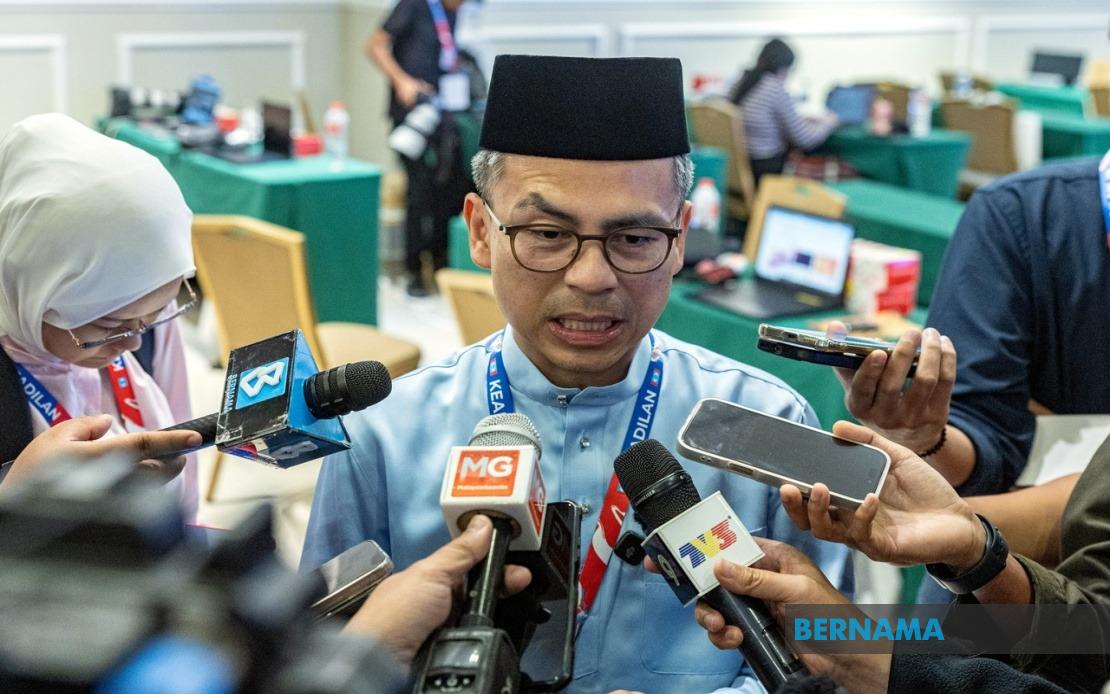
Parti Keadilan Rakyat has committed to overhauling its communication apparatus to more effectively translate government achievements into messages that resonate with ordinary Malaysians. The undertaking emerged during the PKR National Congress 2026 in Melaka, where party delegates raised persistent concerns that despite significant policy efforts and economic gains, these victories have failed to materially improve the lived experience of households across the country.
The initiative reflects a growing recognition within Malaysia's largest ruling coalition partner that the government faces a perception problem distinct from actual performance. Communications Minister Datuk Seri Fahmi Fadzil, who also serves as PKR Information Chief, acknowledged this messaging void during the congress at the Melaka International Trade and Exhibition Centre. His comments underscore a fundamental challenge afflicting the Pakatan Harapan coalition: the disconnect between macroeconomic indicators and public sentiment, a gap that has plagued the government since its 2018 election victory and intensified during subsequent coalition restructurings.
Fahmi's remarks suggest that PKR delegates have flagged substantive concerns about how information flows from government to constituents. Rather than dismissing feedback as peripheral, the communications chief indicated the party's openness to structural changes in how messages are crafted and disseminated. This receptiveness represents a tacit acknowledgment that existing channels, while technically functional, lack the coherence and coordination necessary to cut through Malaysia's fragmented media landscape and increasingly partisan social media environment.
The proposed formalisation of communication protocols addresses a chronic administrative weakness. Fahmi indicated that while informal arrangements for sharing parliamentary-level intelligence have existed, a more systematic framework could better connect grassroots concerns with policymaking in Putrajaya. This hierarchical integration would theoretically enable branch leaders and frontline party members to surface community grievances more efficiently, allowing the government to respond with greater precision and local relevance.
The emphasis on household-level impact reflects electoral mathematics. Malaysians increasingly evaluate governments not on headline economic statistics but on tangible improvements in purchasing power, cost of living, employment stability, and service quality. Unemployment figures and GDP growth rates matter little to families struggling with inflation or inadequate public transport. PKR recognises that without bridging this perception gap, the coalition risks further erosion of support among the constituencies it depends upon, particularly younger urban voters and middle-class households.
Fahmi's appointment as both Communications Minister and PKR Information Chief positions him centrally in executing this strategy. His dual roles theoretically streamline coordination between party machinery and government apparatus, though they also concentrate responsibility for any continued messaging failures. The Communications Ministry carries substantial institutional resources, including relationships with state media, advertising budgets, and digital platforms, which could amplify any revamped communication framework.
The Central Leadership Council's receptiveness to delegate proposals signals that PKR's hierarchy recognises institutional changes must begin internally. Rather than outsourcing the problem to external consultants or blaming media coverage, the party has committed to self-examination and structural reform. This represents a departure from earlier tendencies to attribute poor public perception solely to hostile media narratives or opposition disinformation campaigns.
For Malaysian readers, the implications extend beyond PKR's organisational mechanics. The communication crisis reflects broader challenges confronting the Pakatan Harapan government as it approaches the next electoral cycle. The coalition inherited a country bruised by the 1MDB scandal and political uncertainty, yet its early promises of transformative change have yielded mixed results. Successful economic policies—some genuinely impressive—have failed to generate corresponding improvements in household finances, largely due to structural headwinds including inflation, exchange rate pressures, and global supply chain disruptions beyond the government's control.
PKR's communication overhaul must therefore navigate a difficult reality: no amount of improved messaging can substitute for genuine policy improvements. The party risks compounding credibility damage if constituents perceive the enhanced communication strategy as mere spin rather than accompaniment to substantive reforms. This tension between communication and substantive policy remains the fundamental challenge.
The focus on formalising information flows between parliamentary and executive levels also suggests PKR believes part of its current messaging weakness stems from fragmentation. Different government agencies, ministries, and party wings currently operate with limited coordination, resulting in mixed messaging and missed opportunities to collectively emphasise government narratives. A more integrated approach could prevent instances where one government agency's announcement contradicts another's priorities or timelines.
Regionally, PKR's communication problems reflect challenges facing centrist coalitions throughout Southeast Asia. Governments attempting to balance multiple coalition partners, manage diverse stakeholder expectations, and govern amid polarised public discourse struggle to maintain coherent messaging. The solutions PKR contemplates—formalising communication protocols, empowering branch-level advocates, and tightening coordination between party and government—represent pragmatic responses familiar to coalition partners elsewhere.
The congress itself served as a venue for airing grievances typically contained within party structures, suggesting member anxieties about public perception run deep. This internal pressure may ultimately prove more consequential than media criticism in driving institutional change. When grassroots party members—individuals with direct constituency exposure—complain that government messaging fails to resonate locally, leadership cannot easily dismiss such feedback as media-driven distortion.
As PKR implements whatever communication reforms emerge from the congress's concluding sessions, success will ultimately be measured not by improved internal coordination but by whether ordinary Malaysians perceive the government as competent, responsive, and genuinely invested in household welfare. Messaging, however sophisticated, cannot indefinitely sustain public support divorced from tangible results.

