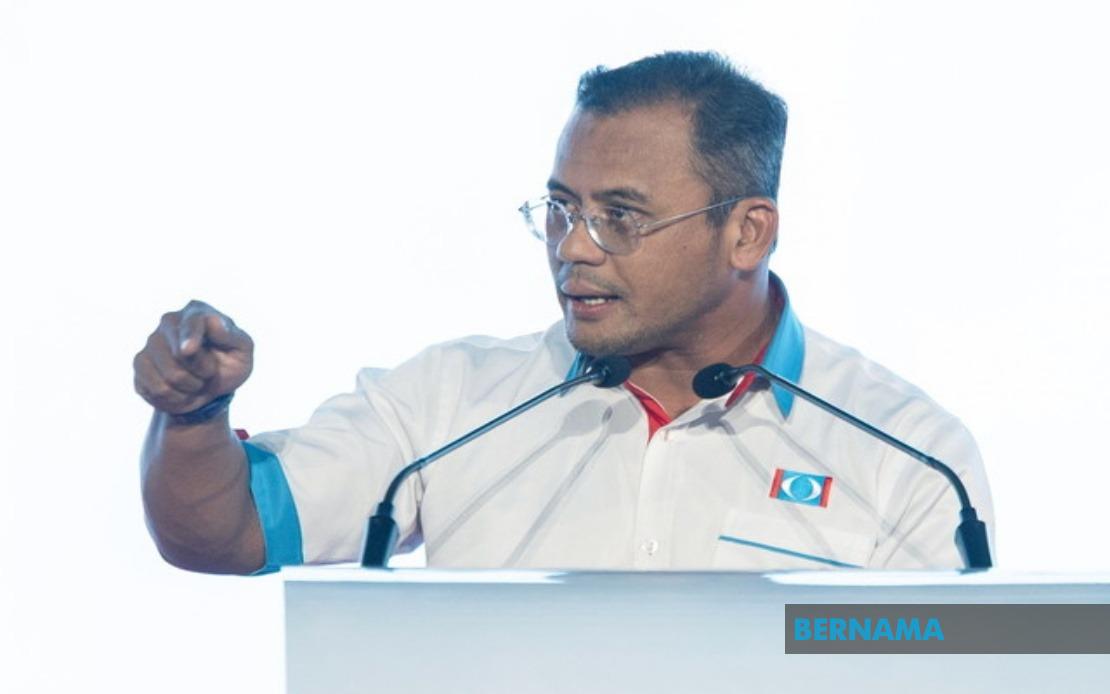
At its national congress in Melaka, the People's Justice Party has reaffirmed its commitment to balanced governance that serves all Malaysians while respecting the constitutional position of Islam and the Malays. Datuk Seri Amirudin Shari, the party's vice president and Selangor Menteri Besar, articulated this centrist positioning as essential to PKR's political identity, arguing that the party's legitimacy rests on extending fair treatment to citizens regardless of ethnicity or faith. This stance reflects the party's attempt to occupy middle ground in Malaysian politics, neither capitulating to majoritarian sentiments nor dismissing the foundational compact enshrined in the Federal Constitution.
The constitutional architecture of Malaysia represents a social contract forged at independence, explicitly recognizing Islam's position and Malay-Bumiputera rights whilst guaranteeing religious freedom and equal citizenship to all communities. Amirudin's emphasis on respecting these provisions while simultaneously championing equitable treatment signals PKR's broader strategy of reconciling traditional constitutional principles with contemporary demands for non-discriminatory governance. This balancing act has become increasingly fraught as political competition intensifies, with parties across the spectrum accused of exploiting communal anxieties for electoral advantage.
Amirudin credited PKR president Datuk Seri Anwar Ibrahim's political trajectory, beginning with his reform movement in 1998, with placing democratic deepening, fundamental rights protection, economic justice, and institutional integrity at the forefront of the party's agenda. These themes represent PKR's claim to ideological distinctiveness within Malaysia's complex political landscape. The party positions itself as a vehicle for substantive democratic reform rather than merely competing for power, emphasizing governance quality and constitutional fidelity over narrow factional interests.
A second vice president, Datuk Seri R. Ramanan, expanded on this theme by explicitly condemning political actors who weaponize racial and religious divisions to consolidate support. Ramanan, serving concurrently as Human Resources Minister, framed resistance to identity politics as essential to social stability and national cohesion. His warning resonates particularly given Malaysia's history of communal tension and the recurring deployment of ethnic anxiety by various political formations seeking electoral mobilization. The assertion that certain parties deliberately exploit divisive messaging to advance narrow agendas reflects PKR's perceived competitive disadvantage against opposition groups and factions within the ruling coalition that may possess stronger communal bases.
Ramanan further issued an internal disciplinary call, urging PKR's leadership to prioritize organizational unity and suppress individual ego-driven competition within party ranks. His concern about internecine conflict undermining grassroots effectiveness addresses a perennial challenge facing Malaysian political organizations. When upper-level factionalism becomes public, party members become demoralized, organizational coordination deteriorates, and opposition forces gain exploitable vulnerabilities. This observation applies broadly across Malaysian politics, where personality-driven divisions frequently fragment parties and diminish their institutional capacity.
The minister's framing of party unity as an organizational imperative rather than merely an ideological aspiration highlights the practical consequences of internal discord. Ramanan argued that fractious leadership inevitably cascades downward through party structures, confusing members and weakening mobilization capacity precisely when external political pressures intensify. This diagnosis, while organization-specific to PKR, reflects systemic challenges affecting Malaysian parties generally, where hierarchical structures and personality-centered politics create vulnerabilities to leadership instability.
Third vice president Datuk Chang Lih Kang offered empirical evidence supporting PKR's inclusive political model through electoral outcomes. He pointed to the Chennah state election result in Negeri Sembilan, where DAP secretary-general Anthony Loke achieved increased support from Malay voters despite facing intensive identity-based opposition messaging. This result, Chang suggested, demonstrates that voters can transcend communal voting patterns when presented with evidence of competent, ethical governance that serves constituent interests across ethnic lines. The case exemplifies how political performance and responsive administration may gradually erode support for divisive messaging.
Chang's argument implies a longer-term realignment trajectory in Malaysian politics, wherein demographic change, economic pressures, and evolving voter expectations gradually diminish the electoral potency of pure identity politics. The Chennah result acquires significance within this broader interpretive frame: it suggests that certain voter cohorts, even within traditionally-defined communities, increasingly prioritize service delivery and governance quality over communal signaling. This observation carries implications for PKR's strategic positioning within the Madani coalition and the broader competitive environment, suggesting potential electoral opportunities among cross-communal constituencies oriented toward performance-based assessments.
The party leadership's repeated emphasis on defending constitutional fundamentals whilst advancing inclusive governance reflects PKR's attempted synthesis of competing imperatives in Malaysian politics. The party must satisfy both progressives seeking democratic deepening and legal equality, and traditionalists concerned with constitutional protections for Islam and Malay-Bumiputera interests. This positioning requires constant rhetorical calibration and is vulnerable to criticism from both directions: opposition parties may portray PKR as insufficiently committed to non-discrimination, whilst conservative forces may question whether the party adequately respects constitutional provisions.
The PKR congress messaging occurs within a broader context of rising political polarization in Malaysia, with various parties intensifying efforts to consolidate demographic blocs through identity-focused messaging. PKR's explicit rejection of such tactics represents either a principled commitment or a strategic calculation that the party's electoral coalition is better served by emphasizing inclusive governance. The party's coalition role within the Madani government and its pursuit of urban, educated, and ethnically-diverse voter constituencies may reinforce this positioning, as these demographics tend to respond negatively to overt communal appeals.
For Malaysian and regional observers, PKR's reiterated commitment to inclusive politics amidst intensifying identity-based competition raises questions about democratic resilience and the sustainability of cross-communal political coalitions. If PKR successfully demonstrates that equitable, performance-based governance can achieve electoral viability without communal targeting, the party might establish a significant precedent within Southeast Asian politics, where identity-based mobilization typically dominates electoral competition. Conversely, if PKR's strategy proves electorally insufficient against opponents wielding more aggressive communal appeals, the result would reinforce expectations that identity politics remains structurally dominant in Malaysian democracy, constraining space for genuinely inclusive political formations.

