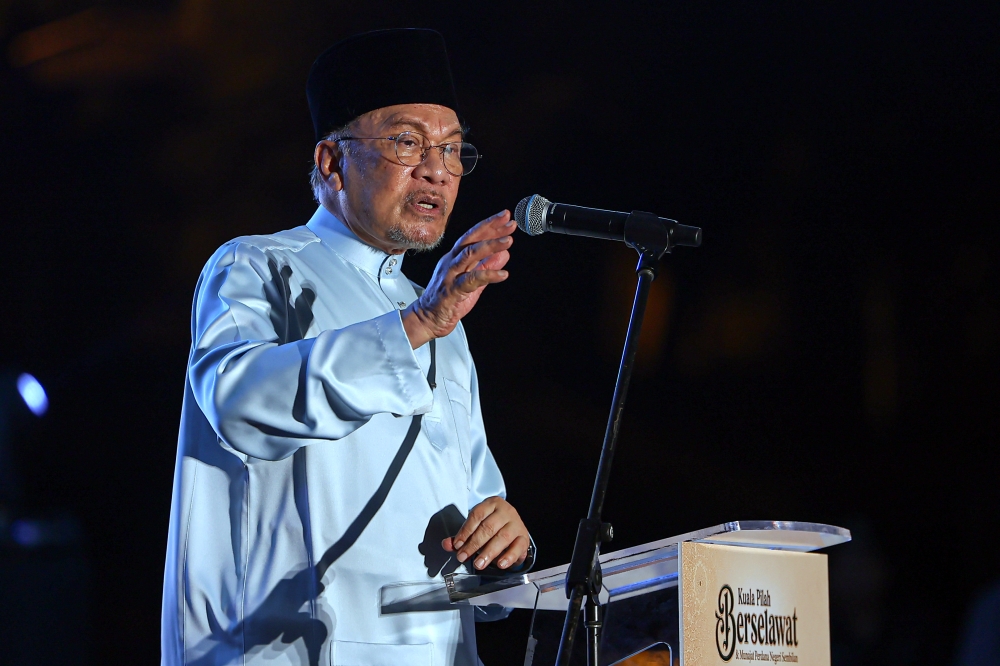
Parti Keadilan Rakyat (PKR) faces a critical juncture where it must consciously resist the temptation to become merely an election-winning apparatus, according to party president Anwar Ibrahim. Speaking in Kuala Lumpur on August 15, Anwar emphasised that the party's founding identity as a mass movement—committed to integrity, transparency, and grassroots engagement—remains essential to its long-term relevance and moral authority within Malaysian politics. This distinction matters profoundly in an era when political parties across the region increasingly face public scepticism about their genuine commitment to reform versus their hunger for power.
The warning reflects broader tensions within PKR as it navigates responsibilities both as an opposition force and as part of Malaysia's governing coalition. When a party must simultaneously mobilise supporters, manage internal factions, and exercise executive power, the risk of compromising foundational principles intensifies. Anwar's intervention suggests he perceives warning signs within party structures that operational efficiency and electoral strategy may be eclipsing the ideological moorings that distinguish PKR from Malaysia's traditional political establishments. This concern carries weight given PKR's history as a vehicle for political reform during the 1990s reformasi movement.
What distinguishes a mass movement from a typical political machine extends beyond semantics. Mass movements typically emphasise broad-based membership participation, decentralised decision-making, and accountability to constituent voices rather than hierarchical command structures. They thrive on volunteer energy and principled engagement rather than patronage networks. Conversely, electoral vehicles tend to concentrate power in campaign machinery, prioritise donor relationships and resource allocation for winning seats, and subordinate broader principles to tactical advantage. Anwar's call underscores the vulnerability of reform-oriented parties in maintaining this distinction once they taste governmental success.
For Malaysian audiences, this message carries particular resonance given the country's recent political turbulence. The 2018 election that brought Anwar's coalition to power generated expectations of genuine institutional transformation and anti-corruption rigour. Subsequent developments—including internal coalition squabbles, questions about the pace of democratic reform, and complications in prosecuting high-profile corruption cases—have generated public wariness about whether Malaysia's political parties can transcend traditional patronage patterns. PKR's trajectory will significantly influence whether the optimism of that watershed election evolves into sustained systemic change or gradually dissipates.
The party's challenge mirrors predicaments faced by reform movements across Southeast Asia. Indonesia's Partai Demokrasi Indonesia Perjuangan (PDI-P), Thailand's Future Forward Party, and the Philippines' various anti-corruption coalitions have all grappled with the contradiction between maintaining idealistic messaging and executing pragmatic politics. Parties that successfully navigate this tension tend to invest heavily in grassroots structures, maintain transparent governance protocols, and ensure leadership remains accountable to member oversight rather than just electoral outcomes. Those that falter often discover that public trust, once eroded through perceived compromises, proves extraordinarily difficult to restore.
Anwar's intervention appears timed to address specific vulnerabilities. As PKR matures within government, its younger cadre and newer members may lack direct connection to the reformasi ideals that motivated the party's founders. Without intentional reinforcement of these values through training, mentorship, and organisational culture, institutional drift toward business-as-usual politics occurs almost automatically. The infrastructure that builds a mass movement—local chapters with autonomous capacity, membership education programmes, transparent internal elections, regular community engagement—requires continuous investment that yields no immediate electoral advantage.
The practical implications for PKR involve institutionalising mechanisms that keep the party tethered to its founding principles despite pressures toward centralisation. This might encompass mandatory grassroots consultation on major policy decisions, term limits for party leadership to prevent entrenched hierarchies, transparent procedures for candidate selection that resist factional capture, and regular member surveys that measure perceptions of the party's adherence to stated values. Such mechanisms sound bureaucratic, yet they fundamentally determine whether parties remain instruments of their membership or transform into instruments of their leadership.
Regionally, Anwar's statement carries significance for how Southeast Asian democracies evaluate political reform. Malaysia, alongside Indonesia and the Philippines, represent middle-income democracies attempting democratic consolidation despite structural obstacles. The region's experience increasingly demonstrates that formal institutional changes—electoral system modifications, anti-corruption legislation, parliamentary reforms—produce limited impact without parties that genuinely internalise democratic commitments. If PKR can model how a party maintains mass movement character while wielding governmental power, it provides valuable lessons for reform efforts across the region.
The distinction Anwar articulates also reflects recognition that electoral dominance proves ephemeral without deeper social legitimacy. Mass movements generate resilience because they embed themselves in community structures, workplace organising, and civil society networks that transcend electoral cycles. A party reduced to electoral machinery becomes vulnerable to competitor challenges and potentially susceptible to fragmentation when electoral fortunes shift. In Malaysia's volatile political environment, where coalition mathematics frequently shift and public sentiment remains volatile, maintaining grassroots depth provides crucial institutional insurance.
Moving forward, PKR's effectiveness as a governing party will correlate significantly with its capacity to operationalise Anwar's message. This demands explicit choices about resource allocation, leadership training priorities, and internal governance structures. It requires resisting the myopic focus on next-cycle elections in favour of investment in long-term institutional capacity. For Malaysia's political future, whether PKR can maintain its identity as a mass movement while managing governmental responsibilities may ultimately determine whether the 2018 transition represents the beginning of genuine democratic deepening or merely a reconfiguration of Malaysia's perennial pattern of elite circulation.

