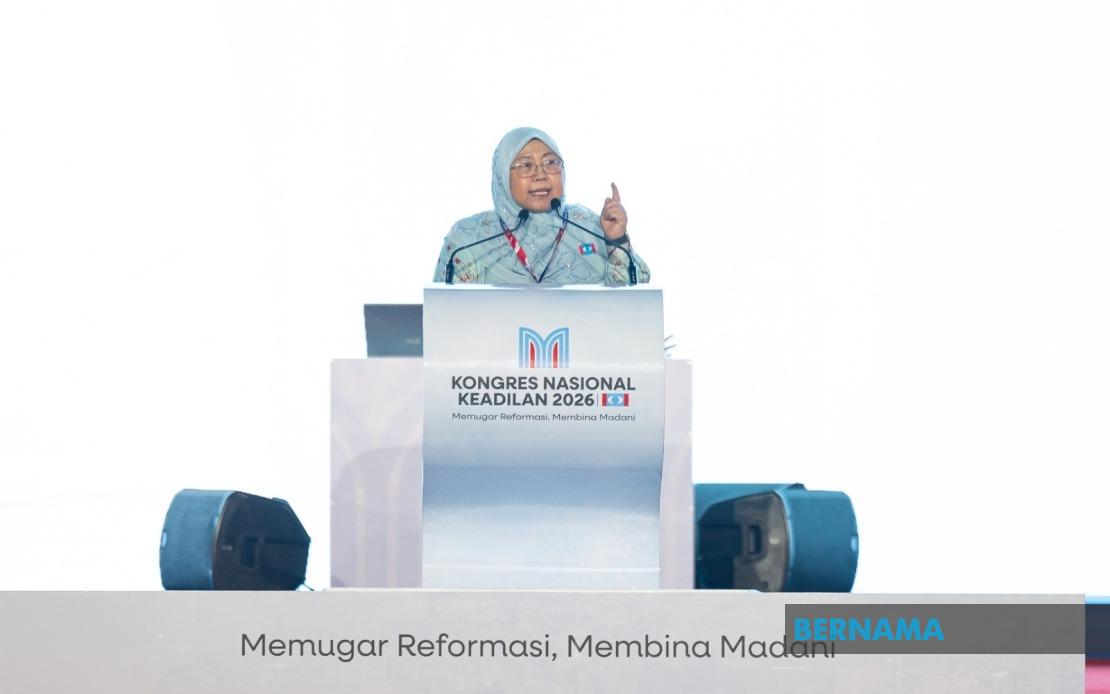
The leadership of Parti Keadilan Rakyat faces a critical juncture as the party grapples with the aftermath of recent electoral setbacks. At the 2026 PKR National Congress held at the Melaka International Trade Centre, party secretary-general Senator Datuk Dr Fuziah Salleh delivered a pointed message to delegates gathered from across Malaysia: the moment demands maturity, introspection, and a commitment to rebuilding rather than recrimination. Her remarks signal an attempt to steer the party away from internal divisions that could deepen during a period of vulnerability.
Fuziah's intervention reflects growing concerns within PKR that the party risks fracturing under the strain of recent electoral disappointment. She explicitly cautioned against using the congress as a forum for finger-pointing, fault-finding, or retaliatory actions against other political entities. Such warnings typically emerge when organisational leaders perceive genuine danger of internal conflict spilling into public view, potentially further damaging party morale and electoral prospects. The congress, with its 2,594 delegates and more than 2,000 observers, represented a significant gathering of the party faithful at a vulnerable moment in its trajectory.
To place current challenges in perspective, Fuziah drew upon PKR's historical record of adversity and recovery. She reminded members of the 2004 General Election, when the party won only one parliamentary seat, a nadir that threatened its very survival as a significant political force. Yet rather than accepting defeat as terminal, PKR renewed its organisational efforts, rebuilt its grassroots presence, and maintained its Reformasi message across Malaysian communities. This historical parallel carries weight: if the party emerged from near-extinction once, the argument suggests, current difficulties need not define its future. The implicit message is that political setbacks, however painful, represent temporary conditions rather than permanent outcomes.
The congress theme, "Memugar Reformasi, Membina MADANI," encapsulates the strategic direction Fuziah and party leadership are promoting. The Malay term "memugar" carries connotations of revival and renewal, signalling an intention to reconnect with PKR's foundational ideals rather than pursue entirely new directions. This approach matters considerably for a party whose original identity centred on the Reformasi movement and its critique of governance. Fuziah emphasised that the party seeks not to invent fresh ideological terrain but to revitalise the principles that animated PKR's establishment and earlier struggles, suggesting continuity with the past even as the party adapts to present realities.
For Malaysian observers and regional political analysts, PKR's current posture reflects broader tensions within opposition politics in Southeast Asia. The party occupies an unusual position: it remains part of Malaysia's governing coalition through an alliance arrangement, yet faces pressure from both coalition partners and electoral competition. This dual exposure complicates the party's messaging and internal cohesion. Members supporting continued participation in government coalitions may clash with those advocating a more independent, confrontational stance. The congress setting provided an opportunity to manage these tensions before they escalate further.
The presence of 26 diplomatic representatives from 19 countries, including six ambassadors, underscores the international dimension of Malaysian politics and PKR's significance beyond domestic boundaries. Such diplomatic attendance reflects global interest in Malaysia's political stability and the behaviour of major political parties during periods of electoral difficulty. The optics of PKR's handling of internal challenges carry implications for Malaysia's international reputation and potential investor confidence in political predictability.
Fuziah's speech strategy emphasised collective agency and the possibility of regeneration through disciplined effort. She presented defeat not as a destination but as a waypoint in a longer historical journey, one that requires honesty about failures without succumbing to despair or destructive internal conflict. This messaging targets multiple audiences simultaneously: party loyalists requiring reassurance, emerging leaders seeking direction, and external observers monitoring whether PKR can maintain organisational cohesion under stress. The framing reflects sophisticated understanding that political parties in transition require narratives that simultaneously acknowledge present difficulties while projecting future viability.
The party's experience since its 2004 low point demonstrates the potential for recovery. PKR subsequently grew into a significant parliamentary force, became central to Malaysia's political conversation during the 2008 and 2013 electoral cycles, and eventually achieved participation in government formation. This trajectory, however uneven, provides empirical support for Fuziah's claims about the party's resilience. Whether current membership and supporters can sustain the patience and commitment such recovery demands remains an open question, particularly as electoral pressures mount and economic conditions affect voters' political calculations.
Looking forward, PKR faces interconnected challenges: restoring electoral performance, maintaining coalition discipline, managing internal factional dynamics, and communicating a compelling vision for governance. The congress provided a venue for addressing the last element, articulating values and direction to prevent the party drifting into irrelevance or schism. Fuziah's emphasis on maturity and reflection suggests that party leadership recognises that purely tactical responses to electoral losses prove insufficient. Instead, they appear committed to undertaking deeper organisational and ideological work to position PKR for potential recovery and renewed influence.
The test ahead extends beyond rhetoric to execution. Whether PKR members and leaders genuinely embrace the mature, reflective approach Fuziah advocated will become apparent through their subsequent behaviour within the party and in broader political engagement. The congress debate, internal elections, and policy formulations will reveal whether the party can unite around renewal or whether centrifugal forces pull it toward fragmentation. For Malaysian politics more broadly, PKR's trajectory carries significance: as a major opposition component that periodically enters government, its stability or instability affects the nation's political functioning and the viability of coalition arrangements that characterise contemporary Malaysian governance.

