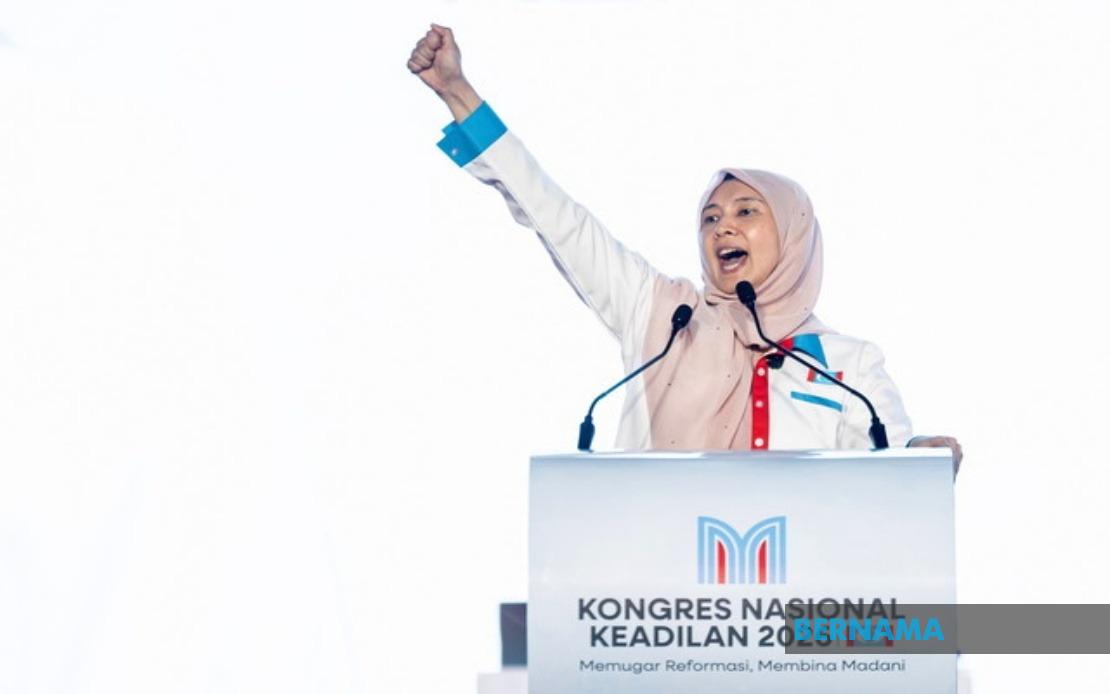
The Malaysian reform movement's momentum should not decelerate simply because the party carrying its torch now occupies the corridors of power. This was the core message delivered by PKR deputy president Nurul Izzah Anwar during the closing session of the party's 2026 National Congress in Melaka, where she challenged her colleagues to view governance as a continuation of the party's foundational struggle rather than a destination.
Nurul Izzah's remarks came at a pivotal moment for PKR, which emerged from grassroots activism and democratic reform campaigns to become a governing force within the MADANI administration. Her intervention addresses a tension that has historically plagued many reform-oriented parties globally: the danger that once in power, movements can abandon the principles that propelled them to office. She framed this not as cynicism but as institutional necessity, arguing that structural change demands sustained effort beyond campaign cycles or parliamentary terms.
The deputy president pointed to concrete achievements as evidence of what reform in government can accomplish. The repeal of the Universities and University Colleges Act (AUKU) 1971 exemplified her argument—this piece of legislation, long opposed by student activists and civil liberties advocates, became achievable only when PKR and allied partners gained sufficient executive authority to reshape legal frameworks. This signals that reform is not merely rhetorical but actionable through legislative power, provided political will remains intact.
However, Nurul Izzah recognised that legislative victories alone are insufficient. She stressed that economic growth, while necessary, must translate into tangible improvements in citizens' daily lives. The MADANI Government's economic performance metrics mean little to ordinary Malaysians unless they experience expanded employment prospects, fairer wage structures, and genuine opportunities to participate in wealth creation. This reframing connects macroeconomic achievement to microeconomic benefit—a distinction often lost in government messaging.
Small and medium enterprises represent a particular focus within her reform agenda. SMEs form the backbone of Malaysia's economy and employ millions, yet often struggle with access to capital, market information, and regulatory support. Nurul Izzah's emphasis on creating space for SME growth signals recognition that inclusive economic reform requires deliberate government intervention beyond simple free-market rhetoric. Similarly, her mention of expanded opportunities for women and youth addresses demographic groups historically marginalised from mainstream economic participation despite forming substantial portions of the population.
Structural wage reform emerged as another crucial plank in her vision. She identified the disconnect between rising productivity and stagnant real wages as a problem demanding attention. This observation aligns with contemporary Malaysian economic debates, where wages have not kept pace with living costs, particularly for lower-income groups. The notion that salary structures require deliberate reform through government policy represents a departure from pure laissez-faire approaches, positioning PKR within a social market economy framework.
Yet Nurul Izzah's most striking contribution transcended specific policy proposals. She delivered a pointed reminder to PKR's leadership cadre about power's nature and proper use. Her warning against treating ministerial positions, parliamentary seats, and party authority as personal possessions rather than public trusts touches on a fundamental governance principle often observed more in breach than in practice. In Malaysian politics, where patronage networks and personality-driven politics frequently eclipse institutional values, her statement carries particular weight.
The ''Princess of Reform'' label, which has followed Nurul Izzah throughout her political career, reflects her family lineage and her early prominence in pro-democracy activism. Yet it also invites scrutiny: does a party leader calling for others to avoid personal aggrandisement enjoy immunity from similar critique? Her rhetorical stance positions her as advocating principles rather than power accumulation, though this remains subject to interpretation and time's verdict. Her reference to legacy—what remains after individuals depart—reflects a longer historical view than typical political discourse permits.
The timing of these remarks at the party congress suggests internal party deliberation about institutional direction. As PKR solidifies its position within Malaysia's political establishment, tensions inevitably emerge between original reform ambitions and pragmatic governance demands. Nurul Izzah's intervention indicates that at least some party leadership remains committed to reconciling these tensions rather than abandoning reform principles in favour of comfortable administration.
For Malaysia's broader political landscape, Nurul Izzah's message resonates beyond PKR's immediate circle. It implicitly challenges all governing parties to examine whether they have betrayed founding principles. It also suggests that reform movements face a particular vulnerability: co-optation through success. Once in power, the urgency that animated grassroots campaigns can evaporate, replaced by satisfaction with incremental adjustments and established hierarchies.
The implications for ASEAN's democratic trajectory warrant consideration too. Many Southeast Asian reform movements have floundered once achieving power, discovering that winning elections differs fundamentally from sustaining transformative change. The region's political landscape includes numerous examples of parties that abandoned their reform credentials upon attaining office. Whether PKR can chart a different course depends partly on whether messages like Nurul Izzah's reflect genuine institutional commitment or merely aspirational rhetoric.
The reform agenda Nurul Izzah articulated—from AUKU repeal through wage structure reform to SME expansion—represents sustainable, policy-level improvements rather than revolutionary restructuring. This pragmatic approach may disappoint purists but recognises governmental realities. The crucial question remains whether PKR can maintain this reformist energy across multiple electoral cycles and successive leadership transitions, or whether the party will gradually settle into conventional administrative patterns common to established political movements.

