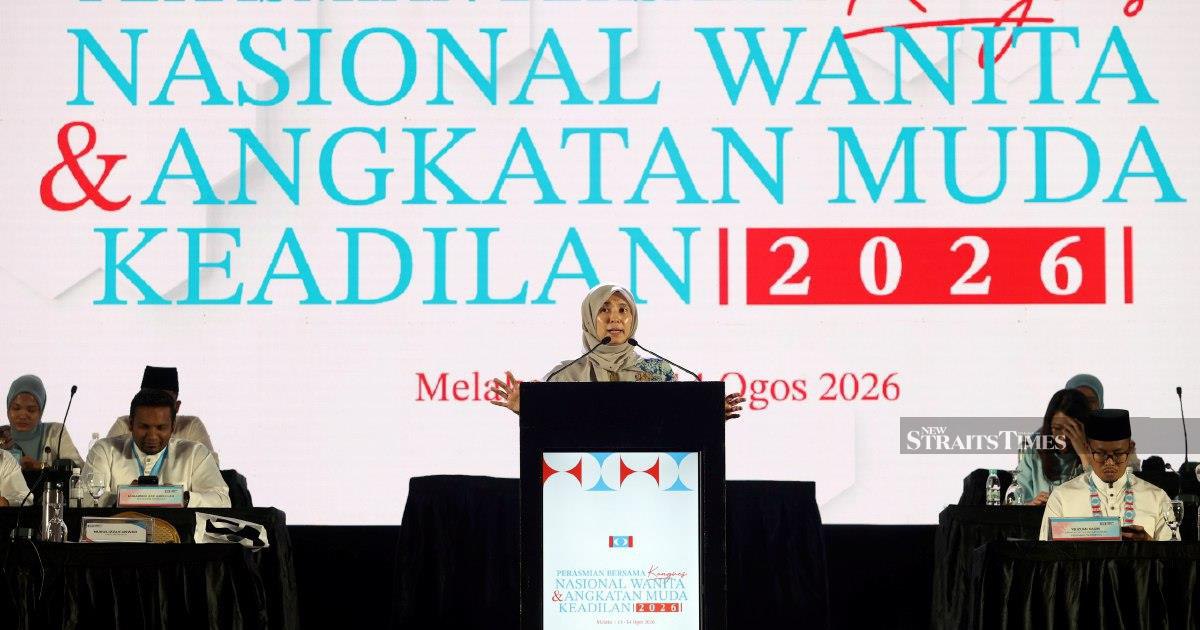
Keadilan's second-in-command has signalled growing concern about the need for her party to establish explicit ethical guardrails as Malaysian coalition politics becomes increasingly fluid and transactional. Speaking in Ayer Keroh, Nurul Izzah Anwar articulated a position that reflects tensions within progressive political movements when balancing electoral viability with institutional integrity—a perennial challenge facing PKR as it navigates complex parliamentary arithmetic and shifting alliance dynamics.
The intervention comes at a moment when Malaysian politics has witnessed repeated instances of unexpected partnerships, floor-crossing, and controversial power-sharing arrangements that have tested the loyalty of party members and voters alike. For a party that came to prominence partly on anti-corruption credentials, the question of maintaining moral authority while engaging in necessary political compromise has become increasingly acute. Nurul Izzah's remarks suggest PKR's leadership recognises this contradiction and feels obligated to address it head-on rather than allow ambiguity to erode the party's foundational principles.
By invoking the concept of "red lines"—unmovable boundaries that define what a political entity will or will not tolerate—Nurul Izzah is proposing a framework that acknowledges political pragmatism while protecting against ethical erosion. This represents an attempt to square a difficult circle: allowing sufficient flexibility for coalition-building and legislative negotiation without creating a slippery slope where increasingly questionable arrangements become normalised. The challenge lies in articulating these boundaries with sufficient clarity that party members and supporters understand what constitutes acceptable compromise versus unacceptable capitulation.
Critically, Nurul Izzah specified that political horse-trading and compromise should never serve as convenient justifications for tolerating corruption, malfeasance, or the abuse of public authority. This formulation recognises that Malaysian politics has historically witnessed scenarios where powerful figures or factions employ the language of pragmatism and unity to shield wrongdoers from accountability. By explicitly rejecting this pattern, the deputy president is attempting to anchor PKR to a principle that transcends tactical considerations and reflects the party's founding ethos.
For Malaysian observers, this intervention carries particular significance because it addresses a real vulnerability affecting the credibility of opposition and progressive movements. When political parties prioritise short-term electoral gains or coalition stability over consistent application of their stated values, they undermine public confidence in democratic institutions more broadly. Citizens become cynical about whether political parties genuinely stand for anything beyond the accumulation of power and patronage. Nurul Izzah's call for clarity speaks to this deeper concern about regenerating public trust in governance structures.
The timing of such remarks also warrants attention. Malaysia's political landscape has shifted considerably in recent years, with various coalitions rising and receding, necessitating constant recalibration of alliances and relationships. In this environment, a party's ability to communicate consistent principles becomes a competitive advantage in maintaining member morale and voter support. PKR, which has served in different governing coalitions with different partners, must articulate an identity that transcends any particular alliance while remaining coherent and principled.
Establishing clear red lines requires more than rhetorical flourishes, however. Parties must operationalise such boundaries through institutional mechanisms—internal codes of conduct, disciplinary procedures, and transparent decision-making processes that can withstand scrutiny when difficult situations arise. The real test of PKR's commitment to integrity will emerge when the party actually faces a scenario where honouring its red lines creates political costs. Will senior leaders prioritise principles over parliamentary seats or coalition advantages? Such moments determine whether party rhetoric translates into genuine institutional change.
Moreover, Nurul Izzah's remarks implicitly acknowledge that Malaysian political culture has normalised certain practices that democratic societies with stronger institutional safeguards would consider unacceptable. The idea that such boundaries require explicit articulation suggests they are not yet sufficiently embedded in how politicians and parties operate. This points to a deeper institutional deficit that transcends any single party and reflects systemic challenges affecting Malaysia's democratic maturity.
For regional observers, PKR's positioning is instructive because similar tensions affect progressive and reformist parties across Southeast Asia. As these movements transition from opposition to governance roles, or as they navigate complex alliance politics, questions about maintaining moral consistency become unavoidable. How parties resolve these tensions—whether through genuine institutional reform or mere rhetorical repositioning—affects not just electoral outcomes but the broader trajectory of democratic development in the region.
Nurul Izzah's intervention represents a recognition that public trust in political institutions cannot be restored through slogans alone. Malaysian voters, particularly younger and urban constituencies, have demonstrated increasing sophistication in distinguishing between genuine reform and opportunistic posturing. Parties that fail to define and consistently maintain meaningful boundaries risk irrelevance as voters turn toward alternatives or disengage from political participation altogether. The deputy president's call for clarity thus addresses a strategic imperative as much as a principled one.
The challenge ahead for PKR will involve translating these high-minded principles into concrete institutional practices and maintaining commitment to them even when politically inconvenient. This requires building a political culture within the party where members understand that certain lines cannot be crossed regardless of electoral consequences, and where leadership enforces such boundaries consistently. Without such follow-through, Nurul Izzah's remarks risk becoming merely another layer of political rhetoric in Malaysia's already saturated soundscape of competing claims and counterclaims about integrity and governance.

