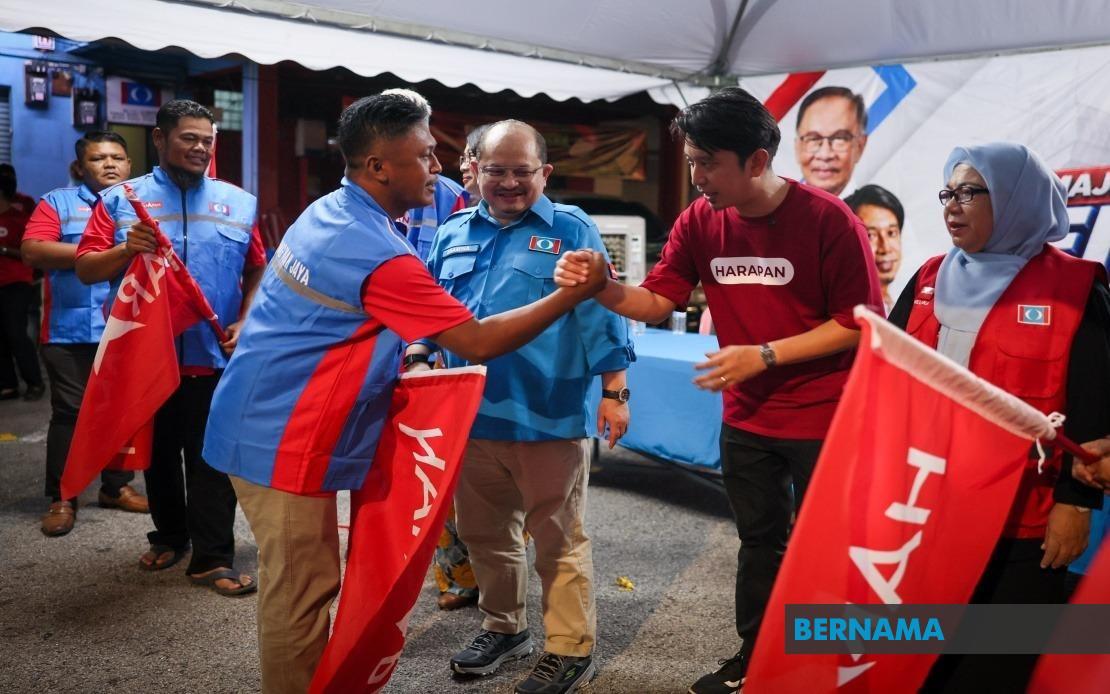
Parti Keadilan Rakyat (PKR) in Melaka has decided to accelerate its candidate announcement timeline for the forthcoming state election, departing from the party's historical pattern of last-minute nominee declarations. This strategic shift aims to grant newly selected candidates adequate preparation time before they encounter voters at the ballot box, according to Adam Adli Abdul Halim, the acting chairman of the Melaka PKR Leadership Council and Deputy Minister of Higher Education.
The party has implemented a multi-tiered vetting mechanism to identify its representatives. Candidates undergo initial screening processes beginning at branch level, proceeding through state-level assessments, and ultimately reaching the central party hierarchy where the party president makes final determinations. This structured approach reflects PKR's intention to avoid the rushed selection processes that have previously hampered the party's electoral readiness in the state.
Previous election cycles witnessed PKR struggling to announce nominees in a timely manner due to competing interests and logistical constraints. By frontloading candidate selection this cycle, the party leadership believes it can mitigate these historical challenges while simultaneously pursuing what Adam Adli characterised as a deliberate diversification agenda. The emphasis on fielding newcomers represents a conscious effort to inject fresh perspectives into the political arena.
Crucial to this early announcement strategy is PKR's commitment to achieving greater representational balance. The party explicitly aims to bolster female representation and youth participation within its candidate slate. These demographic considerations demand extended lead time to properly vet, prepare, and position candidates from these historically underrepresented groups. The accelerated timeline thus serves the dual purpose of operational preparation and strategic diversity implementation.
Beyond candidate selection, PKR Melaka is investing substantially in building robust electoral infrastructure across the state. The party plans sequential launches of its election machinery apparatus in multiple constituencies including Tangga Batu, Hang Tuah Jaya, Alor Gajah, Masjid Tanah, and Jasin. These launches, commencing with the Hang Tuah Jaya branch event at Taman Bukit Piatu, represent groundwork essential to any competitive electoral campaign in Malaysia's highly organised political environment.
Adam Adli emphasised that establishing a powerful, functional election machinery constitutes PKR's immediate priority. The party believes that field-level organisation strength ultimately matters more than individual candidate quality. A well-coordinated grassroots apparatus capable of mobilising supporters, managing voter relations, and executing campaign activities remains essential regardless of which specific individuals eventually receive nominations. This institutional focus reflects mature electoral strategy.
Cooperation discussions between the Pakatan Harapan coalition and rival Barisan Nasional represent another significant dimension of the Melaka political landscape. Adam Adli disclosed that preliminary informal talks have transpired between the two major political blocs, though substantive negotiations aimed at formalising any power-sharing arrangement have not yet commenced. These conversations remain exploratory rather than definitive.
The dialogue between PH and BN holds particular significance for Melaka given the state's political volatility. Both coalitions have expressed openness to engagement, with PH's election director Datuk Seri Amirudin Shari recently approaching Melaka Chief Minister Datuk Seri Ab Rauf Yusof to arrange formal discussions. These contacts reflect broader recognition that constructive engagement between major political actors can benefit democratic processes. PKR's leadership frames such communications not merely as tactical manoeuvres but as contributions toward elevating the overall quality of electoral contest.
Adam Adli articulated PKR's principled perspective on political engagement. The party views inter-coalition communication as instrumental in combating what it characterises as destructive campaign practices. By facilitating dialogue between PH and BN, party leaders believe they can foster more substantive policy-focused competition whilst discouraging vituperative personal attacks and unethical campaign tactics that have occasionally marred Malaysian elections.
However, PKR maintains strategic flexibility regarding potential coalition arrangements. The party has prepared independent campaign infrastructure and contingency plans should negotiations with Barisan Nasional founder or fail to produce mutually acceptable terms. This preparedness ensures PKR can pursue either cooperative or autonomous electoral strategies depending on how negotiations develop. The party refuses to negotiate from a position of weakness or desperation.
For Malaysian political observers, the Melaka state election represents a significant test case for both coalition functionality and PKR's internal organisational capacity. The party's early candidate announcements will provide voters extended periods to evaluate nominees, potentially reducing surprise nomination controversies that have occasionally undermined Pakatan Harapan campaigns elsewhere. The simultaneous emphasis on election machinery development suggests recognition that candidate quality alone cannot guarantee electoral success in Malaysia's complex political terrain.
The evolving political dynamics in Melaka also reflect broader national trends. Coalition stability remains contested across multiple states, with various parties constantly repositioning and negotiating. PKR's approach—combining controlled candidate selection with openness to coalition dialogue whilst maintaining independence as fallback option—exemplifies how contemporary Malaysian political parties operate pragmatically within fluid electoral landscapes.
Ultimately, PKR Melaka's restructured approach to candidate announcement and campaign preparation signals maturation in the party's electoral operations since its formation. Whether this enhanced preparation translates into electoral gains depends ultimately on multiple factors beyond party control, including voter sentiment, economic conditions, and broader political developments at national level.

