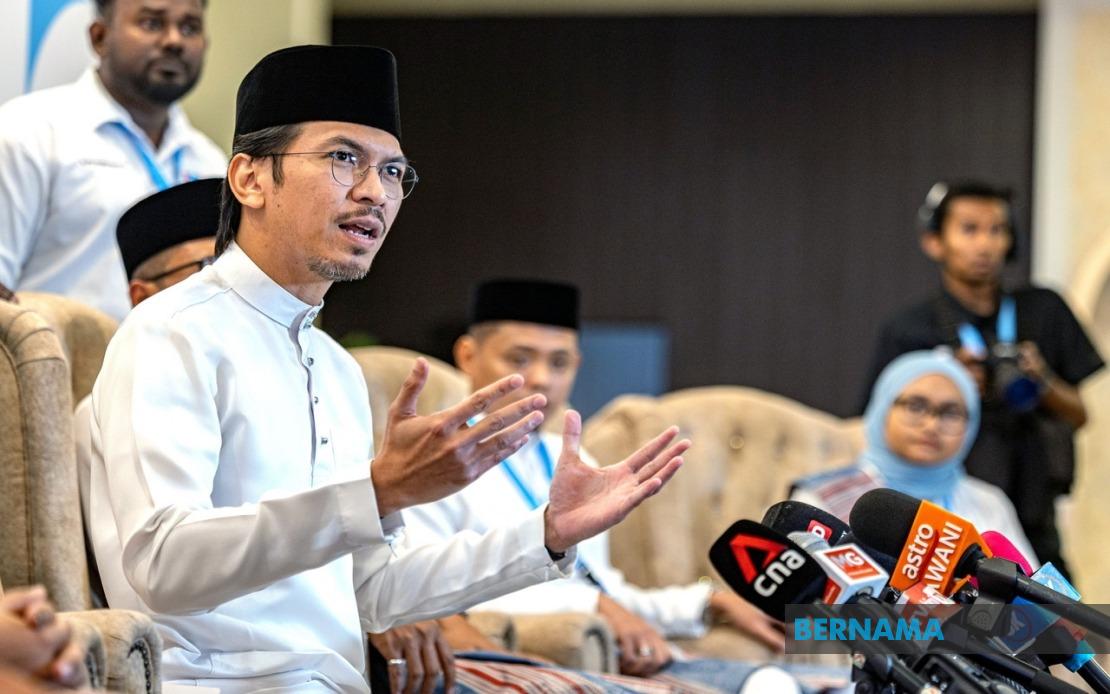
The Parti Keadilan Rakyat has moved to counter growing concerns about internal attrition by asserting that recent member defections pose no meaningful threat to its organisational cohesion or political standing. Muhammad Kamil Ahmad Munim, heading the party's youth division Angkatan Muda Keadilan, made the statement during the 2026 AMK National Congress in Melaka, framing departures as isolated decisions that reflect personal preference rather than systemic weakness within the party.
The comments represent an effort to manage perceptions following claims by Parti Bersama Malaysia co-founder Datuk Seri Rafizi Ramli that approximately 25 per cent of his fledgling party's membership originated from PKR. The allegation suggested meaningful bleeding from the established coalition party to a newer political venture, potentially signalling discontent among the grassroots. Muhammad Kamil's characterisation of defectors as a negligible fraction appears designed to diminish the narrative of internal erosion while affirming robust member engagement.
Central to the youth wing's messaging is the framing of departures as voluntary personal choices warranting respect rather than indicators of organisational failure. By acknowledging members' right to exit while simultaneously dismissing the scale of such movements, PKR attempts to occupy middle ground—neither denying defections nor conceding their significance. This rhetorical approach seeks to prevent further haemorrhaging while avoiding the appearance of a party in crisis.
The timing of these assurances coincides with questions about PKR's operational continuity following the leave of absence taken by deputy president Nurul Izzah Anwar. Muhammad Kamil emphasised that the party has implemented clear hierarchical delegation to maintain momentum regardless of personnel absences. Vice-president Datuk Seri Saifuddin Nasution Abdullah and election director Datuk Seri Amirudin Shari have assumed expanded responsibilities, effectively distributing decision-making authority across multiple senior figures.
This delegation strategy addresses practical concerns about institutional stability during leadership transitions. Rather than allowing one individual's unavailability to create operational vacuums, PKR has formalized task distribution and communicated these arrangements to state and branch-level structures. The youth wing's assertion that grassroots members have accepted these explanations with open-mindedness suggests successful internal messaging, though the need to explicitly highlight acceptance indicates awareness of potential scepticism.
For Malaysian political observers, the defection narrative carries broader implications about coalition durability and member loyalty in the post-2022 realignment era. The emergence of Bersama as a distinct political force competing for former PKR constituencies represents a shift in the opposition landscape. If substantial portions of PKR's membership base genuinely found the new party's platform more appealing, this would signal ideological or strategic divergence within what was previously understood as a coherent bloc.
The quantification of member departures remains contested. Muhammad Kamil declined to specify exact figures, describing the number as proportionally insignificant without providing comparative benchmarks. This vagueness permits flexibility in interpretation—the youth wing can later adjust its claims depending on political convenience. Conversely, Rafizi's figure of 25 per cent of Bersama's new membership carries more concrete weight, though it measures composition rather than absolute departures, allowing for expansion of Bersama's total membership to offset PKR losses proportionally.
The broader context of approaching state elections and general elections amplifies sensitivity around internal defections. In competitive electoral environments, perceived weakness invites opportunistic defections and dampens volunteer mobilisation. By publicly minimizing departures and emphasizing operational continuity, PKR aims to project confidence to remaining members and potential supporters. This messaging is particularly critical among younger activists who might otherwise question the party's trajectory or viability.
Muhammad Kamil's emphasis on preparing for both state elections and the general election frames member consolidation as secondary to electoral readiness. This rhetorical move subordinates internal stability discussions to forward-looking campaign narratives. Rather than dwelling on departures, the youth wing leadership preferred to highlight preparation and organisational strengthening, suggesting that activity and progress matter more than explaining past losses.
The reception of these statements within PKR grassroots structures will likely determine their political efficacy. If state and branch-level leadership successfully communicate the youth wing's perspective to members and if this narrative resonates with remaining activists, PKR may successfully contain the defection narrative. However, if members privately harbour doubts about leadership competence or strategic direction, public reassurances may prove superficial without addressing underlying dissatisfaction.
The apparent parallel governance structure involving Saifuddin and Amirudin alongside the absent Nurul Izzah suggests PKR has adapted to leadership uncertainty through institutional redundancy. This approach prevents any single individual from becoming indispensable, though it potentially creates coordination challenges and unclear hierarchies. For Malaysian analysts watching coalition dynamics, such arrangements reveal attempts to maintain facade of normal operations while managing substantive leadership gaps.
Ultimately, PKR's defence against defection concerns hinges on whether demonstrable electoral success in upcoming contests can vindicate claims of organisational health. Public statements matter, but electoral performance provides the most persuasive counter-narrative to suggestions of institutional decline. The youth wing's confidence in the party's trajectory will be tested when Malaysian voters render verdicts on PKR's candidates and positioning.

