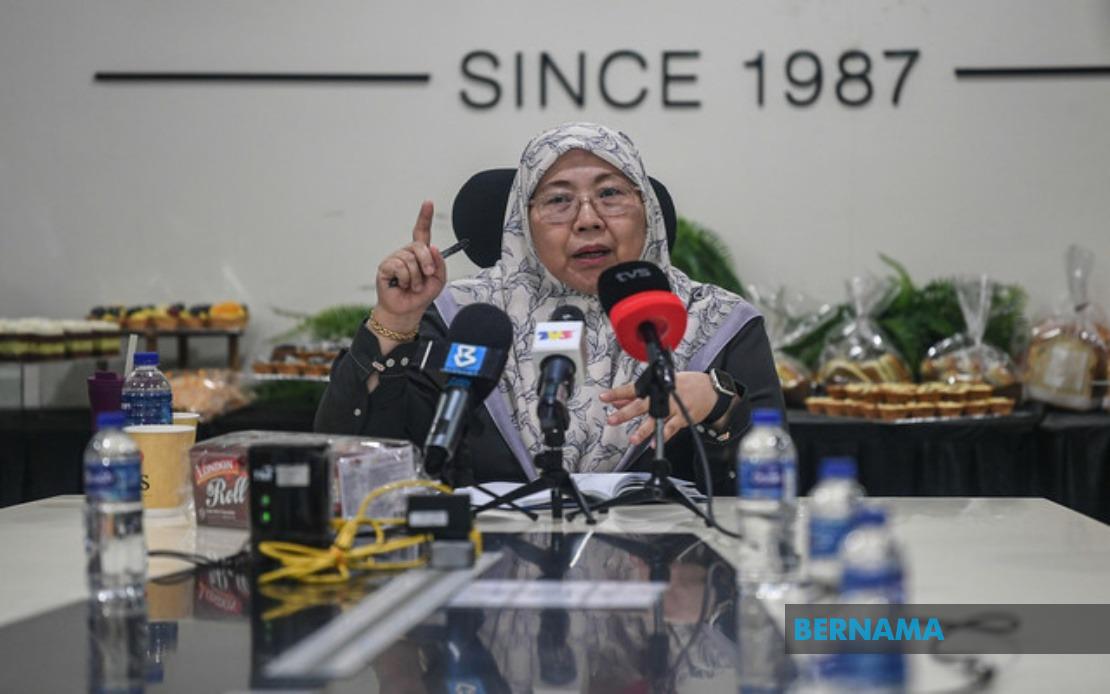
The departure of a PKR faction led by former Johor state leadership council vice-chairman M. Murugan, who took approximately 200 supporters to join the MIC Iskandar Puteri division on June 28, reflects deeper party management challenges within the opposition coalition. PKR secretary-general Datuk Dr Fuziah Salleh characterised the exodus as unexpected, emphasising that internal party investigations had identified position disappointment as the primary driver rather than substantive political disagreements. Speaking during a working visit to SDS Food Sdn Bhd in Skudai on June 30, Fuziah acknowledged that departing members had publicly cited frustration over not receiving appointed roles, a candid admission that underscores how patronage and advancement opportunities significantly influence Malaysian party loyalty.
The timing of these defections carries particular significance for Pakatan Harapan as it prepares for the Johor state election scheduled for July 11, where 172 candidates are competing across 56 constituencies. Fuziah's relatively measured response—offering departing members well-wishes in their new political home—reflects a strategic decision to minimise controversy rather than escalate internal disputes publicly. Such departures, while numerically modest in a state context, demonstrate the persistent challenge facing opposition parties in retaining grassroots members when advancement opportunities appear limited or opaque. The loss of experienced organisers like Murugan, who held prominent positions within the state structure, potentially disrupts ground-level campaign machinery in Iskandar Puteri and surrounding areas during a critical election period.
Beyond internal management issues, Fuziah's comments reveal deepening fractures within the broader opposition-conservative bloc configuration in Johor. The PAS president Tan Sri Abdul Hadi Awang's recent call urging voters to reject Pakatan Harapan has triggered speculation about potential realignment between Barisan Nasional and the Islamic party, suggesting that traditional coalition boundaries are becoming increasingly fluid. Fuziah characterised Hadi's statement as signalling renewed cooperation overtures, implying that PAS may be repositioning itself as a potential bridge between BN and Perikatan Nasional rather than remaining firmly aligned with PH's secular, multiethnic orientation. This trajectory would represent a significant reversal for PAS in Johor specifically, where the party had been incorporated into the PH state government framework since 2018.
The strategic implications extend beyond immediate electoral mathematics. Fuziah's assessment suggests that Perikatan Nasional's calculated attempts to poach Barisan Nasional supporters—a tactic designed to split the conservative vote and weaken BN's organisational coherence—may inadvertently expose internal divisions within PN itself. If PAS moves closer to BN, as Hadi's remarks suggest, the coalition spanning PN's Malay-Muslim partners would face fundamental realignment pressures. The PKR secretary-general's observation that such political manoeuvring could ultimately benefit Pakatan Harapan reflects confidence that voter confusion and fractured opposition messaging might consolidate support around PH's established presence and organisational capacity in the state.
Johor holds particular strategic weight within Malaysian politics as the nation's southern economic engine and the political stronghold where Barisan Nasional traditionally maintained its deepest roots. The state election therefore functions as a crucial test case for whether BN can recover ground lost during the 2018 political tsunami and subsequent leadership transitions. Fuziah's emphasis on voters carefully assessing the political situation underscores PH's messaging strategy: positioning itself as a stable, coherent alternative amid uncertainty elsewhere in the political landscape. The fragmentation evident in PAS positioning and PN coalition tensions contrasts with PH's continued organisational unity across its constituent parties despite the PKR defections.
The patronage-driven nature of the Murugan departure also reflects broader structural challenges within Malaysian opposition politics. Unlike ruling coalitions that control substantial state resources and appointment mechanisms, opposition parties must offer advancement primarily through internal party hierarchy and electoral success prospects. When electoral outcomes remain uncertain, as in Johor where BN retains historical advantages, ambitious members may rationally calculate that immediate positions within a coalition partner offer faster advancement than waiting for uncertain opposition electoral gains. The MIC, as a junior component within BN, nonetheless maintains access to state-level positions through coalition government arrangements, making it an attractive destination for individuals seeking tangible advancement opportunities.
Fuziah's dismissal of the defections as driven by personal disappointment rather than principled disagreement carries implicit risks. If opposition members increasingly perceive internal advancement as blocked or arbitrary, larger waves of departures could follow, particularly if election results appear heading toward BN victories. The framing also potentially underestimates how position allocation failures represent broader governance and management challenges within PKR's internal structures. The party has historically struggled with transparency in appointment processes and member engagement mechanisms, issues that have occasionally surfaced in earlier rounds of party conflicts and leadership contestations.
The broader political moment captured in these developments reflects Malaysia's ongoing realignment following the 2022 general election and subsequent government formations. The Johor state election serves as a significant checkpoint in determining whether Pakatan Harapan's 2018-2020 reform momentum can be sustained, or whether Barisan Nasional's deep institutional advantages and state-level resource control will reassert dominance. Fuziah's confident assessment that coalition fragmentation on the conservative side benefits PH may prove overly optimistic if BN manages to consolidate diverse support strands despite PAS and PN positioning. Conversely, clear PH electoral success in Johor would validate her analysis that opposition divisions and confused messaging ultimately fragment anti-PH votes.
Looking forward, PKR's capacity to address member retention and advancement mechanisms will significantly influence its resilience beyond this election cycle. The party has undertaken various internal restructuring initiatives to enhance democratic participation and transparent appointment processes, though implementation consistency remains variable across state and local levels. The Johor departures represent a practical test of whether such reforms have genuinely addressed member grievances or whether patronage networks continue functioning according to informal dynamics that formal party procedures fail to constrain. PKR's continued prominence within Pakatan Harapan depends substantially on maintaining grassroots cohesion and preventing further defections to rival parties seeking to harvest opposition discontent.

