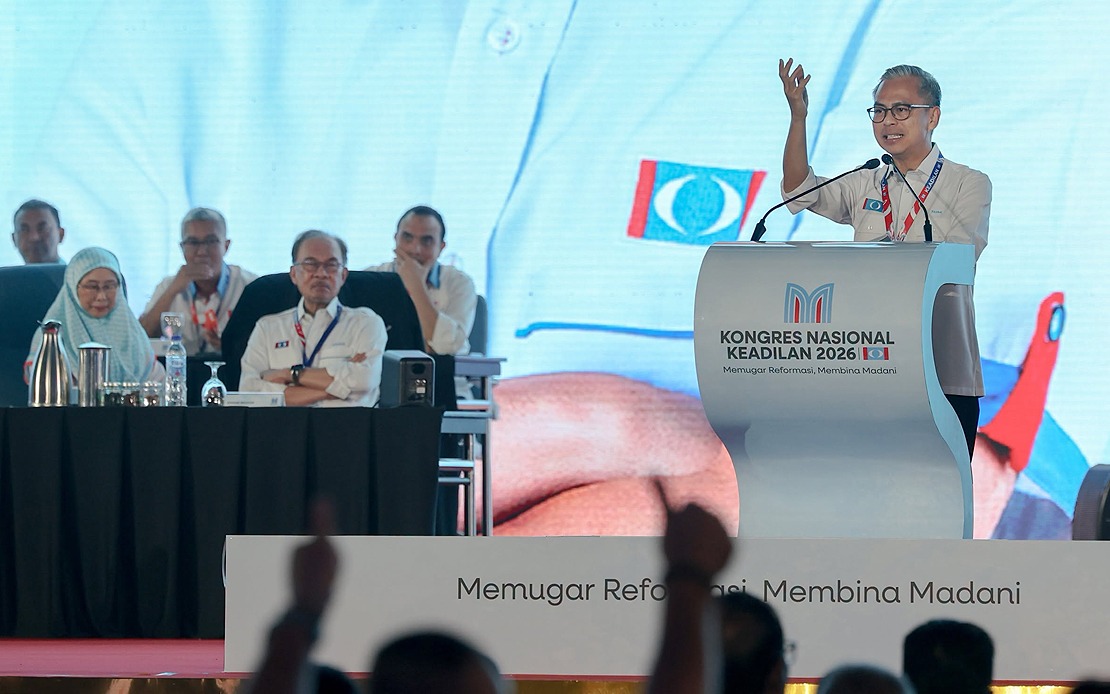
Parti Keadilan Rakyat concluded its 2026 National Congress in Kuala Lumpur on August 16, marking a significant gathering for Malaysia's reform-focused political party. The two-day assembly brought together party members to chart the course ahead, with PKR Information Chief Datuk Seri Fahmi Fadzil characterizing the event as far more substantial than a routine political gathering. Rather than serving merely as a forum for oratory flourishes and procedural debates, the congress functioned as a crucible for introspection, enabling the party to conduct a candid assessment of its organizational health and recommit to its foundational principles.
The substance of PKR President Datuk Seri Anwar Ibrahim's keynote address underscored a fundamental message: the reformasi movement cannot afford complacency or abandonment of its core mission. Anwar's remarks carried particular weight given Malaysia's political landscape, where pragmatism and coalition-building have sometimes tested parties' ideological steadfastness. The president's explicit call for continuation of the reform struggle served as a corrective reminder to party cadres that electoral success and governmental participation must not dilute PKR's commitment to systemic change and accountability. This positioning matters significantly within the context of PKR's participation in the Pakatan Harapan coalition and its role in national governance.
Fahmi elaborated on the congress outcomes through his Facebook address, emphasizing that the gathering represented a deliberate exercise in organizational renewal rather than ceremonial proceedings. He articulated a three-pronged approach: returning to constituencies to rebuild grassroots connections, conducting frank internal assessments of the party's capabilities and vulnerabilities, and channeling renewed commitment toward tangible improvements in citizens' lives. This framework reflects an acknowledgment that Malaysian political parties, particularly those claiming reform credentials, face mounting pressure to demonstrate concrete policy outcomes amid economic uncertainty and public skepticism about political institutions.
The emphasis on grassroots reconnection carries particular significance for PKR, which has historically positioned itself as a champion of ordinary Malaysians against entrenched power structures. Fahmi's call for party members to listen to constituent concerns and translate grievances into actionable solutions suggests PKR recognizes that public confidence erodes when political parties become disconnected from the daily realities facing voters. In contemporary Malaysia, where issues ranging from cost of living pressures to infrastructure deficiencies to employment opportunities dominate household conversations, parties that maintain credible channels of community engagement retain distinct advantages in maintaining support.
The congress messaging also emphasized organizational discipline and unity of purpose as prerequisites for navigating upcoming political challenges. Fahmi characterized the political environment as inherently turbulent, with competitive pressures and tactical challenges perpetually emerging. His insistence that PKR "remain steadfast in its principles and the people's struggle agenda" despite these headwinds reflects a conscious decision to anchor party identity to ideological moorings rather than pursue short-term tactical advantages. For Malaysian observers monitoring coalition dynamics, this emphasis on principled persistence holds implications for how PKR positions itself relative to partner parties and opposition movements.
The congress concluded with a clear understanding that formal proceedings represent merely a waypoint in the party's continuous journey rather than a destination. Fahmi's observation that "although the congress has ended, the responsibility of the party machinery continues" acknowledged that resolutions and rhetorical flourishes during congresses gain legitimacy only when translated into sustained organizational work. This includes the demanding tasks of building stronger local party structures, recruiting and developing cadres, managing internal communications, and ensuring that party programs align with member expectations and public needs.
For Malaysian political analysts, PKR's 2026 congress underscores how reform-oriented parties in the Southeast Asian context navigate the tension between maintaining ideological clarity and achieving pragmatic political objectives. The congress outcomes suggest PKR leadership believes the party's electoral viability and long-term influence depend fundamentally on refusing to become indistinguishable from the conventional power-seeking formations it originally arose to challenge. This positioning carries implications not only for PKR's internal cohesion but also for the broader coalition's ability to sustain public trust and differentiate itself from other political formations.
The renewed emphasis on people-centered governance and continuous listening also reflects PKR's apparent strategic calculation that legitimacy flows from demonstrated responsiveness to public concerns rather than from holding ministerial positions alone. In an environment where voters increasingly evaluate parties based on service delivery and attentiveness to grievances, PKR's conscious commitment to grassroots engagement may represent a deliberate competitive strategy. This approach acknowledges that Malaysian voters, particularly younger and increasingly urbanized segments of the electorate, judge political parties by concrete outcomes rather than historical narratives or institutional status.
Looking ahead, the congress message suggests PKR intends to intensify its organizational development efforts while maintaining focus on reform imperatives. The party's leadership has signaled that the coming period will demand sustained effort to strengthen internal machinery, expand grassroots presence, and demonstrate tangible improvements in public welfare through policy implementation and advocacy. Whether PKR successfully translates these congressional commitments into sustained organizational practice and visible policy outcomes will significantly influence its trajectory within Malaysian politics and the Pakatan Harapan coalition's overall electoral prospects.

