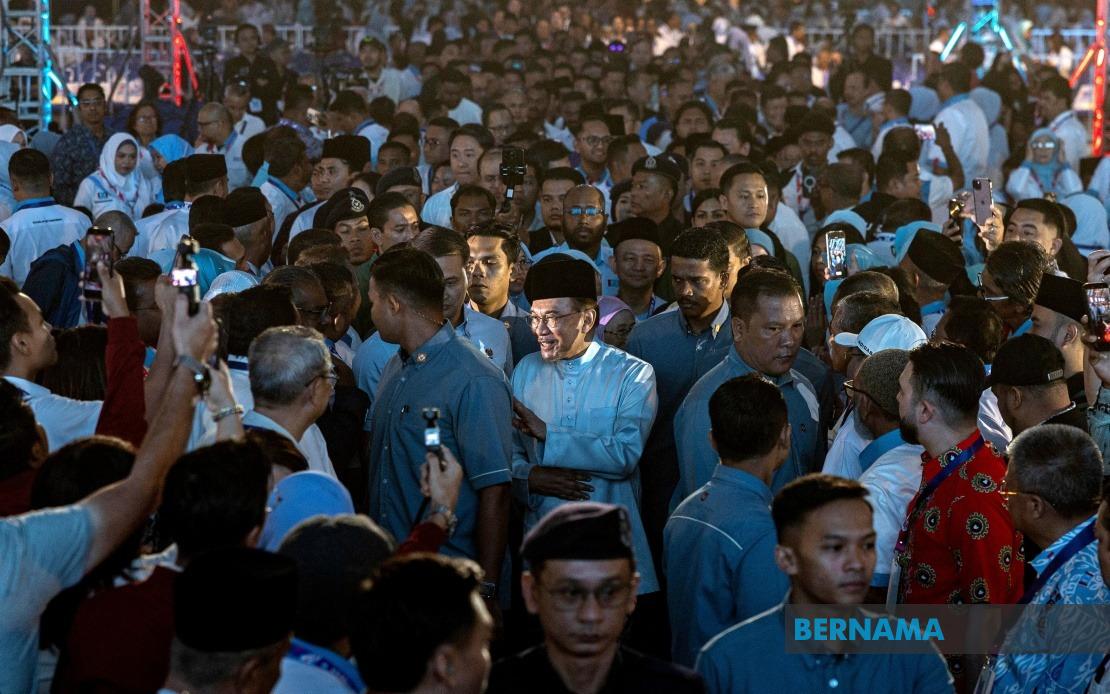
The upcoming 2026 PKR National Congress represents a critical juncture for the party to consolidate its position and reconnect with Malaysian voters, according to Tengku Datuk Seri Zafrul Tengku Abdul Aziz, the Prime Minister's senior political adviser. Speaking in Melaka on August 15, Tengku Zafrul stressed that the gathering must become a decisive moment for party unity, organisational strengthening, and restoring confidence among ordinary Malaysians who have grown disconnected from the political messaging of the ruling coalition.
As an ex-officio member of the PKR Political Bureau, Tengku Zafrul carries considerable influence within the party hierarchy. His intervention signals concern at the highest levels about PKR's electoral performance and its ability to effectively communicate its governance record to the electorate. The recent state elections have clearly prompted soul-searching within the party, with senior leaders now recognising that internal cohesion and strategic repositioning are essential if PKR is to maintain relevance in Malaysian politics heading toward the next general election.
Tengku Zafrul's primary message centred on the necessity for rigorous self-examination across all levels of the party structure. Rather than dwelling on disappointments with Unity Government coalition partners, he advocated that PKR members concentrate their energy on identifying and rectifying organisational weaknesses. This approach acknowledges a fundamental political reality: while PKR cannot dictate the behaviour or electoral performance of allied parties like UMNO or Barisan Nasional components, it can directly influence its own institutional effectiveness and member discipline.
The adviser emphasised that party machinery must function more efficiently at every level, from grassroots branches where individual voters form their first impressions of PKR, through to the central leadership that sets strategic direction. This two-way communication breakdown appears to be a significant concern. Ground-level party workers often lack clear instructions or messaging, while central leadership sometimes fails to understand local grievances and priorities. Addressing this structural problem could substantially improve PKR's electoral prospects and internal morale.
Tengku Zafrul identified a critical communication gap as a key vulnerability for the party. Even when the government has implemented policies designed to benefit ordinary Malaysians, many voters remain unaware of these efforts or fail to connect them with PKR's contribution. This suggests the party has underinvested in grassroots communication and media engagement, allowing opposition narratives to dominate public discourse. Without clearer articulation of achievements, the ruling coalition struggles to translate policy successes into political capital.
He called for party members to adopt a fundamentally different approach to constituent engagement. Rather than immediately crafting responses to public complaints, members should first listen attentively and genuinely seek to understand underlying concerns. This listening-first methodology contrasts sharply with the defensive posturing that often characterises political interactions in Malaysia, where parties rush to justify themselves rather than acknowledging legitimate grievances. By shifting toward active listening, PKR could demonstrate respect for voter perspectives and build stronger community relationships.
The three-step framework Tengku Zafrul proposed—listen, acknowledge, deliver—represents a deliberate strategy to restore institutional credibility. Many Malaysians have become cynical about political promises, viewing them as empty rhetoric designed to secure votes at election time. By explicitly acknowledging unresolved problems rather than denying them, PKR could differentiate itself from competitors and establish a reputation for honesty. Subsequently delivering tangible improvements would convert that trust into sustained electoral support.
This intervention by the Prime Minister's senior political adviser carries implications beyond PKR's internal dynamics. The Unity Government has struggled to maintain public enthusiasm, with coalition parties frequently appearing disunited or working at cross-purposes. PKR's ability to strengthen itself organisationally and rebuild voter confidence could positively influence broader coalition cohesion. Conversely, continued internal weakness at PKR would further undermine the government's credibility and create opportunities for opposition parties to exploit coalition divisions.
For Malaysian voters, particularly those in urban areas where PKR draws significant support, the message suggests acknowledgment that current governance communication has fallen short. The party appears ready to invest more resources in explaining policies and outcomes to ordinary citizens. This could manifest in improved town hall meetings, social media engagement, and localised community programmes designed to demonstrate government benefits in tangible ways.
The timing of this intervention, occurring well before the 2026 congress, suggests careful stage-setting for a significant party conference. Tengku Zafrul is essentially preparing the ground for potential organisational changes, leadership adjustments, or strategic reorientation that might be unveiled at the congress itself. Party members are being invited to contribute to an honest evaluation of weaknesses, creating buy-in for whatever restructuring might follow.
Southeast Asian context matters here as well. Across the region, several governments have struggled with public trust deficits despite undertaking significant development projects. PKR's experience mirrors challenges faced by ruling parties in Indonesia, Thailand, and the Philippines, where communication breakdowns between government and citizens have undermined electoral fortunes. Learning from these regional experiences, PKR appears to be taking seriously the challenge of bridging the gap between policy implementation and public perception.
Ultimately, Tengku Zafrul's message reflects recognition that political parties cannot rely solely on institutional machinery or coalition partnerships to secure electoral victory. Rather, genuine reconnection with voters through honest dialogue, transparent acknowledgment of problems, and demonstrated delivery on commitments remains fundamental to democratic legitimacy. Whether PKR can successfully implement this approach at scale will significantly influence not only its own electoral prospects but also the broader political trajectory of Malaysia's governance landscape over the coming years.

