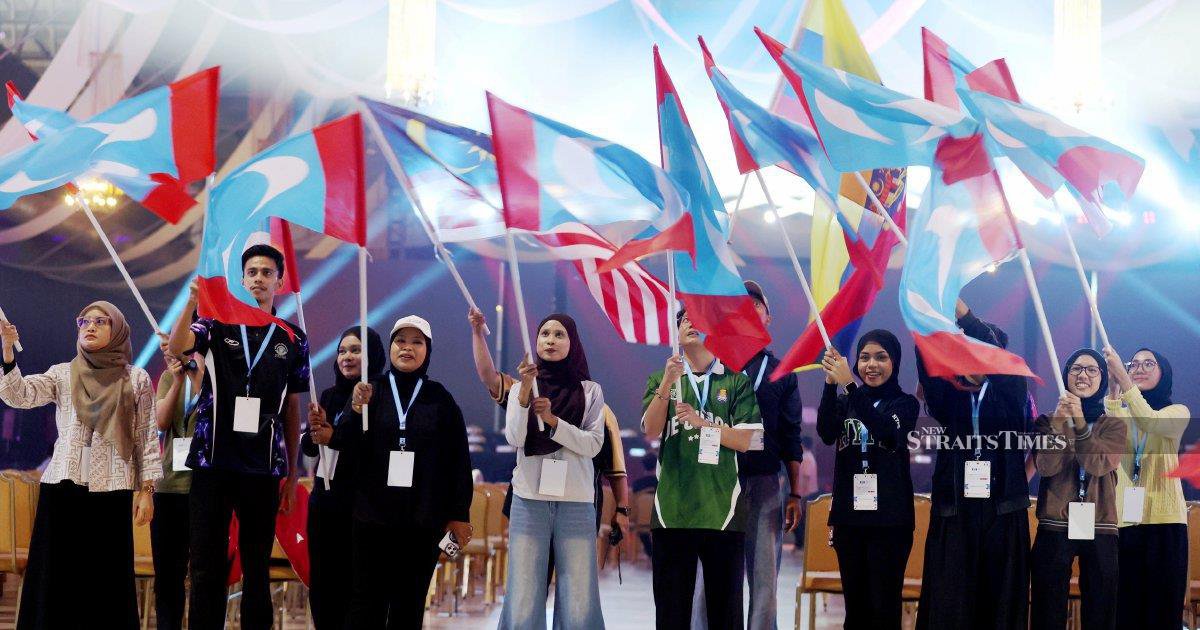
Malaysia's People's Justice Party (PKR) convenes its annual congress at the Melaka International Trade Centre in Ayer Keroh against a backdrop of declining electoral fortunes and deepening fractures within its leadership ranks. The timing of the gathering underscores the mounting pressures facing the party as it attempts to regroup following disappointing results in recent state elections and address what party members acknowledge as a serious crisis affecting internal stability.
The consecutive electoral setbacks in Johor and Negri Sembilan represent significant challenges for a party that has positioned itself as a key player in Malaysia's political landscape. These defeats cannot be dismissed as isolated incidents; rather, they signal a potential erosion of voter confidence and suggest underlying organizational vulnerabilities that merit serious examination. The results have prompted introspection within PKR's ranks about whether the party's messaging, candidate selection, or ground operations require fundamental recalibration to remain competitive in state-level contests.
For Malaysian voters and observers of the political scene, these state-level outcomes carry implications beyond PKR's immediate circumstances. The party forms a crucial component of the Pakatan Harapan coalition and has consistently played a bridging role between urban and rural constituencies, particularly in Peninsular Malaysia. Weakness at the state level can cascade upward, potentially affecting the coalition's prospects in future federal competitions and reshaping the country's political balance.
The internal strife gripping the party appears to be multifaceted, involving disagreements over leadership direction, strategic priorities, and resource allocation among competing factions. Such divisions, when visible to the electorate, typically corrode public confidence and can translate into lost votes as supporters question whether the party can effectively represent their interests. For a party that has branded itself as reform-oriented and committed to good governance, visible internal discord strikes an ironic chord with its political messaging.
The congress presents an opportunity for PKR to address these tensions directly, though the party's ability to achieve meaningful reconciliation during a formal gathering will depend on whether underlying grievances can be frankly acknowledged and constructively resolved. History suggests that simply papering over divisions rarely succeeds; sustainable solutions require genuine engagement with conflicting viewpoints and demonstrated commitment to procedural fairness.
Regional observers will likely scrutinize the congress for signs regarding PKR's future trajectory. The party's performance in upcoming state and federal elections carries consequences not only for its own political fortunes but for the broader composition of Malaysia's parliament and state assemblies. A significantly weakened PKR could create vacuums that rival coalition partners or opposition parties might exploit.
The electoral defeats in Johor and Negri Sembilan suggest that PKR's previous organizational strength may have atrophied in these territories, or that voters have shifted their preferences for reasons the party has not yet adequately addressed. Understanding the precise causes—whether demographic shifts, specific policy disagreements, candidate quality concerns, or general dissatisfaction with the coalition government—will be essential for developing an effective recovery strategy.
For delegates attending the congress, expectations may be elevated regarding concrete announcements about party reforms, leadership accountability, and revised electoral strategies. The gathering offers a platform for senior leaders to articulate a compelling vision for PKR's future and demonstrate that the party possesses the institutional maturity to learn from recent setbacks rather than dismiss them as temporary aberrations.
The internal crisis dimension adds complexity to the party's recovery prospects. If factions within PKR are prioritizing their own organizational interests over broader party recovery, the necessary unity required to mount competitive campaigns across multiple constituencies simultaneously becomes increasingly elusive. Congress deliberations that fail to address these factional tensions could leave the party vulnerable as it approaches the subsequent rounds of electoral competition.
These developments occur within the context of Malaysia's broader political realignment, where voter preferences have demonstrated considerable fluidity in recent years. PKR cannot assume that electoral support from previous cycles will automatically materialize again. The party must earn renewed confidence through demonstrable improvements in governance contributions, corruption prevention, and policy advocacy.
The Ayer Keroh gathering, while nominally focused on routine congress business, carries substantial weight as a potential inflection point for PKR's political trajectory. How effectively the party manages both its electoral challenges and internal divisions will likely determine whether it can stabilize its position within Pakatan Harapan or faces continued marginalization in Malaysia's competitive political environment.
Moving forward, PKR faces the difficult task of simultaneously addressing immediate electoral recovery needs while undertaking the longer-term organizational reforms necessary to restore party discipline and member confidence. Congress decisions made during this critical period could reverberate through multiple election cycles, determining whether PKR emerges strengthened or continues its apparent decline.

