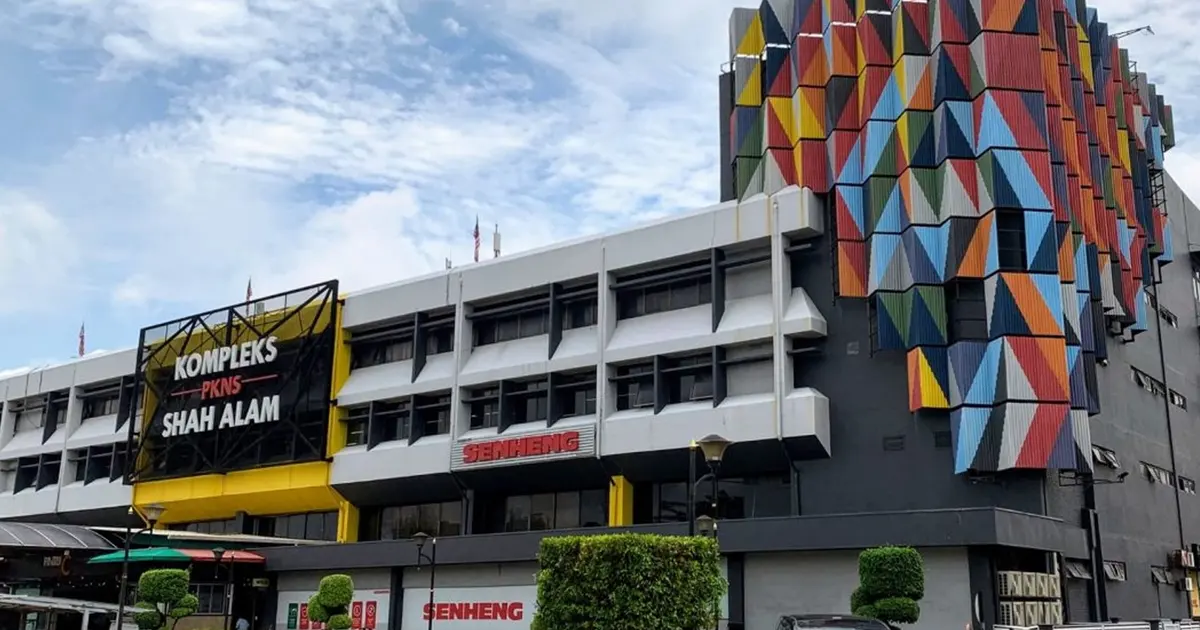
The Selangor State Development Corporation (PKNS) has moved swiftly to counter mounting public concerns about its financial health, issuing a categorical denial of claims suggesting the agency faces substantial losses and mounting debt obligations. The corporation's statement represents a direct rebuttal to allegations that have emerged regarding reported losses of RM103.7 million alongside an accumulated debt burden of RM6.1 billion, characterising such assertions as both inaccurate and fundamentally misleading in nature.
The timing of PKNS's denial carries particular significance given the heightened public scrutiny surrounding state-linked enterprises across Malaysia. As Selangor's primary vehicle for urban development and property management, the corporation plays a crucial role in implementing the state government's strategic initiatives across multiple sectors including residential, commercial, and industrial development. Any suggestion of serious financial mismanagement therefore carries wider implications for investor confidence in state-level projects and the broader sustainability of Selangor's development agenda.
The allegations appear to have gained traction within public discourse, compelling the corporation to issue a formal response defending its financial position and operational integrity. This reactive posture underscores the increasing importance of financial transparency among government-linked companies operating in Malaysia's competitive business environment. Stakeholders ranging from resident associations to investment analysts have grown more attentive to the balance sheets of such entities, particularly following high-profile cases of corporate mismanagement affecting state development plans elsewhere in the country.
PKNS manages an extensive portfolio of assets and development projects throughout Selangor, from residential townships to commercial hubs, making its financial stability directly relevant to thousands of homebuyers and business operators who depend on the corporation's delivery capabilities. The corporation's reputation for fiscal responsibility directly influences purchasing decisions and investor participation in its development schemes. Consequently, unsubstantiated claims regarding losses or debt accumulation carry tangible consequences for market perception and public confidence.
The denial itself, however, raises important questions about financial disclosure practices and the mechanisms available for public scrutiny of government-linked corporations. In an era of increasing demand for institutional accountability, mere categorical denials without accompanying detailed financial disclosures may prove insufficient to fully restore stakeholder confidence. Investors and residents alike increasingly expect comprehensive explanations supported by auditable data, transparent accounting methodologies, and independent verification.
Selangor's position as Malaysia's most economically significant state outside the federal territories adds another layer of complexity to questions surrounding PKNS's financial standing. The state's rapid urbanisation and intensive development activity place substantial operational demands on the corporation, requiring significant capital deployment and sophisticated financial management. Any structural weaknesses in the state's primary development agency could potentially constrain broader economic development initiatives and property market dynamics throughout the region.
The nature of development corporation finances inherently differs from conventional corporate accounting, as these entities typically operate across multiple revenue streams including property sales, rental income, and service fees, whilst simultaneously shouldering substantial long-term infrastructure obligations. Understanding the distinction between ordinary operational debt incurred through normal development cycles and problematic debt accumulation requires careful financial analysis that public statements alone cannot adequately convey.
Future credibility for PKNS will depend substantially on how comprehensively the corporation addresses underlying concerns. A sustained emphasis on transparency, regular public disclosure of audited financial statements, and independent verification mechanisms would provide stronger assurance to stakeholders than categorical denials unsupported by detailed evidence. This approach would align with evolving best practices among well-managed government-linked entities across Southeast Asia and globally.
The corporation's response also occurs within a broader context of renewed focus on governance standards among Malaysian public institutions. Regulators, legislators, and civil society organisations have collectively elevated expectations regarding financial management and transparency across the government-linked company landscape. PKNS, as a flagship state development agency, operates under heightened scrutiny and must navigate this demanding environment with comprehensive, data-driven communication strategies.
Looking forward, the resolution of these allegations will likely hinge on PKNS's willingness to provide granular financial information, engage constructively with independent auditors and analysts, and demonstrate through concrete actions its commitment to sound financial practices. The corporation's reputation and continued market access depend substantially on moving beyond defensive posturing toward proactive transparency measures that would permit stakeholders to independently verify the corporation's financial position and operational health.
For Malaysian investors and Selangor residents considering property acquisitions or commercial engagements with PKNS projects, obtaining independent professional advice regarding the corporation's financial stability remains prudent. This situation underscores the importance of rigorous due diligence when dealing with government-linked entities, regardless of official assurances regarding financial health. Until more comprehensive disclosure mechanisms become standard practice, exercising appropriate caution represents sensible risk management.

