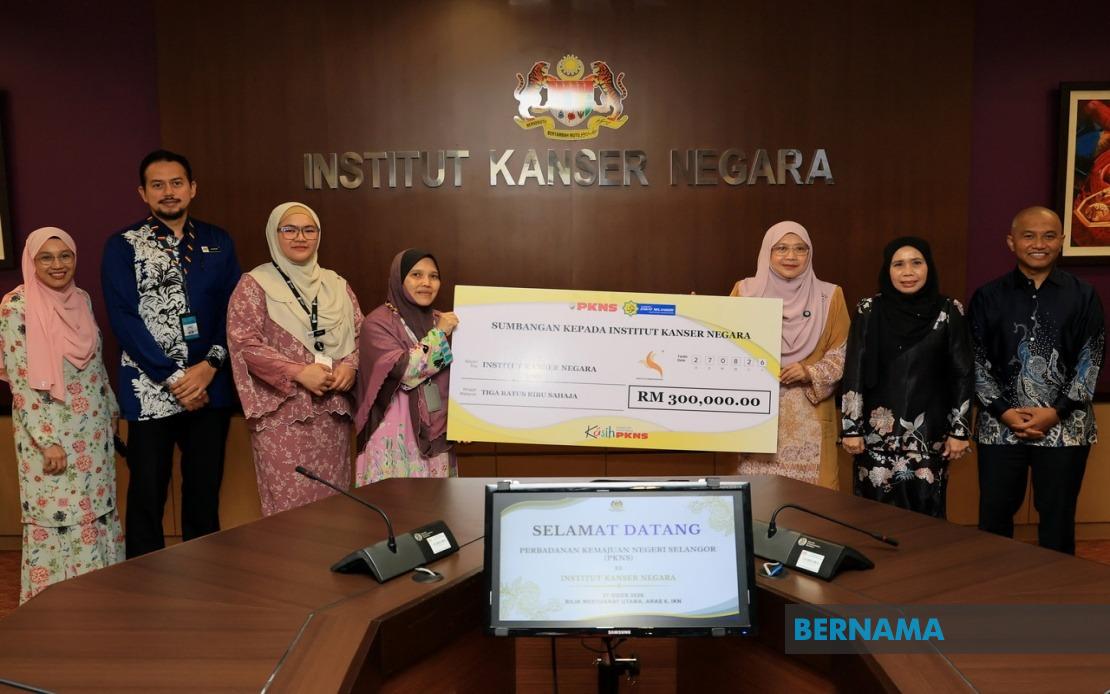
The Selangor State Development Corporation (PKNS) has committed RM300,000 to assist between 50 and 100 cancer patients receiving treatment at the National Cancer Institute (IKN), marking a significant corporate contribution to ease the mounting financial pressures these patients face during their medical journey.
The donation was formally presented in Putrajaya on Tuesday and represents PKNS's first major contribution to IKN. According to Sapna Turmidi, senior general manager of PKNS Corporate Services, the initiative reflects the corporation's philosophy that supporting society extends well beyond monetary aid to encompass genuine compassion, moral encouragement and active solidarity with vulnerable populations. She emphasised that PKNS recognises the profound emotional and practical challenges confronting cancer patients and their families, and hopes the contribution demonstrates that these individuals are not isolated in their struggle.
The decision to partner with IKN was motivated by a deeply personal tragedy within PKNS itself. A staff member diagnosed with glioma in February passed away just four months later at the institute, a loss that prompted leadership to reassess how the corporation could meaningfully contribute to cancer care. This experience provided senior management with a window into the extraordinary difficulties that patients and their loved ones encounter, transforming abstract compassion into concrete action.
Structured through a corporate social responsibility framework, the assistance is being distributed via wakalah zakat, a mechanism aligned with Islamic principles of charitable giving. PKNS has partnered with the Selangor Zakat Board (LZS) to ensure funds reach eligible Muslim cancer patients classified under the asnaf al-Gharimin category, which comprises individuals burdened by debt and financial hardship. The timing of the announcement coincides with PKNS's 62nd anniversary, reflecting the corporation's commitment to reinvesting in community welfare as it marks six decades of operations since its establishment on August 1, 1964.
The financial need at IKN is substantial and ongoing. Dr Nur Aslina Bahakodin, director of the institute, has indicated that the hospital requires between RM1 million and RM2 million annually to adequately support underprivileged cancer patients navigating the complex expenses associated with their disease. These costs extend far beyond conventional medical charges, encompassing travel expenses to and from appointments, specialised nutritional requirements, medical equipment, and essential supplies. The financial burden often extends to families accompanying patients, creating cascading economic strain across households.
The consequences of insufficient financial support directly impact treatment outcomes. Dr Nur Aslina noted that financial constraints frequently force patients to miss critical follow-up appointments, compromising the continuity of their care and potentially delaying timely completion of their treatment protocols. In oncology, where timing is frequently determinative of survival and quality of life outcomes, such interruptions can have profound implications. This reality underscores why institutional support from corporations, zakat bodies and civil society organisations is not merely beneficial but essential to complement hospital resources.
Administration of the PKNS funds will proceed through IKN's Medical Social Work Unit, which will conduct thorough socio-economic assessments of individual patients and their families to ensure assistance reaches those most in need. This structured approach ensures accountability and precision in resource allocation, preventing wastage and maximising the impact of each ringgit distributed. The unit's capacity to evaluate circumstances holistically means support can be tailored to specific challenges rather than applying a uniform formula.
Beyond this specific donation, broader trends in cancer detection and treatment offer both encouraging signs and ongoing challenges for Malaysia's healthcare system. Dr Nur Aslina attributed rising cancer case numbers partly to heightened public awareness and expanded participation in cancer screening initiatives across the country. Early detection remains a cornerstone of improved outcomes, with timely identification enabling patients to commence treatment sooner and substantially improving recovery prospects.
The epidemiological landscape in Malaysia reflects patterns observed across the developed world. Breast cancer constitutes the most frequently detected malignancy among women, while colorectal cancer leads among men. These statistics carry implications for public health strategy, suggesting that targeted screening campaigns and prevention education focused on these two cancers could yield significant population-level benefits. However, such prevention-oriented approaches require sustained funding and public engagement, areas where corporate partnerships like PKNS's contribution become invaluable.
The PKNS initiative represents a constructive example of how large state-linked organisations can leverage their resources and platforms to address gaps in healthcare financing. For Malaysian patients navigating the dual burden of illness and financial instability, such corporate interventions can mean the difference between maintaining treatment continuity and falling into catastrophic debt. While the RM300,000 allocation addresses immediate needs for approximately 100 patients, the broader systemic requirement for RM1-2 million annually suggests that sustained and expanded corporate engagement across multiple institutions will be necessary to adequately support Malaysia's growing cancer patient population and ensure equitable access to care regardless of economic status.

