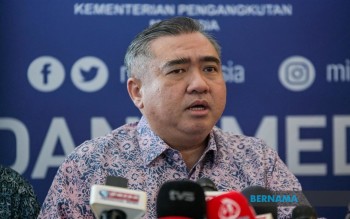
Transport Minister Anthony Loke has outlined ambitious plans to elevate Malaysia's northern region into a more formidable air logistics powerhouse through the Penang International Logistics Aeropark (PILA), a major expansion initiative that represents a significant step in the country's broader infrastructure development strategy. Speaking after the Ministry of Transport's monthly assembly in Putrajaya on August 13, Loke emphasized that the project would deliver substantially greater handling capacity while reinforcing Penang's position as a crucial air freight hub for the region.
The initiative builds upon existing cargo capabilities at Penang's current air logistics centre, transforming it into what Loke referred to as a "Penang Air Logistics Complex" of considerably larger scale. By combining increased capacity with modern infrastructure, the development aims to address growing demand for air freight services that has become increasingly important for Malaysia's international trade connections and regional supply chains. This expansion reflects recognition that the northern corridor requires enhanced logistics infrastructure to compete effectively with other Southeast Asian hubs and capture greater market share in the burgeoning air cargo sector.
Construction efforts are already underway for the PILA project, a collaborative venture between Malaysia Airports Holdings Bhd (MAHB) and Penang Development Corporation (PDC). Loke disclosed that the government has extended an invitation to the Prime Minister to formally launch the initiative, signalling its strategic importance within the administration's economic agenda. The project site is positioned adjacent to Penang's existing cargo hub, enabling operational synergies and maximizing the utilization of established logistics infrastructure and expertise.
Crucially, PILA represents a model of private-sector-led development in critical infrastructure, with MAHB bearing the investment burden while the government assumes a facilitating role. This approach aligns with broader policy objectives to attract private capital into strategic projects without placing the financial onus on public coffers. Loke clarified that while MAHB is directing substantial resources into upgrading air cargo facilities across multiple Malaysian airports, the government's contribution centres on enabling regulatory frameworks and coordination rather than direct capital investment.
The project structure demonstrates MAHB's comprehensive strategy to modernize air freight capabilities nationally. Beyond the Penang initiative, the airport operator is pursuing parallel upgrades at Kuala Lumpur International Airport (KLIA), creating a complementary network of high-capacity cargo facilities. This dual-hub approach would allow Malaysia to better distribute freight flows, reduce congestion at individual airports, and provide shippers with flexible options depending on their geographic location and service requirements.
A pivotal milestone occurred in May when the boards of both PDC and MAHB approved establishment of a dedicated joint-venture entity, PILA Sdn Bhd, with formal agreements executed on April 13, 2026. This corporate structure provides a focused governance framework specifically designed for the project's execution and long-term operations. The clarity afforded by this institutional arrangement enables more efficient decision-making and accountability for meeting developmental timelines and performance benchmarks.
The initial phase centres on constructing a new warehouse facility designated as free commercial zone class, providing specialized infrastructure for bonded cargo operations and value-added logistics services. Completion and commencement of operations are targeted for 2029, offering a realistic timeframe that accounts for design, procurement, and construction complexities typical of large-scale industrial projects. This warehouse component represents the foundation upon which subsequent phases of expansion will be built, ensuring the facility can commence revenue-generating operations within a defined period.
Longer-term projections reveal the transformational scope of the complete PILA vision. By 2050, the facility is designed to accommodate annual cargo throughput reaching 500,000 tonnes, a capacity benchmark that would position Penang among Southeast Asia's most significant air freight gateways. When combined with projected warehouse space exceeding two million square feet, these specifications indicate infrastructure dimensioned to serve not merely current demand but anticipated growth trajectories spanning decades.
For Malaysia's northern states and the broader Southeast Asian region, PILA's development carries substantial implications. Enhanced air cargo capacity at Penang would strengthen logistics competitiveness for businesses operating across northern Peninsular Malaysia, reducing transit times and expanding service availability. For international enterprises seeking regional distribution hubs, improved facilities and capacity would make Penang a more attractive alternative to competing centres in Thailand, Singapore, or Indonesia.
The expansion also reflects Malaysia's strategic positioning within evolving global supply chains. As e-commerce growth and just-in-time manufacturing practices intensify demand for rapid freight movement, investing in air logistics infrastructure becomes increasingly critical for national competitiveness. PILA enables Malaysian businesses to access regional markets more efficiently while attracting foreign companies seeking Southeast Asian logistics bases with modern facilities and reliable connectivity.
Moreover, the project demonstrates pragmatic collaboration between federal and state-level entities working alongside private capital. PDC's involvement ensures alignment with Penang's broader development objectives, while MAHB's expertise in airport operations guarantees technical competence and operational excellence. This multi-stakeholder approach has become characteristic of successful infrastructure initiatives in Malaysia and provides a replicable model for future public-private partnerships.
The timing of PILA's development also proves fortuitous given the region's post-pandemic recovery trajectory. Air freight demand remains robust across Asia, particularly for high-value and time-sensitive commodities including electronics, pharmaceuticals, and fresh produce. Northern Malaysia's geographic position and Penang's established reputation as a manufacturing and technology hub position the region favourably to capitalize on these opportunities, provided adequate logistics infrastructure exists to support accelerated cargo volumes.

