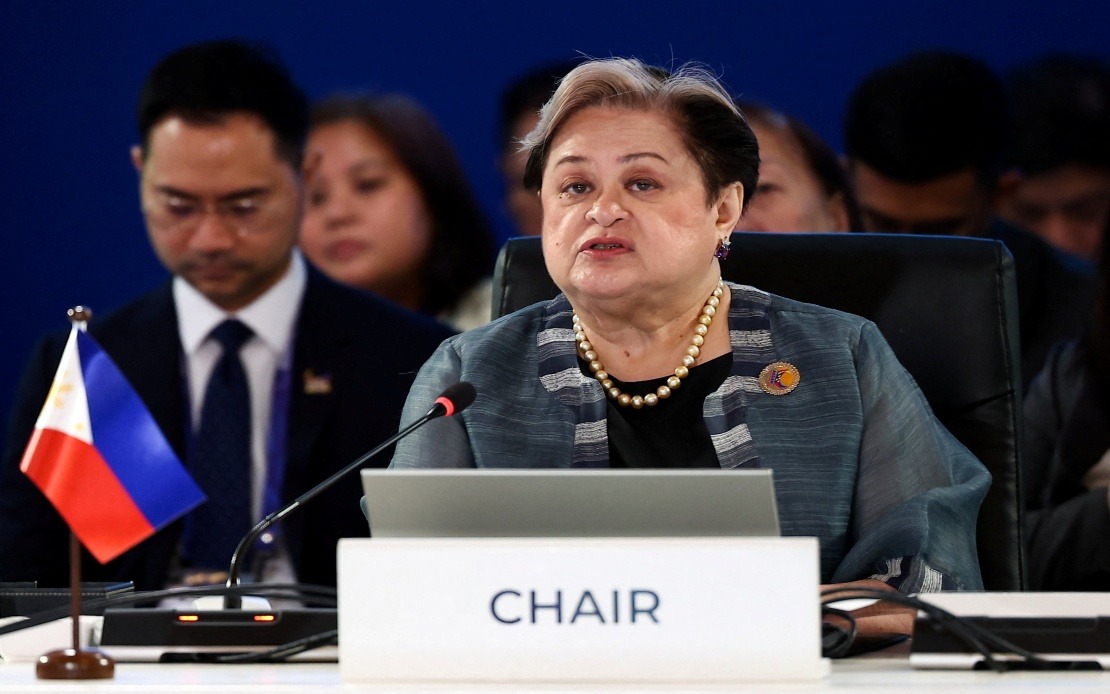
The Philippines is positioning itself at the forefront of ASEAN's engagement with Myanmar, with Foreign Affairs Secretary Ma. Theresa Lazaro set to spearhead a significant humanitarian initiative into the crisis-affected nation before the year concludes. Lazaro, serving as the special envoy to Myanmar for the ASEAN chair, made the commitment following intensive consultations with regional counterparts in Thailand, signalling renewed momentum in the bloc's attempt to address Myanmar's deepening humanitarian challenges and political instability.
The announcement represents a critical juncture in ASEAN's approach to its troubled member state. For Southeast Asia's regional body, the mission carries symbolic weight beyond its immediate humanitarian objectives—it underscores the organisation's determination to maintain Myanmar's integration within the bloc despite the military regime's continued isolation from international norms. Lazaro's direct involvement at the ministerial level suggests that the Philippines views this engagement as sufficiently important to warrant sustained high-level attention, particularly given the complexities of operating within conflict zones where multiple armed actors operate with competing interests.
Lazaro's visit to Thailand from July 12 to 13 brought together a diverse array of stakeholders, reflecting the intricate diplomatic architecture required to address Myanmar's crisis. Her meeting with Myanmar Foreign Minister U Tin Maung Swe focused specifically on implementing the Five-Point Consensus, ASEAN's framework for addressing Myanmar's instability. This framework, first endorsed in 2021, continues to serve as the regional bloc's primary mechanism for engagement with Myanmar's military junta, despite widespread international criticism that the approach has proven ineffective in stemming the violence that has claimed thousands of lives since the February 2021 coup.
The humanitarian mission's structure demonstrates how regional diplomacy operates differently from Western-led pressure campaigns. Rather than imposing conditions or sanctions, ASEAN's model emphasizes constructive engagement and incremental progress. The commitment to expand access to areas requiring humanitarian assistance reflects an acknowledgment that Myanmar's conflict has created severe shortages of medical care, food, and essential services across multiple regions. For Malaysian readers particularly, the regional approach warrants attention—Malaysia has historically balanced its relationships within ASEAN while maintaining independent foreign policy positions, and Myanmar's trajectory affects broader Southeast Asian stability and connectivity.
U Tin Maung Swe's participation in the informal ASEAN foreign ministers' meeting represented the first in-person engagement between Myanmar's government and the full slate of ASEAN foreign ministers since 2021. The military representative outlined his government's implementation efforts regarding the Five-Point Consensus, including the military junta's 100-day peace initiative and counter-transnational crime operations. These presentations, while reflecting the junta's perspective, occurred within a framework where regional ministers reiterated that Myanmar remains integral to ASEAN—a diplomatic formulation that simultaneously affirms membership while implicitly criticising governance failures.
The support from all stakeholders for the humanitarian mission signals a rare convergence of interests within ASEAN's historically fractious diplomatic consensus-building process. Each member state, including Malaysia, Thailand, Indonesia, Singapore, and Vietnam, has distinct perspectives on Myanmar policy shaped by their own security interests and historical relationships. Malaysia, as a significant economic and demographic stakeholder in regional stability, maintains particular interest in Myanmar's trajectory given the presence of Malaysian investments, ethnic and religious communities, and border security concerns. The unanimous backing for Lazaro's initiative reflects pragmatic recognition that the humanitarian situation demands action regardless of deeper disagreements about political solutions.
The inclusion of ethnic armed organisations and the National Solidarity and Peacemaking Negotiation Committee in Lazaro's July 13 discussions broadens the diplomatic aperture beyond the military junta. These non-state actors control significant territories and populations across Myanmar's borderlands, and their buy-in for inclusive dialogue processes carries weight for any sustainable resolution. The openness expressed by all sides to dialogue, as reported by the Department of Foreign Affairs, offers modest encouragement—yet must be weighed against years of failed negotiations and ceasefire violations. For Southeast Asian stability, the engagement of armed organisations matters considerably, as these groups operate across borders and their actions influence everything from refugee flows to illicit trade networks.
The humanitarian mission gains particular relevance when considered alongside Myanmar's deteriorating economic conditions and healthcare collapse. Access to conflict-affected regions remains contested, and the junta's control over aid distribution has prompted international criticism that humanitarian assistance occasionally bolsters military finances. ASEAN's approach of expanding access through diplomatic channels rather than confrontation reflects the regional organisation's capacity constraints—it lacks enforcement mechanisms and must therefore rely on persuasion and graduated engagement. This reality shapes what the humanitarian mission can realistically achieve, even with full stakeholder support.
For Malaysia and other ASEAN members, the Philippines' leadership on this initiative has implications for regional burden-sharing. If the humanitarian mission succeeds in establishing corridors for aid distribution, other member states may face expectations to contribute resources or expertise. Malaysian humanitarian organisations and medical personnel could potentially be drawn into support operations, requiring policy coordination at the government level. Additionally, the mission's success or failure will influence broader ASEAN credibility when addressing future regional crises, setting precedent for how the bloc responds to member state instability that threatens regional security and human welfare.
The timeline extending to the fourth quarter of 2026 allows for preparatory diplomatic groundwork and risk assessment, essential given the volatile security environment across Myanmar. The DFA has indicated that further details remain pending, suggesting ongoing negotiations about logistics, security arrangements, and the mission's precise mandate. This deliberate pace reflects ASEAN's characteristic caution—the organisation moves slowly on contentious matters but, once consensus emerges, can mobilise member state resources effectively. The mission's eventual composition will likely include representatives from multiple ASEAN states, amplifying its diplomatic weight while distributing responsibility for success or complications arising from the operation.
For regional observers, the humanitarian mission signals that ASEAN remains committed to Myanmar's reintegration into the regional community, despite the military coup and subsequent violence. This persistence reflects both ideological commitment to non-interference in member states' internal affairs and pragmatic recognition that Myanmar's isolation serves neither ASEAN's collective interests nor promotes the political change some member states privately desire. The mission thus operates within ASEAN's characteristic tensions between principle and pragmatism, seeking humanitarian benefit while neither endorsing nor explicitly opposing the current regime. Whether this approach can deliver meaningful assistance to Myanmar's suffering populations, or whether it primarily serves to legitimise the junta internationally, remains to be seen when the mission materialises in the coming months.

