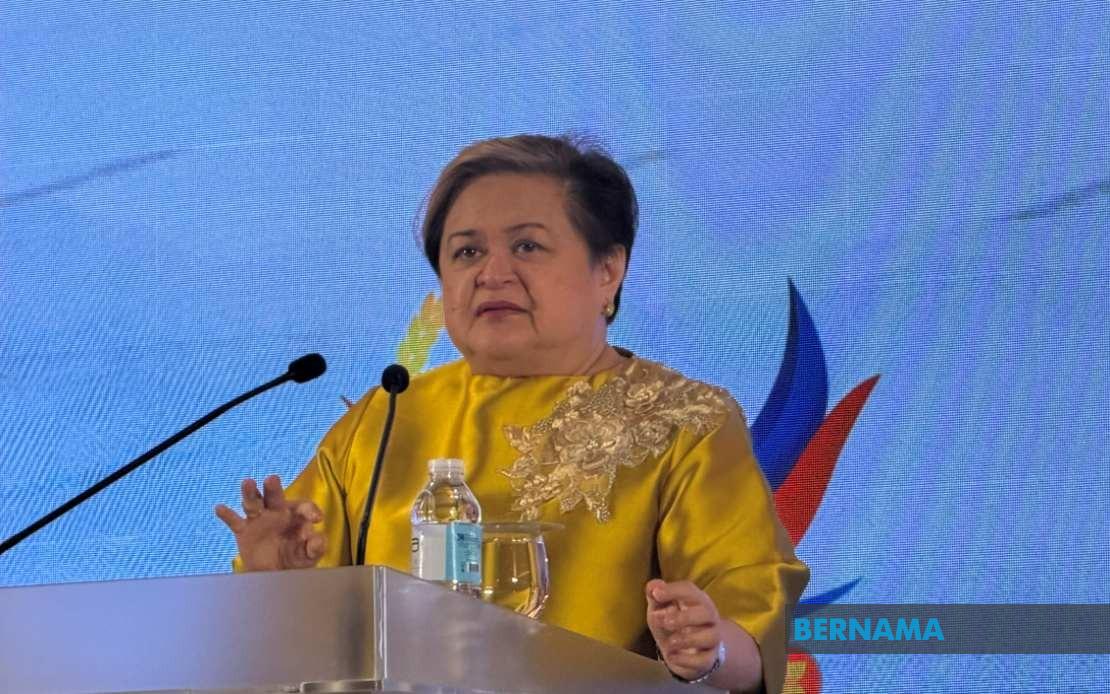
The Philippines has made an urgent case for ASEAN to intensify its focus on maritime security and resilience across the region's most vital waterways, warning that escalating geopolitical tensions pose an immediate threat to the bloc's economic stability and supply chain integrity. Foreign Affairs Secretary Ma. Theresa P. Lazaro outlined the concern during an interview in Kuala Lumpur, emphasizing that major shipping disruptions—whether in the Strait of Hormuz or elsewhere—demonstrate the vulnerability of ASEAN's deeply interconnected trade networks to external shocks.
The timing of Manila's appeal reflects heightened anxiety across Southeast Asia about the fragility of maritime commerce. Recent instability in the Strait of Hormuz has illustrated how disruptions to even distant shipping routes can cascade through global markets, driving up energy costs, accelerating inflation, and threatening food security. For ASEAN nations, which depend heavily on seaborne trade for both imports and exports, such vulnerabilities carry particular weight. The bloc's position at the nexus of global commerce means that any prolonged disruption to key passages—especially the Strait of Malacca and waters across the South China Sea—would reverberate across member economies with severe consequences.
Lazaro emphasized that ASEAN's economic interdependence with global supply chains creates a double-edged vulnerability. While integration into worldwide trading systems has driven prosperity and development across the region, it has also exposed member states to shocks originating far beyond their borders. Higher operating costs, production delays, and reduced competitive advantage would follow any significant maritime disruption, she cautioned. This reality demands that ASEAN treat maritime security not as a peripheral concern but as a core pillar of regional economic policy.
The Philippine foreign minister proposed a multifaceted approach to address these challenges, beginning with the establishment of robust crisis communication and coordination frameworks. She specifically highlighted the need for enhanced protocols operating at the foreign ministers' level, enabling ASEAN to respond with greater speed and unity when emergencies arise. During a recent Special ASEAN Foreign Ministers' Meeting focused on developments in West Asia, Lazaro tabled recommendations for strengthening institutional mechanisms to manage maritime crises more effectively.
Beyond crisis response infrastructure, Lazaro called for deeper technical cooperation among ASEAN members, including expanded information-sharing and early warning systems. These practical measures would enable the region to detect emerging threats before they mature into full-scale disruptions, allowing preventive action rather than reactive scrambling. The emphasis on transparency and predictability reflects an understanding that confidence in maritime security directly translates into confidence in supply chains—a psychological factor that influences business investment and consumer behaviour across ASEAN economies.
A concrete manifestation of Manila's commitment to maritime cooperation is the planned establishment of the ASEAN Maritime Centre within the Philippines. This facility, positioned as a flagship deliverable during the country's 2026 ASEAN Chairship, would serve as a central hub for addressing maritime issues across the bloc. Rather than operating in isolation, the centre would foster cross-sectoral and cross-pillar collaboration, recognizing that maritime security intersects with energy policy, trade facilitation, environmental management, and regional connectivity.
The centre's creation addresses a structural gap in ASEAN's institutional architecture. Currently, maritime coordination occurs through scattered mechanisms and ad hoc meetings, lacking a dedicated facility to consolidate expertise, coordinate research, and serve as a convening space for policymakers and technical specialists. By centralizing these functions, the centre could accelerate knowledge transfer, harmonize regional standards, and facilitate the kind of seamless cooperation that Lazaro identified as essential for collective resilience.
For Malaysia specifically, heightened maritime cooperation carries substantial implications. As steward of the eastern approaches to the Strait of Malacca—one of the world's most critical maritime chokepoints—Malaysia has a vested interest in ensuring that passage remains secure and unimpeded. Any instability in ASEAN's maritime domain affects Malaysian commerce, energy security, and geopolitical standing. Stronger coordination frameworks could enhance Malaysia's capacity to contribute to regional surveillance and response capabilities.
The broader strategic context underscores the timeliness of Manila's push. Rising tensions in the South China Sea, piracy concerns, climate-induced maritime challenges, and the militarization of key waterways have created an environment in which ASEAN can no longer rely on informal or sporadic cooperation. The stakes are sufficiently high that formalized institutions and regular diplomatic engagement have become imperative. Lazaro's emphasis on openness and transparency suggests an effort to depoliticize maritime security by grounding cooperation in shared economic interests rather than contested sovereignty claims.
Implementing Lazaro's recommendations would require significant diplomatic effort and resource commitment from all ASEAN members. Harmonizing national maritime policies, aligning intelligence-sharing protocols, and establishing joint operational standards present substantial technical and political challenges. Yet the cost of inaction—measured in disrupted trade, lost economic growth, and vulnerability to external coercion—arguably exceeds the effort required to build stronger regional institutions.
The Philippines' initiative also reflects a recognition that maritime security in Southeast Asia cannot be addressed through bilateral arrangements alone. The interconnected nature of regional trade and the shared exposure to global disruptions mean that collective action amplifies individual resilience. By proposing institutional innovation through the Maritime Centre and upgraded diplomatic protocols, Manila is advancing a vision of ASEAN as a bloc capable of managing complex transnational challenges through coordinated governance.
Looking ahead, the success of these proposals will likely depend on sustained political will and adequate funding from member states. The 2026 ASEAN Chairship provides a window of opportunity for the Philippines to move from advocacy to implementation, but follow-through beyond that period will be essential. As geopolitical risks continue to evolve, ASEAN's maritime framework will require continuous refinement and adaptation to remain effective in protecting regional prosperity.

