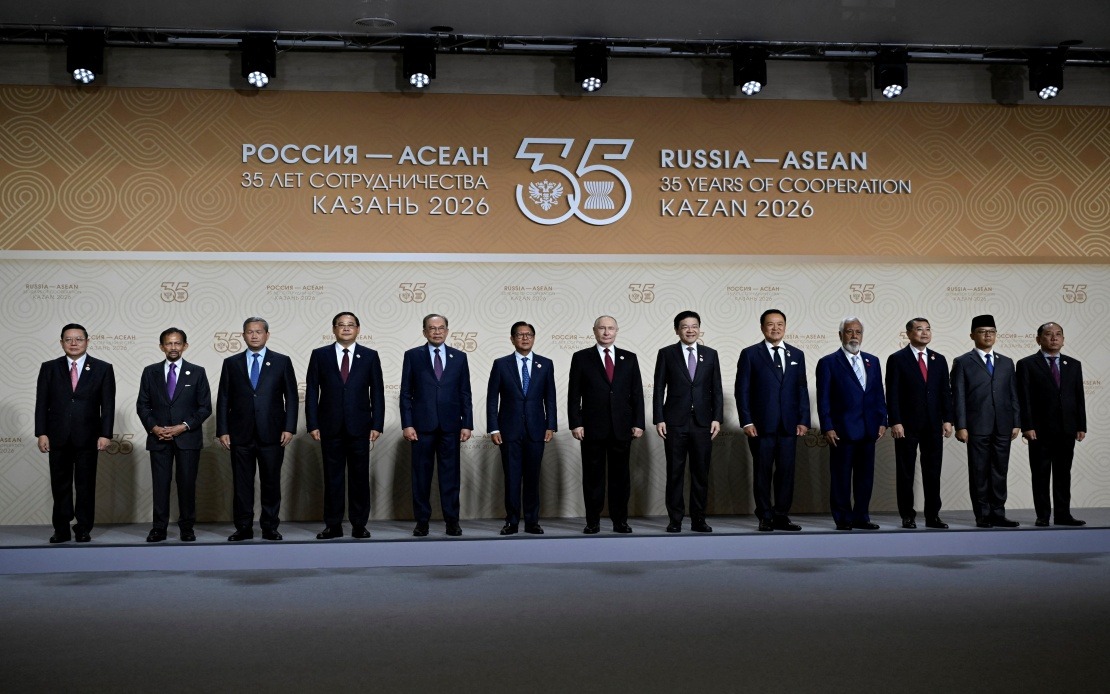
Philippine President Ferdinand R. Marcos Jr has called for accelerated expansion of ASEAN-Russia engagement, arguing that the regional bloc and Moscow have only scratched the surface of their partnership potential despite three decades of formal dialogue. Speaking after attending the ASEAN-Russia Commemorative Summit in Kazan, Marcos indicated that the relationship, while progressing steadily, remains constrained by reliance on traditional economic pathways and lacks the dynamism necessary to reflect contemporary regional interests.
The Philippine leader acknowledged significant disparities in bilateral advancement across Southeast Asia's ten member states, with some countries progressing further than others in their respective ties with Russia. This variance reflects differing geopolitical orientations and strategic priorities within ASEAN, a challenge that has long complicated the bloc's attempts to present unified positions on external partnerships. Marcos's observation underscores a fundamental structural reality: ASEAN's consensus-based decision-making mechanism often produces lowest-common-denominator outcomes that leave individual nations frustrated by limited collaborative scope.
Marcos identified cutting-edge domains as the primary frontier for renewed cooperation, specifically highlighting advanced technology, artificial intelligence infrastructure, data centres, and power generation capabilities. These sectors represent a departure from conventional trade relationships centred on commodity exports and manufacturing partnerships that have historically defined ASEAN-Russia economic relations. The emphasis on technology and energy reflects broader shifts in regional development priorities, where Southeast Asian governments increasingly view digital infrastructure and reliable power supply as critical foundations for sustained economic growth and technological competitiveness.
The Russian dimension in these emerging sectors carries particular significance given Moscow's established expertise in certain advanced technology domains and its substantial energy resources. By positioning Russia as a potential collaborator in AI development and data infrastructure, Marcos signals openness to diversifying ASEAN's technology partnerships beyond traditional Western suppliers. This approach acknowledges geopolitical realities while pursuing practical developmental benefits, a pragmatic stance that resonates with Southeast Asian governments navigating complex great-power competition.
Marcos characterised ASEAN's evolving external engagement as a coming-of-age moment, describing the current phase as transitional and marked by deliberate expansion beyond historically ingrained alignments. His invocation of a "bipolar world" reference suggests recognition that Cold War-era partnership patterns no longer constrain regional decision-making as they once did. Instead, Southeast Asian nations increasingly evaluate external relationships through contemporary lenses focused on technology transfer, investment opportunities, and sectoral expertise rather than ideological congruence or security bloc membership.
The language employed by Marcos reveals strategic repositioning rather than fundamental realignment. By framing ASEAN as "growing up fast" and consciously recalibrating partnership preferences, he articulates a narrative of regional maturation and autonomous agency. This messaging proves important domestically within the Philippines and across Southeast Asia, where publics and political establishments seek assurance that foreign policy choices reflect national interests rather than deference to external pressures.
The ASEAN-Russia summit outcomes institutionalize this expanded engagement trajectory through formal documentation. The Kazan Declaration 2026 and the ASEAN-Russia Comprehensive Plan of Action for 2026-2030 establish frameworks for sustained dialogue and cooperation across multiple domains. Supporting agreements addressing cultural exchange and energy collaboration indicate deliberate effort to construct multifaceted partnerships extending beyond security or trade considerations. Such comprehensive approaches contrast with narrower, transactional engagements and signal commitment to building substantive long-term relationships.
For Malaysia and other Southeast Asian economies, these developments carry tangible implications. Expanded ASEAN-Russia cooperation in data centre infrastructure and AI could create regional competition for investment and talent, potentially affecting Malaysian tech sector positioning and government digital transformation initiatives. Energy collaboration outcomes may influence regional power market dynamics, particularly as ASEAN nations pursue energy security and transition objectives. Technology-focused partnerships could facilitate knowledge transfer while presenting both opportunities and risks related to technological dependence and intellectual property considerations.
The strategic timing of heightened ASEAN-Russia engagement reflects broader geopolitical shifts. As Western sanctions and technology restrictions constrain Russian capabilities in certain sectors, Moscow demonstrates heightened interest in Asian partnerships offering alternative markets and cooperation possibilities. Simultaneously, Southeast Asian governments face pressure to demonstrate foreign policy independence while securing access to diverse technology sources and energy supplies. ASEAN-Russia cooperation provides platforms for pursuing these objectives without explicit alignment with competing great powers.
Marcos's emphasis on recognising "potential we really did not take full advantage of in the past" suggests previous underutilization of bilateral capacities. This acknowledgment implies that ASEAN governments themselves bear responsibility for limited engagement depth, not external constraints alone. The statement reflects self-directed motivation to rectify institutional and policy shortcomings, signalling that renewed cooperation stems from deliberate strategic choices rather than reactive positioning.
The commemorative summit's focus on delivering "concrete benefits to their peoples" grounds partnership rhetoric in practical outcomes. Beyond diplomatic ceremonialism, ASEAN and Russian officials committed to tangible collaborative achievements. Whether these translate into meaningful technology transfer, infrastructure investment, or skilled workforce development remains subject to implementation effectiveness and sustained political commitment across both parties.
As Southeast Asian nations navigate complex international environments, ASEAN-Russia cooperation exemplifies hedging strategies that avoid exclusive alignment while maximizing partnership diversity. Malaysia, as ASEAN chair and major regional economy, faces opportunities and obligations to facilitate bloc-level initiatives while pursuing distinct national interests. The technology and energy focus areas identified by Marcos offer concrete domains where Malaysian participation could generate developmental benefits while strengthening regional solidarity and influence in external relationships.