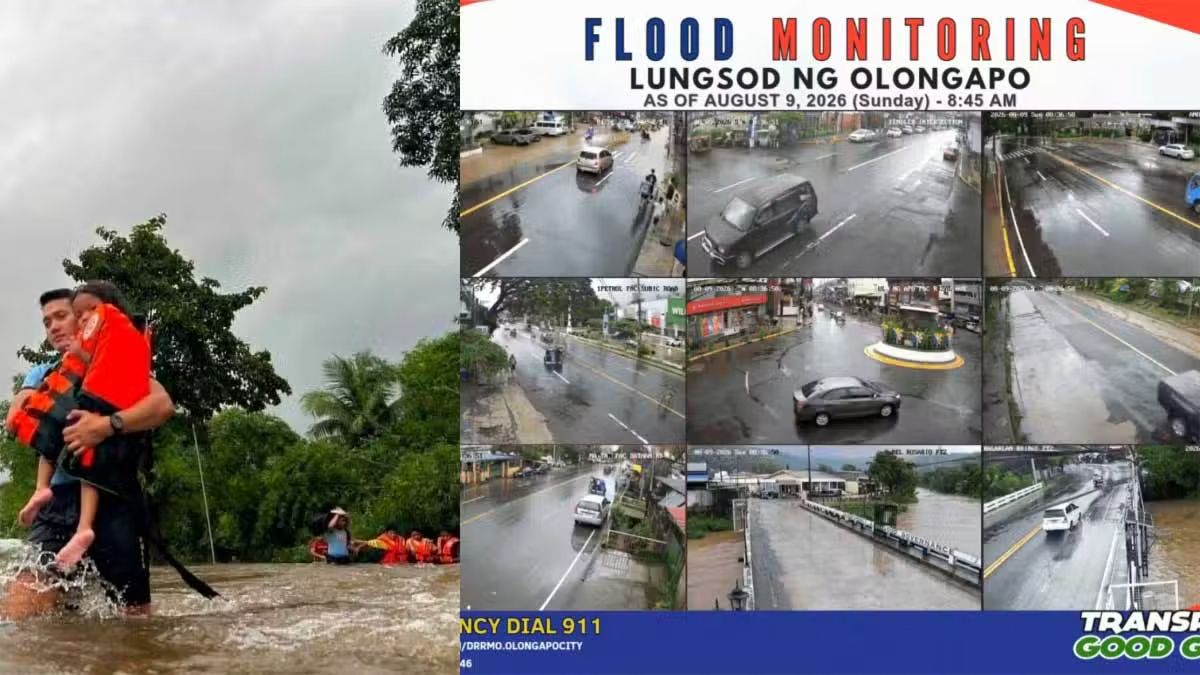
The Philippine authorities have escalated their disaster response efforts considerably as the southwest monsoon, locally known as the habagat, combines with two tropical weather systems to inundate vulnerable communities across the archipelago. The National Disaster Risk Reduction and Management Council reported on Sunday that the flooding has reached at least 382,000 people, comprising roughly 110,000 families spread primarily across eight regions spanning both the main island of Luzon and the southern region of Mindanao. The convergence of Tropical Depression Luis and Tropical Storm Maymay, internationally designated as Kujira, has intensified rainfall patterns far beyond typical monsoon conditions, prompting an unprecedented mobilisation of rescue personnel and resources.
The human toll of the disaster continues to mount, with nine fatalities officially recorded so far. Among the dead is a police officer from Negros Occidental who perished while attempting to rescue two colleagues from a dangerously swollen river. Another victim was a 28-year-old man from Cuenca, Batangas, who died after reportedly being electrocuted while traversing a flooded section of J.P. Laurel Highway. The remaining seven deaths involved drowning and landslide incidents scattered across multiple provinces including Ilocos Sur, La Union, Pangasinan, Benguet, and Rizal, underscoring the widespread nature of the hazards posed by the weather system.
Metorological forecasts indicate that the deluge will persist through at least Wednesday, with the Philippine Atmospheric, Geophysical and Astronomical Services Administration warning that rainfall will likely intensify over mountainous and elevated terrain. The agency's 5 p.m. weather advisory issued on Sunday cautioned that consequences could deteriorate further in areas that have already endured substantial precipitation. This compounds the predicament facing residents in exposed communities, as the ground becomes increasingly saturated and dam levels rise toward critical thresholds. The extended forecast timeframe suggests that relief operations will face sustained pressure for several additional days.
The impact on critical infrastructure has been severe and widespread. Angat Dam in Norzagaray, Bulacan, a vital water source for Metro Manila, experienced a dramatic rise of nearly 15 metres within a 10-day period, reaching 164.80 metres above sea level by Sunday afternoon. This represents a recovery from its record low of 150.61 metres above sea level recorded on July 30, reflecting both the severity of the current monsoon and the reservoir's vulnerability during dry periods. Downstream, Ipo Dam approached its 101-metre spilling threshold while releasing substantial volumes of water at 314.91 cubic metres per second, necessitating careful monitoring to prevent uncontrolled overflow.
In Central Luzon, particularly hard hit by the flooding, nearly 100 villages found themselves submerged, displacing approximately 170,000 individuals. The Calabarzon region experienced significant damage to residential areas, with over 7,000 families affected and more than 3,100 families sheltered across 117 evacuation centres distributed across 29 separate localities. In Bulacan specifically, approximately 1,000 residents from several towns and cities were compelled to flee their homes as waterlevels reached approximately 4 feet in some neighbourhoods, rendering the Bulusan Riverbank impassable for light vehicles. These displacement figures represent not only immediate humanitarian concerns but also longer-term economic disruptions as agricultural areas, small businesses, and informal settlements become inundated.
Transportation infrastructure has suffered substantial disruption throughout the archipelago. Two bridges in Cagayan became impassable as the Chico River rose above safe levels, while landslides and rockfalls obstructed critical roads in Nueva Vizcaya, Abra, and Mountain Province. In Zambales, a breached dike in San Marcelino severed road access for affected communities, while a bridge in Barangay Santa Fe was destroyed by powerful currents. These breaches in the transport network have hampered evacuation efforts and supply delivery to isolated areas. Maritime services have also been severely compromised, with 543 passengers, vehicle operators, and cargo workers stranded across 28 ports spanning four regions according to Philippine Coast Guard reports.
Philippine National Police chief General Jose Melencio Nartatez Jr. acknowledged the scale of the challenge in a statement released Sunday, announcing that authorities had positioned extensive personnel and resources for emergency evacuations and broader disaster response operations. He urged the public to remain calm whilst maintaining vigilance and following directives from emergency officials. The police leadership also cautioned residents against circulating unverified information on social media platforms, recognising that misinformation and panic-inducing rumours can undermine coordinated relief efforts and divert resources away from genuine emergencies. This messaging reflects broader concerns about information management during large-scale disasters when communication channels become congested and rumours spread rapidly.
The disaster has provoked political scrutiny regarding infrastructure investment under the current administration. The Makabayan coalition, a progressive political grouping, contended that the flooding exposes inadequacies in the administration's flood management and broader infrastructure initiatives. The coalition specifically cited concerns regarding unprogrammed appropriations, discretionary budget allocations that can be redirected during the fiscal year. With deliberations on the 2027 national budget proceeding simultaneously with the disaster, the coalition urged lawmakers to scrutinise whether such flexible spending mechanisms facilitate pork barrel allocation and corrupt practices among legislators. This criticism touches on longer-standing debates about the adequacy of infrastructure investment in flood-prone regions and whether available resources are deployed efficiently.
The flooding carries particular significance for Southeast Asian observers monitoring climate resilience across the region. The Philippines, situated within the western Pacific typhoon belt and subject to intense monsoon patterns, routinely experiences severe weather events that challenge infrastructure and disaster management systems. The combination of conventional monsoon patterns with tropical cyclones reflects climate dynamics that may become increasingly common as ocean temperatures rise. Other Southeast Asian nations similarly vulnerable to seasonal flooding—including Malaysia, Thailand, and Vietnam—may draw lessons from how Philippine authorities manage large-scale displacement, coordinate inter-agency responses, and communicate with affected populations. The disaster underscores the region's ongoing vulnerability to hydro-meteorological hazards and the critical importance of sustained investment in early warning systems, evacuation infrastructure, and community preparedness programmes that transcend individual national boundaries.

